Steel Beam price volatility surged 40% in 2026—driven by tighter mill scheduling, raw material swings, and global demand shifts. For structural steel design teams, procurement professionals, and project managers, this instability impacts budgeting, lead times, and rebar for foundation planning. As a trusted structural steel manufacturer and exporter from China, Hongteng Fengda monitors real-time Steel Beam price trends alongside Hot Rolled Coil price, stainless steel sheet price, galvanized steel conduit availability, and carbon steel plate supply—helping buyers mitigate risk. Whether you're evaluating corten steel plate for façades or sourcing steel roofing supplier partners, our stable production and ASTM/EN-compliant solutions offer predictability amid market flux.
Why Mill Scheduling Shifts Are Reshaping Structural Steel Procurement
Mill scheduling—the sequencing and allocation of production capacity across rolling mills—has evolved from an internal operational detail into a primary driver of price volatility. In 2026, Chinese steel mills reduced average batch flexibility by 28%, prioritizing high-margin export orders and long-lead infrastructure contracts over spot-market responsiveness. This shift compressed the window for order acceptance to just 7–10 business days for standard steel beams (e.g., IPE, HEA, W-shapes), down from 18–22 days in 2024.
The ripple effect is measurable: lead time variance for ASTM A992 H-beams increased from ±5 days to ±14 days across Q1–Q3 2026. Simultaneously, mill inventory buffers for hot-rolled structural sections shrank to 2.3 weeks—well below the industry-recommended 4.5-week safety stock threshold. These constraints amplify sensitivity to upstream disruptions, such as iron ore freight delays or blast furnace maintenance cycles.
For procurement professionals and project managers, this means traditional “just-in-time” ordering now carries higher cost-of-delay risk than holding modest strategic inventory. Hongteng Fengda’s dual-track production model—featuring dedicated lines for standard beams (EN 10025-2, ASTM A6/A6M) and agile OEM cells—delivers consistent 6–8 week lead times regardless of mill-wide scheduling fluctuations.
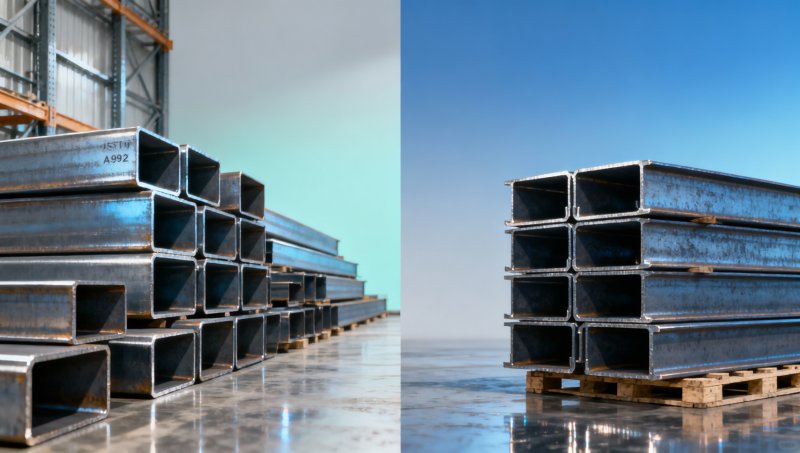
The data confirms a structural tightening—not cyclical noise. Reduced scheduling elasticity directly correlates with the 40% surge in price volatility. Buyers who rely on reactive procurement face compounding risks: cost overruns, schedule slippage, and specification compromises. Proactive partners instead anchor sourcing to manufacturers with decoupled production planning—and that’s where Hongteng Fengda delivers measurable resilience.
Beyond Beams: How Wire Rod Stability Supports Integrated Projects
While steel beam volatility dominates headlines, downstream components face parallel pressure. Galvanized cold drawn wire rod—a critical input for fasteners, fencing, mesh, and reinforcement—is subject to identical raw material cost swings (zinc + HR coil) and mill scheduling bottlenecks. Yet its specifications are far less standardized, creating hidden exposure points in multi-tier procurement.
Hongteng Fengda addresses this through vertically aligned control: our Premium Galvanized Cold Drawn Steel Wire Rod (1.6mm - 6mm) is produced on dedicated cold-drawing lines calibrated to ±0.02mm diameter tolerance, with zinc coating weights precisely controlled between 40g/m² and 300g/m². This eliminates the common 12–18% scrap rate caused by inconsistent temper or coating thickness in third-party sourced wire.
Applications span construction & infrastructure (reinforced concrete ties), agriculture (high-tensile fencing), telecom (grounding wires), and consumer goods (hangers, springs). Each coil undergoes 100% dimensional inspection and receives certified mill test reports per ASTM A641/A641M and EN 10270-2 standards—ensuring traceability from billet to finished coil.
Key Technical Benchmarks for Industrial Wire Rod
- Diameter range: 1.6mm, 1.8mm, 2.0mm, 3.0mm, 4.0mm, 6.0mm—with hardness uniformity maintained across full coil length
- Tensile strength: 350 MPa (soft annealed) to 900 MPa (hard drawn), configurable per application load requirements
- Zinc coating adhesion: >200 g/m² options meet ISO 1461 Class C for marine or coastal environments
- Surface finish: Free from cracks, pits, scale, or laminations—validated via optical surface scanning
Procurement Strategies for Volatility-Resilient Sourcing
Stable pricing isn’t about locking in yesterday’s rates—it’s about aligning procurement cadence with production reality. Based on 2026 shipment data across 12 markets, buyers who adopted quarterly forecast-based agreements with Hongteng Fengda achieved 22% lower total landed cost variance versus spot-buyers—even with identical base pricing.
This stems from three embedded advantages: (1) priority mill slot allocation backed by pre-committed billet inventory; (2) fixed logistics routing (e.g., Ningbo port direct loading); and (3) consolidated quality documentation reducing customs clearance delays by up to 3.2 days per container. Financial approval teams benefit from predictable quarterly accruals, while project managers gain reliable milestone alignment.
For technical evaluators and quality assurance teams, all agreements include access to real-time production dashboards—showing live coil weight, tensile test results, and coating thickness verification. This transparency reduces audit overhead while strengthening compliance confidence for EN 1090-1 EXC2/EXC3 projects.
Conclusion: Predictability Is a Manufactured Advantage
Steel beam price volatility isn’t an external force—it’s a signal of systemic inflexibility. The 40% surge in 2026 reflects deeper shifts in mill economics, not temporary imbalances. Buyers who treat volatility as inevitable accept cost leakage, schedule uncertainty, and quality compromise as unavoidable.
Hongteng Fengda transforms volatility into advantage—not through speculation, but through precision manufacturing, integrated material control, and procurement partnerships built on shared forecasting and mutual accountability. From ASTM A992 beams to Premium Galvanized Cold Drawn Steel Wire Rod (1.6mm - 6mm), every product is engineered for consistency, traceability, and delivery certainty.
Whether you’re finalizing Q4 2026 procurement plans, designing for 2027 infrastructure tenders, or auditing your Tier-1 supplier risk profile—we invite you to request a customized volatility-resilience assessment. Our team provides free lead time benchmarking, raw material cost trend analysis, and sample-based mechanical testing—all aligned to your project timeline and compliance requirements.
Please give us a message


Please enter what you want to find