Choosing the right steel angle for construction on site is not just about dimensions—it directly affects fit-up, load performance, installation speed, and cost control. From angle iron for construction to angle iron for trailer and angle iron for shelving, buyers and engineers must evaluate sizing accuracy, standards compliance, and application needs before purchase.
On most projects, steel angle sizing problems do not start with a dramatic failure. They usually begin with small mismatches: a leg length that does not align with the connection detail, a thickness that interferes with bolting, a corner radius that affects fit-up, or a tolerance issue that slows fabrication. These “small” errors can create rework, delays, wasted material, and disputes between site teams, fabricators, and suppliers.
For that reason, the core question behind searches like “steel angle for construction: sizing issues on site” is practical rather than theoretical. People want to know how to choose the correct angle size, what dimensions really matter, how standards affect interchangeability, and how to avoid ordering material that looks right on paper but creates problems during installation. This article focuses on those questions and offers a decision framework useful to engineers, contractors, procurement teams, distributors, and project managers.
Why steel angle sizing causes so many site problems
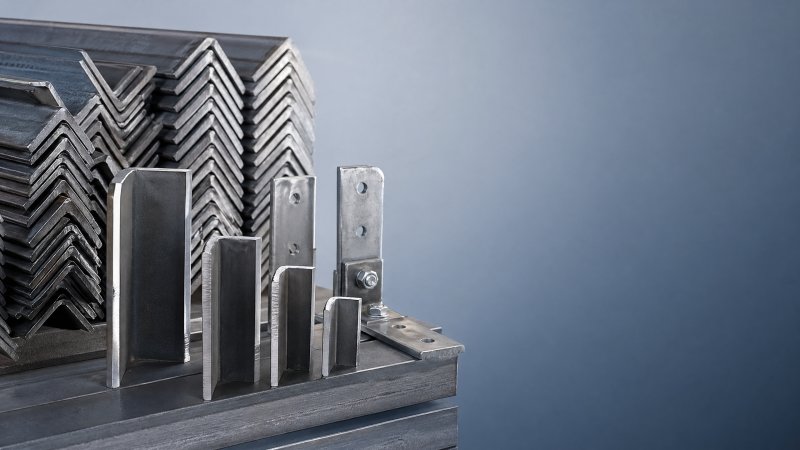
Steel angle is widely used because it is simple, strong, and versatile. It appears in frames, edge supports, brackets, lintels, towers, equipment bases, trailer structures, shelving systems, and countless secondary steel applications. However, that same versatility often leads people to assume angle selection is straightforward. In reality, site problems happen when the application, fabrication method, and dimensional requirements are not matched early enough.
The first issue is that “size” does not mean only one thing. A steel angle is defined by leg dimensions, thickness, length, and sometimes mass per meter. Equal angle and unequal angle sections behave differently in layout and loading. Even when two products appear similar, differences in root radius, straightness, squareness, and rolling tolerances can affect whether they work in the field. Installers often discover this only when pieces reach site and connections do not align as expected.
The second issue is that drawings, purchase orders, and supplier catalogs may describe the product differently. One document may use metric dimensions, another may use imperial references such as angle iron sizes in inches, and another may rely on a standard designation without clearly stating tolerances or steel grade. If these references are not reconciled before production, the project can receive steel angle that is technically compliant but operationally inconvenient.
Third, many on-site issues are actually communication issues. The designer may focus on structural capacity, the buyer on cost, the fabricator on process efficiency, and the installer on assembly speed. A good steel angle selection process must serve all four perspectives. The right choice is not always the cheapest section per ton; it is the one that supports the drawing intent, fabrication method, logistics plan, and installation sequence with minimum risk.
What dimensions matter most when choosing angle steel
If you want to prevent site issues, begin by checking the dimensions that directly affect use. The first is leg size. In brackets, supports, and edge framing, leg lengths influence bearing area, bolt edge distance, weld access, and the ability to connect with adjoining members. A leg that is too short may reduce usable connection space. A leg that is too large may clash with finishes, equipment, or nearby steel components.
The second critical dimension is thickness. Thickness affects strength, stiffness, welding behavior, drilling, galvanizing response, and weight. On site, thickness errors often appear as practical problems rather than engineering calculations. Holes may not line up with standard bolts, welded assemblies may distort differently than expected, and field handling may become more difficult. In trailer or shelving applications, excessive thickness can also add unnecessary cost and weight.
Length is another common source of trouble. Cut length tolerance matters when steel angle is part of a repetitive assembly or modular frame. Small length deviations may accumulate across multiple members, making final alignment difficult. For long components, transport and handling should also be considered. It is often better to coordinate practical production and shipping lengths than to insist on a nominal dimension that creates unnecessary delivery or installation challenges.
Finally, pay attention to corner radius and dimensional tolerances. These details are often overlooked in early purchasing discussions, but they matter in fabricated assemblies, especially when angles must sit flush against plates, panels, or concrete surfaces. If the project needs close-fit steelwork, the buyer should confirm tolerance requirements with the supplier before placing the order. This is one of the simplest ways to reduce fit-up complaints on site.
How application changes the “right” steel angle size
There is no universal best size for angle steel. The correct section depends on the job. In general construction framing, the angle may serve as a structural support, bracing component, or connection element. In these cases, selection should be based on load path, connection design, fabrication method, and local code requirements. Strength and dimensional compatibility must be considered together, not separately.
For angle iron for trailer manufacturing or repair, the priorities may shift toward weight efficiency, weldability, impact resistance, and dimensional consistency across repeated assemblies. Trailer builders often need sections that are easy to cut, jig, and weld while maintaining predictable geometry. Here, over-specifying section size may increase cost and dead weight without delivering proportional value. Under-specifying, however, can create fatigue and durability issues in service.
In angle iron for shelving or light-duty support systems, the key concerns are often hole patterns, ease of assembly, corrosion protection, and visual straightness. The angle may not carry major structural loads, but dimensional consistency becomes highly visible and directly affects installation efficiency. Buyers in these applications should focus on tolerance, finish quality, and compatibility with accessories as much as nominal section size.
Industrial users should also think beyond the immediate component. Ask how the steel angle interacts with the rest of the system: will it be welded to base plates, bolted to channel, integrated into cold formed profiles, or exposed to moisture or chemicals? Once the real application is clear, the correct size becomes easier to define in practical terms rather than by guesswork.
Standards, grades, and why “same size” may not mean same performance
One of the most common procurement mistakes is assuming that if the dimensions match, the material is interchangeable. In reality, standards and grades matter. Structural steel products may be supplied under ASTM, EN, JIS, or GB systems, and each standard can define chemical composition, mechanical properties, tolerances, and inspection requirements differently. This affects not only strength but also fabrication response and project acceptance.
For international projects, this issue becomes more important. A buyer in Europe, North America, the Middle East, or Southeast Asia may receive offers from multiple mills using different standard references. A low price may hide an equivalency gap that creates engineering review delays or rejection at QA stage. Before ordering, confirm the exact standard, grade, and required test documentation, and ensure the project team accepts that combination.
Quality control teams should also verify whether the angle is intended for primary structural use, secondary framing, or general fabrication. The level of certification, traceability, and testing should match the application risk. For safety-critical projects, dimensional inspection and mill documentation should be reviewed before dispatch rather than after the material arrives on site. This reduces both technical and commercial risk.
Manufacturers with export experience can add value here by helping buyers compare standard systems and specify equivalent options correctly. Hongteng Fengda, as a structural steel manufacturer and exporter from China, supplies angle steel, channel steel, beams, cold formed profiles, and customized structural steel components with compliance to major international standards such as ASTM, EN, JIS, and GB. That capability is especially useful when projects require both cost control and documentation clarity.
How to check steel angle before ordering: a practical buyer and engineer checklist
A practical review process can prevent most sizing issues before they affect the site. Start with the design intent. What is the angle actually doing—supporting load, forming a frame, carrying a bracket, reinforcing an edge, or acting as a simple connection piece? The answer will determine which dimensions are critical and which can be treated more flexibly.
Next, verify the complete dimensional callout. Do not approve an order based on a general phrase like “angle iron” or “L steel” alone. Confirm equal or unequal angle, leg sizes, thickness, length, quantity, grade, standard, finish, and any special tolerance requirements. If the angle will be fabricated, also confirm whether hole locations, coping, slots, bevels, or galvanizing allowances affect the final fit.
Then review the connection details. Ask practical questions: Is there enough room for bolt installation? Will the weld size be appropriate for the thickness? Does the root radius interfere with the adjoining plate? Are there coating requirements that change hole or fit-up tolerances? These are not minor workshop details. They are direct predictors of whether the steel will install smoothly or create site corrections.
Finally, ask for inspection support. For larger orders or critical projects, request dimensional inspection records, grade certificates, and sample photos before shipment. If the project is repetitive, consider approving a first article or trial batch. The small time spent here is usually far less costly than correcting material after delivery.
Mid-project changes and when another steel solution may be more efficient
Not every site challenge should be solved by forcing a steel angle to do work better suited to another product. In some projects, especially civil, marine, or deep excavation works, the issue is not angle sizing at all but choosing the right structural form. If the project involves retaining soil, forming temporary water barriers, or building cofferdams, a different profile may provide better performance and lower overall risk.
For example, in deep water construction or cofferdam formation, Steel Sheet Piles may be a more suitable option than fabricated angle-based assemblies. These products are available in grades such as S275, S355, S390, S430, SY295, SY390, and ASTM A690, and can be produced to EN10248, EN10249, JIS5528, JIS5523, and ASTM standards. Their advantages include high strength, good waterproof performance, reusability, and the ability to penetrate hard soil layers effectively.
This matters because smart sourcing is not only about buying cheaper steel; it is about matching the product form to the project function. A supplier with a broad structural steel portfolio can help buyers avoid overcomplicated fabrication choices and identify whether angle steel, channel, beams, cold formed profiles, or sheet piles will deliver better installation efficiency and life-cycle value.
Common on-site sizing mistakes and how to avoid them
One common mistake is ordering based on a rough visual estimate or an old project reference. This often happens in maintenance, repair, small contractor work, or urgent procurement situations. But even a familiar size can be wrong if the new project has different load demands, connection details, or finish requirements. The safer approach is to trace the requirement back to current drawings and actual use conditions.
Another frequent error is ignoring tolerance stacking. A single member may appear within tolerance, yet an assembly of many members can drift enough to cause alignment trouble. This is particularly relevant in long runs of shelving, trailers, modular supports, and repetitive brackets. Procurement and fabrication teams should think in terms of assembly performance, not just individual piece compliance.
A third mistake is selecting by weight alone. While reducing tonnage can save cost, a lighter angle that creates cutting complexity, weld distortion, or site reinforcement may not be economical in total. Good steel purchasing balances material price with fabrication time, installation speed, scrap rate, logistics, and risk of rework. This is where experienced suppliers and technical evaluation teams can make a measurable difference.
Finally, some projects fail to consider corrosion protection early enough. If the angle will be galvanized, painted, or used in a humid or marine environment, the finish may influence final dimensions, fabrication sequence, and service life. Sizing, grade selection, and coating strategy should be reviewed together rather than as separate decisions made by different departments.
How procurement and project teams can reduce risk with the right supplier
For procurement teams, the best supplier is not simply the one offering the lowest initial quotation. The more valuable partner is the one that can deliver stable dimensions, standard compliance, reliable documentation, and consistent lead time. On construction projects, uncertainty often costs more than steel itself. A delayed or nonconforming shipment can interrupt installation crews, disrupt subcontractor schedules, and trigger expensive knock-on effects.
Technical buyers should look for manufacturers that understand export standards, offer customized structural steel solutions, and maintain modern production and quality control systems. This is especially important for global sourcing, where buyers may need a combination of standard angle steel and project-specific fabricated components. A supplier that can manage both reduces coordination burden and lowers the chance of specification gaps.
Hongteng Fengda serves customers across North America, Europe, the Middle East, and Southeast Asia with angle steel, channel steel, steel beams, cold formed steel profiles, and OEM structural steel components. For buyers comparing multiple sources, that kind of production range and international standards familiarity can support more efficient sourcing decisions, better cost control, and more dependable project execution.
Conclusion: the right steel angle size is the one that works on site, not just on paper
When people search for information about steel angle sizing issues on site, they are usually trying to avoid one outcome: buying material that appears correct in specification but becomes a problem during fabrication or installation. The best way to avoid that is to define the real application first, confirm the full dimensional and grade requirements, review connection details, and align purchasing with fabrication and site realities.
Whether the project involves angle iron for construction, trailer frames, shelving, or customized structural components, the right choice depends on more than nominal leg size. Thickness, tolerance, standard, finish, and supplier capability all matter. A disciplined review process protects structural performance, installation speed, cost control, and overall project reliability.
In short, successful steel angle selection is practical engineering plus careful procurement. If the product fits the drawing, the connection, the fabrication process, and the site conditions, it is the right size. If it only fits the catalog, it may become tomorrow’s rework.
Please give us a message


Please enter what you want to find