Looking for a reliable steel wire rope price list in 2026? This guide helps buyers, engineers, and project managers compare market trends, specifications, and sourcing factors while choosing a trusted Galvanized Steel Wire Rope supplier. Backed by China’s structural steel manufacturing expertise, we also connect pricing insights with related products such as hot dip galvanized angle steel, custom steel profiles, and ASTM standard steel pipe for better purchasing decisions.
What will shape the steel wire rope price list in 2026?
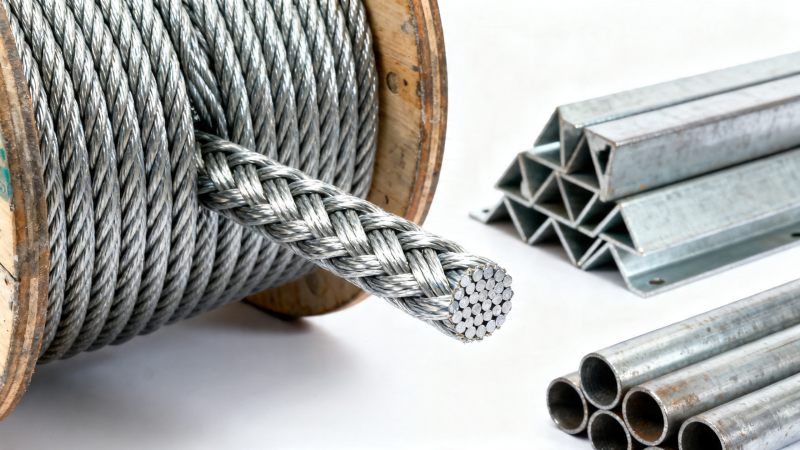
For most buyers, a steel wire rope price list is not just a unit-cost reference. It is a decision tool used to balance load requirements, corrosion resistance, delivery timing, and total procurement risk. In 2026, the market is expected to remain sensitive to raw material cost swings, zinc coating demand, freight changes, and project-driven purchasing cycles across construction, lifting, marine, mining, and infrastructure sectors.
A practical price review usually starts with 4 core factors: rope diameter, construction type, steel grade, and surface treatment. Buyers comparing 6mm to 32mm specifications will often see wider price gaps than expected because thicker ropes use more steel and may require different stranding control. Galvanized steel wire rope generally carries a premium over bright finish due to coating cost and added outdoor service value.
The second layer of pricing comes from order conditions. Small-quantity purchases, urgent lead times of 7–15 days, special packing, and third-party inspection can all affect the final quotation. For larger volumes shipped in 20-foot or 40-foot containers, buyers may gain better cost efficiency, but only if specifications are standardized and documentation is prepared early.
For global importers, 2026 purchasing decisions will also depend on supplier stability. A lower initial quote may not reduce total cost if the rope arrives with inconsistent lay, uncertain tensile performance, or incomplete compliance records. This is why many technical teams combine price list review with supplier manufacturing capability, quality control process, and export experience.
Main cost drivers buyers should verify before comparing quotations
- Material basis: carbon steel composition, wire quality, and whether the rope is intended for general industrial use or higher-duty lifting applications.
- Construction details: common formats such as 6x19, 6x36, or other structures directly affect flexibility, abrasion resistance, and price level.
- Surface and protection: bright, galvanized, lubricated, or customized packaging for sea transport can shift the cost range.
- Commercial terms: EXW, FOB, CFR, and CIF pricing may differ significantly once inland transport, customs, and ocean freight are included.
The table below summarizes the most common variables that influence a steel wire rope price list in export trade. It is useful for procurement teams that need a faster first-round evaluation before requesting a formal quote.
The key takeaway is simple: a useful steel wire rope price list should never be read in isolation. The real benchmark is cost versus service life, application fit, and supply reliability over the full project cycle.
How should buyers compare specifications, applications, and price levels?
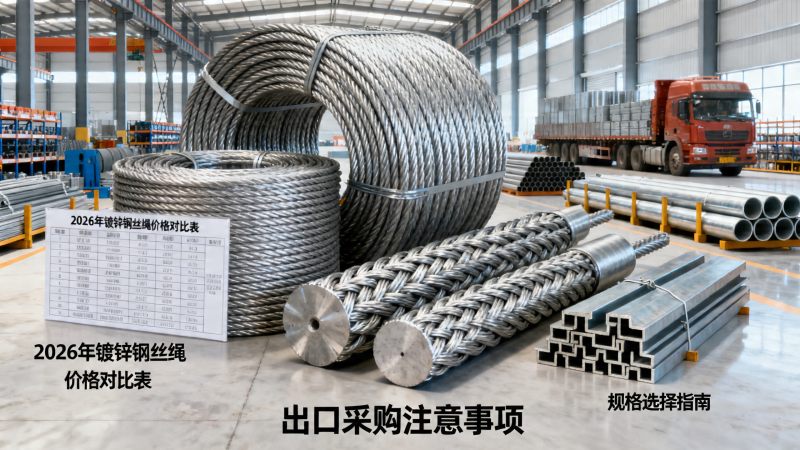
Different applications demand different rope characteristics, so the lowest price is rarely the best option. A lifting contractor may prioritize fatigue resistance and consistent wire quality. A marine user may focus on galvanized protection. A distributor may need a broader size mix and faster replenishment. In each case, the steel wire rope price list must be matched with actual operating conditions, not just nominal diameter.
A practical comparison begins by identifying 3 usage categories: static load support, repeated bending over sheaves, and outdoor exposure. Static applications may accept more basic constructions, while repeated-motion systems often require better flexibility. Outdoor or coastal installation usually pushes buyers toward galvanized steel wire rope because maintenance intervals can be longer and visible rust risk can be reduced.
Technical assessment teams should also confirm tensile-related requirements, lay direction, core type, and lubrication condition. Even when two ropes share the same nominal diameter, their handling behavior and service performance may differ. This matters for safety managers, operators, and quality personnel who need predictable installation and inspection results over months of service.
For projects linked to broader steel procurement, buyers often compare wire rope sourcing with related structural steel purchases. Combining categories from one experienced exporter can improve documentation consistency, packing coordination, and shipment planning, especially when schedules run within 2–4 week approval windows or phased deliveries.
Specification comparison for common procurement decisions
The table below helps buyers compare specification logic instead of comparing price alone. It can support first-round evaluation by procurement staff, project managers, and distributors handling multiple customer inquiries at the same time.
This comparison shows why technical fit and commercial fit must be reviewed together. A more suitable rope may lower replacement frequency, reduce downtime, and simplify quality approval even if the unit price is not the lowest on the list.
A related product perspective for infrastructure and steel package buying
In many infrastructure and transport projects, wire rope is not the only steel item under review. Buyers may also need profiles, handrail components, rails, beams, or galvanized sections in the same purchasing cycle. For teams managing broader package sourcing, integrating related products can reduce supplier coordination effort and improve document consistency.
One relevant insert for such projects is Rail, which is used in Railway Rail, Bridge Railings / Handrails, and Deck Railings / Handrails. Available materials include carbon steel and medium manganese steel, with common models such as U74, U71Mn, PD2, PD3, BNbRE, Q235, 55Q, 50Q, U71, and 45Mn.
Its typical dimensions include length ranges from 12m–30m, thickness from 3mm–24mm, rail height from 134–170mm, head width from 68–73mm, and bottom width from 114–150mm. Common specifications include 4kg/m, 8kg/m, 12kg/m, 15kg/m, 18kg/m, 22kg/m, 24kg/m, 30kg/m, 38kg/m, 43kg/m, 50kg/m, QU70, QU80, QU100, and QU120, with surface options such as Oil, Black, Galvanized, and Painted.
For procurement teams, this matters because integrated sourcing can align quality documents, export packing, and delivery planning. Products of this type are commonly supplied under ISO9001-2008 and ISO14001:2004 management systems, with practical advantages such as reasonable price, abundant stock, prompt delivery, export experience, and 24-hour service response.
What should procurement, quality, and finance teams check before placing an order?
A steel wire rope price list becomes far more useful when procurement, quality, engineering, and finance review it through the same checklist. This prevents a common problem in B2B buying: a low quote is approved first, but specification mismatch, unclear packaging, or incomplete compliance records create delays later. A disciplined review process can reduce these avoidable costs.
For most international orders, buyers should confirm at least 5 checkpoints before payment approval: exact diameter and construction, finish requirement, coil or reel packing method, document package, and shipment terms. If the application involves lifting, high wear, or outdoor service, request a more detailed technical confirmation instead of assuming standard stock is suitable.
Lead time review is also important. Standard sizes may be available faster, while nonstandard combinations may need 15–30 days or longer depending on production load and export schedule. For project managers, the real risk is not only late delivery. It is receiving material on time but without the agreed packing labels, batch traceability, or test references needed for site release.
From a financial perspective, total landed cost should include freight mode, customs code preparation, inspection charges if any, and reserve planning for replacement cycles. The cheapest quotation can become expensive if the rope requires earlier change-out or causes more downtime in operation.
A 6-point procurement checklist for 2026 orders
- Confirm application type and load condition, including whether the rope will face repeated bending, impact loading, or outdoor exposure.
- Verify full specification details, not just diameter, and align them with engineering approval documents.
- Check surface finish and corrosion protection expectations, especially for marine, port, bridge, or humid construction sites.
- Review quality documents, batch traceability, and whether third-party inspection is required before shipment.
- Clarify lead time, packing type, and shipping marks to avoid warehouse and customs confusion.
- Compare landed cost instead of unit price only, including freight, duties, and possible replacement frequency.
Why supplier capability changes the real price equation
In steel procurement, the quotation only tells part of the story. Manufacturing consistency, export coordination, and technical communication often determine whether a buyer saves money or absorbs hidden costs. This is where an experienced Chinese structural steel manufacturer and exporter can add value beyond the item itself.
Hongteng Fengda supports global construction, industrial, and manufacturing buyers with stable production capacity, customized steel solutions, and quality control aligned with major standards such as ASTM, EN, JIS, and GB where relevant to the product category. For multi-item sourcing, this experience helps reduce communication gaps between commercial teams and engineering teams.
Because many buyers source angle steel, channel steel, steel beams, cold formed steel profiles, and custom structural components together with accessory steel products, supplier coordination becomes a real cost factor. A partner that can manage consistent documentation, dependable lead times, and export-ready packing can support smoother project execution across North America, Europe, the Middle East, and Southeast Asia.
Common questions about steel wire rope pricing, risk, and selection
Buyers often search for a steel wire rope price list when they are still narrowing options, not when they are ready to order. That means the most useful answers should connect pricing with use conditions, replacement risk, and sourcing process. The following questions reflect what procurement teams, engineers, distributors, and end users commonly ask before finalizing a purchase plan.
How can I compare two quotations that use similar sizes but different descriptions?
Start with the full technical line, not the price line. Confirm diameter, construction, finish, lubrication, packing, and applicable documents. Two quotations that both mention galvanized steel wire rope may still differ in rope structure, zinc protection level, or packing method. Ask for a side-by-side breakdown and compare at least 5 fields before judging cost competitiveness.
Is galvanized steel wire rope always the better choice?
Not always. It is usually better for outdoor, humid, or corrosive environments, but not every application needs the added coating cost. For indoor use with controlled conditions, a bright finish may be commercially reasonable. The right choice depends on service environment, expected maintenance interval, and replacement consequences over 6–24 months of operation.
What lead time should international buyers expect in 2026?
Lead times vary by size, finish, quantity, and stock condition. Standard items may move faster, while customized packing or less common specifications may extend planning. As a practical range, buyers often prepare for 7–15 days for ready or near-ready goods and 15–30 days for more organized production schedules, excluding ocean transit.
What are the most common mistakes when using a steel wire rope price list?
The top mistakes are comparing unit prices without matching specifications, ignoring corrosion conditions, underestimating document requirements, and treating urgent shipment as a minor issue. Another common error is failing to coordinate wire rope procurement with related steel items, which can increase freight fragmentation and approval delays.
Why work with a Chinese structural steel exporter for broader project sourcing?
A price list helps at the start of the buying process, but project success depends on more than one item and more than one quote. Buyers in construction, manufacturing, distribution, and infrastructure often need a partner that understands both standardized steel products and customized supply coordination. This is especially important when multiple departments must approve cost, quality, compliance, and delivery timing together.
Hongteng Fengda focuses on structural steel manufacturing and export from China, supplying angle steel, channel steel, steel beams, cold formed steel profiles, and customized structural steel components for global projects. With modern manufacturing facilities and strict quality control, the company supports buyers who need reliable production capacity, consistent product quality, and practical lead-time control instead of uncertain spot-market sourcing.
For buyers reviewing a steel wire rope price list in 2026, this broader capability matters. It means you can discuss not only quotation levels, but also parameter confirmation, related steel package planning, OEM needs, export packing, standard alignment, and phased delivery schedules. That is often the difference between a simple transaction and a workable procurement solution.
If you are comparing suppliers now, the next useful step is a technical-commercial review built around your exact project. You can ask for specification confirmation, product selection advice, estimated lead time, packaging options, standard or custom steel solutions, certification-related document support, sample arrangements where appropriate, and quotation communication based on your target market and order volume.
What you can discuss before requesting a final offer
- Wire rope specification matching for lifting, outdoor, industrial, or distributor stock applications.
- Related steel products such as galvanized angle steel, custom profiles, beams, channels, or rail-based project components.
- Lead time planning by batch size, including urgent demand, standard production, and mixed-product shipment arrangements.
- Documentation, inspection expectations, export packing, and destination-market compliance references.
If your team needs a 2026 steel wire rope price list together with a broader steel sourcing plan, it is worth starting with the exact parameters, usage scenario, delivery window, and document requirements. That allows a supplier to provide a more accurate, decision-ready quotation instead of a generic price sheet that leaves key project risks unresolved.
Please give us a message


Please enter what you want to find