Steel Sheet Price: How Thickness Changes Cost in Real Project Scenarios
Understanding steel sheet price is essential for accurate procurement planning, especially when thickness directly affects material weight, processing costs, and project budgets.
For business evaluators comparing suppliers, specifications, and landed costs, even small thickness differences can influence purchasing decisions and long-term cost control.
This guide explains how sheet thickness impacts pricing and what to consider when sourcing structural steel from reliable manufacturers.
Why Thickness Is the First Scenario Filter for Steel Sheet Price
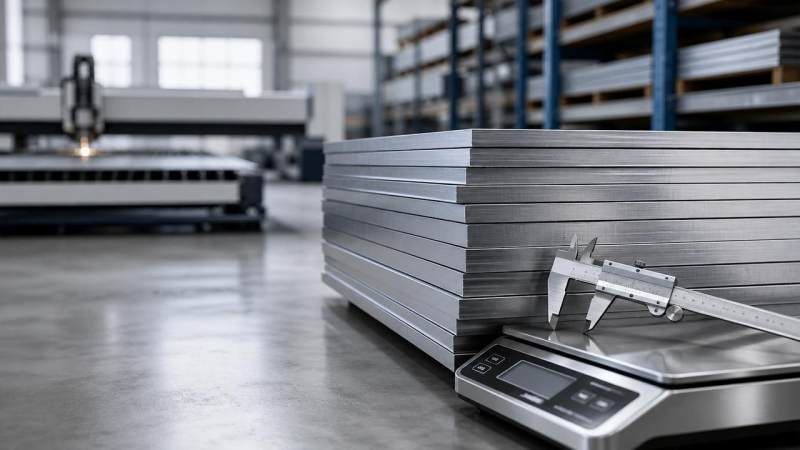
Thickness changes steel sheet price because steel is commonly priced by weight, not only by surface area.
A thicker sheet contains more metal per square meter, raising the base material cost immediately.
However, steel sheet price is not only a simple weight calculation.
Processing difficulty, cutting loss, coating demand, tolerance control, and logistics also change with thickness.
Thin sheets may need careful handling to prevent deformation during fabrication and transport.
Thick sheets may require stronger equipment, longer cutting time, and higher freight capacity.
This is why the same grade and finish can show different steel sheet price behavior across thickness ranges.
Construction Scenarios: When Thickness Controls Safety and Budget
In construction, thickness is often linked to load capacity, stiffness, and installation stability.
Floor plates, gusset plates, base plates, and enclosure parts may all require different thickness logic.
Choosing a thinner sheet only to lower steel sheet price can create later costs in reinforcement or replacement.
Choosing an overly thick sheet can increase material cost, welding time, lifting requirements, and installation labor.
A practical decision starts with actual load conditions, span, connection design, and corrosion exposure.
For structural applications, steel sheet price should be reviewed together with engineering drawings and accepted standards.
Hongteng Fengda supports global projects with structural steel products under ASTM, EN, JIS, and GB standards.
This helps reduce specification mismatch when thickness and performance requirements are evaluated together.
Key construction judgment points
- Check whether the sheet is load-bearing or only protective.
- Confirm required thickness tolerance before comparing steel sheet price.
- Calculate added costs from cutting, drilling, welding, and coating.
- Review shipping weight when ordering large plate quantities.
Manufacturing Scenarios: Thickness Affects Forming, Yield, and Scrap
In manufacturing, steel sheet price must be judged against forming performance and production yield.
Thin sheets may reduce unit weight, but they can wrinkle, spring back, or deform during processing.
Thicker sheets can improve rigidity, yet they may require stronger presses and slower production speeds.
A lower steel sheet price per ton does not always mean a lower finished part cost.
If scrap rate increases, total cost may rise despite an attractive quotation.
This is especially important for automotive parts, equipment panels, machinery covers, and industrial components.
Buyers should compare steel sheet price with processing stability, dimensional accuracy, and surface finish needs.
For repeat production, thickness consistency may create more value than a short-term discount.
Decoration and Light Fabrication: When Appearance Changes the Cost Logic
For decoration, outdoor engineering, kitchenware, and visible structures, surface quality can affect steel sheet price strongly.
A thin decorative sheet may need bright polishing, No. 4 finish, BA finish, or protective film.
These treatments add value but also increase processing cost and packaging requirements.
In visible applications, scratches, uneven flatness, or color variation can lead to rejection costs.
Therefore, steel sheet price should include surface expectations, not just thickness and grade.
For urban decoration and outdoor installations, corrosion resistance and maintenance cycles also matter.
A slightly higher steel sheet price may be justified if it reduces repainting, repair, or early replacement.
Industrial Equipment Scenarios: Thickness Must Match Wear and Pressure
Heavy earthmoving equipment, cement plants, paper mills, shipbuilding, and defense applications require stronger cost evaluation.
In these scenarios, thickness influences wear life, vibration resistance, pressure behavior, and repair frequency.
A thin sheet may fail early under abrasion, impact, or repeated load cycles.
A thick sheet may perform better but increase equipment weight and transportation complexity.
The right steel sheet price comparison should include lifecycle cost, not only purchase cost.
Maintenance downtime, spare part availability, and weld repair difficulty should be considered before ordering.
Hongteng Fengda provides customized structural steel components for industrial and manufacturing projects worldwide.
Stable production capacity supports repeat orders where thickness and quality consistency are critical.
How Related Steel Products Influence Procurement Decisions
Sheet procurement often happens with bars, beams, channels, angles, and custom profiles in one project package.
When buyers compare steel sheet price, related components can influence the total sourcing strategy.
For example, the 316L Stainless Square steel rod can be reviewed alongside sheet requirements for mixed fabrication projects.
Its listed information includes 201 stainless steel material, length from 1 to 6 meters, and multiple surface options.
Available appearances include black, bright polished, rough turning, mattness treatment, No. 4, and BA finishes.
Technical references include tensile strength ≥520, yield strength ≥275, and elongation around 55–60.
These properties help evaluate formability, pressure resistance, and suitability for industrial assemblies.
Combining sheet, rod, and structural profiles from one source may reduce communication errors and shipment fragmentation.
Thickness-Based Steel Sheet Price Differences by Scenario
This comparison shows why steel sheet price should be measured by scenario, not only by tonnage.
Practical Formula for Comparing Steel Sheet Price
A basic comparison starts with thickness, density, area, and unit price per ton.
For carbon steel, density is commonly estimated near 7.85 tons per cubic meter.
Stainless grades may vary slightly, so project specifications should define the correct reference value.
The simple logic is: thicker sheet equals more weight per square meter.
More weight usually means a higher steel sheet price for the same area.
Yet the final quotation should also include slitting, cutting, surface treatment, packing, inspection, and freight.
A complete cost review avoids surprises after the purchase order is released.
Cost items to request in a quotation
- Material grade, thickness, tolerance, and standard.
- Sheet size, order quantity, and theoretical weight.
- Cutting, drilling, bending, or special fabrication cost.
- Surface treatment, packaging, and inspection requirements.
- Delivery term, lead time, freight mode, and destination charges.
Common Mistakes When Judging Steel Sheet Price
One common mistake is comparing steel sheet price without checking thickness tolerance.
A small tolerance difference can change actual delivered weight and performance consistency.
Another mistake is ignoring minimum order quantity and production scheduling.
Non-standard thickness may require special rolling, longer lead time, or higher setup cost.
A third mistake is focusing only on ex-works steel sheet price.
Ocean freight, inland transport, duties, port charges, and packaging can change landed cost significantly.
It is also risky to ignore quality documents, mill certificates, and inspection procedures.
Reliable documentation helps reduce claims, delays, and disputes after delivery.
Scenario Adaptation Advice for Better Cost Control
For load-bearing projects, define performance first, then compare steel sheet price within approved specifications.
For forming projects, request samples or trial lots before confirming bulk production.
For visible applications, confirm surface finish, protection method, and acceptance criteria in writing.
For heavy industrial use, evaluate replacement cycles, weldability, and operating environment.
For international sourcing, compare steel sheet price using the same trade terms and delivery scope.
Hongteng Fengda helps customers control sourcing risks through stable production, quality control, and dependable lead times.
Its product range includes angle steel, channel steel, steel beams, cold formed profiles, and customized structural components.
Final Purchasing Checklist Before Confirming an Order
- Confirm whether thickness is nominal or actual measured thickness.
- Compare steel sheet price by delivered weight and usable area.
- Check the required standard, such as ASTM, EN, JIS, or GB.
- Review surface, edge condition, flatness, and packing method.
- Calculate landed cost, not only factory quotation.
- Ask for realistic lead time based on thickness and quantity.
Thickness is one of the strongest drivers behind steel sheet price, but it should never be judged alone.
The best decision connects scenario, performance, processing, logistics, and long-term operating cost.
To move forward, prepare drawings, thickness ranges, standards, quantity, and delivery destination for supplier review.
A clear specification allows accurate steel sheet price comparison and reduces risk throughout procurement and project execution.
Please give us a message


Please enter what you want to find