Steel rebar cost can shift quickly with raw material prices, specifications, freight, and project timelines—directly affecting budget control for construction managers.
For project leaders responsible for procurement accuracy and delivery schedules, understanding what drives rebar pricing is essential to reducing sourcing risk and avoiding costly delays.
This guide explains the key factors behind steel rebar cost changes and how reliable structural steel sourcing supports efficient, compliant, and financially predictable projects.
What Project Leaders Really Need to Know About Rebar Cost
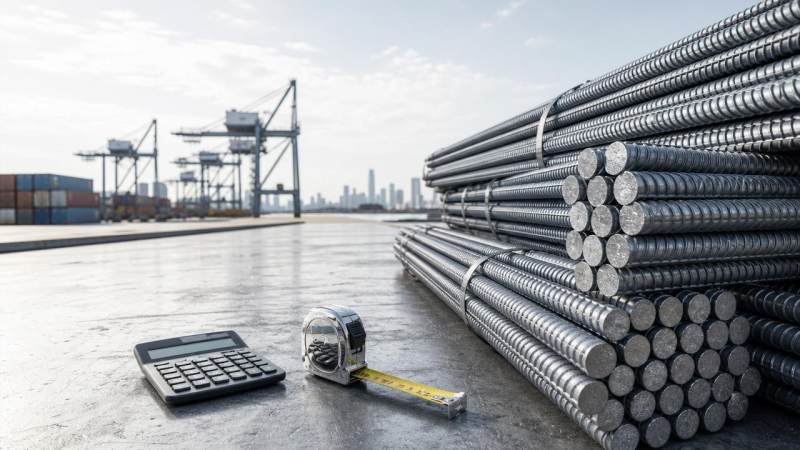
When project managers search for steel rebar cost, they are usually not looking for a simple market number.
They need to know why quotations differ, whether a supplier is reliable, and how price movements may affect the total project budget.
The most important point is that rebar cost is not only a material price issue. It is a procurement risk issue.
A low unit price can become expensive if it causes schedule delays, specification mismatches, compliance problems, or unexpected freight charges.
For construction managers, the real target is not the cheapest rebar. It is predictable cost, stable delivery, and approved quality.
That is why a serious budget review should compare the full supply package, not only the price per ton.
Why Steel Rebar Cost Changes So Often
Steel rebar is strongly connected to raw material markets, especially iron ore, scrap steel, billets, and energy costs.
When these inputs rise, mills and manufacturers usually adjust quotations quickly to protect production margins and supply stability.
Currency exchange rates can also affect international buyers. A small movement may change landed cost across large-volume orders.
For imported rebar, freight rates, port congestion, customs procedures, and inland transportation can create additional budget pressure.
Seasonal demand is another factor. Construction peaks often increase order volume, while supply tightness may shorten quotation validity.
Project leaders should therefore treat every rebar quote as time-sensitive, especially during active bidding or procurement approval stages.
Specifications That Directly Affect Rebar Pricing
Rebar cost changes significantly according to grade, diameter, length, surface requirements, tolerance, and applicable standard.
Common standards such as ASTM, EN, JIS, and GB define mechanical performance, chemical composition, testing requirements, and acceptance criteria.
Higher strength grades may reduce steel consumption in design, but they may carry higher unit prices and stricter production requirements.
Diameter also matters. Popular sizes are often more cost-efficient because mills produce them regularly and inventory moves faster.
Customized cutting, bending, bundling, tagging, or project-specific documentation can increase service cost but reduce site handling risk.
For project managers, the key is to align procurement specifications with engineering requirements before requesting final quotations.
How Quantity, Timing, and Order Planning Influence Cost
Volume usually affects pricing because larger orders help manufacturers plan production more efficiently and reduce handling cost per ton.
However, very large orders may still face phased delivery challenges if the project schedule requires strict arrival windows.
Short lead times often increase procurement pressure. Suppliers may need to prioritize production, arrange faster logistics, or source urgent materials.
Early planning gives project teams more flexibility to compare suppliers, verify documents, and secure better shipping arrangements.
It also reduces the chance of accepting a risky quote simply because the site urgently needs material.
In budget management, timing is not administrative detail. It directly affects negotiation power, logistics options, and delivery reliability.
Freight, Packaging, and Landed Cost Are Often Underestimated
Many project budgets focus on ex-factory or FOB price, but actual project cost depends on landed cost.
Landed cost includes ocean freight, insurance, port charges, customs duties, local transport, unloading, and sometimes storage or demurrage.
Packaging quality matters because damaged bundles, rust exposure, or unclear tags may delay inspection and site acceptance.
For international orders, container availability, vessel schedules, and destination port efficiency can affect both cost and project timing.
A professional supplier should help clarify shipping terms, packing methods, bundle weights, and documentation before order confirmation.
When comparing quotes, project leaders should always ask whether the price includes freight assumptions and how long those assumptions remain valid.
Quality Compliance Can Protect the Budget More Than a Lower Price
Non-compliant rebar can create serious cost consequences, including failed inspection, redesign work, replacement purchases, and construction delays.
For public infrastructure, industrial plants, high-rise buildings, and export projects, documentation is often as important as the material itself.
Mill test certificates, chemical analysis, mechanical testing, heat numbers, and standard compliance should be reviewed before shipment.
A reliable manufacturer should maintain strict quality control from raw material selection to rolling, inspection, bundling, and loading.
Project teams should be cautious when a quote is far below the market without a clear explanation.
Unusually low prices may reflect downgraded material, inconsistent tolerances, limited documentation, or weak delivery capability.
How Supplier Capability Changes the Real Cost of Rebar
The supplier’s production capacity and export experience can strongly influence the final value of a rebar purchase.
A capable manufacturer can support stable lead times, consistent quality, and clearer communication during production and shipment.
For overseas buyers, export documentation accuracy reduces customs risk and prevents unnecessary port delays or additional handling fees.
Manufacturers with broader structural steel capabilities can also help consolidate sourcing for related project materials.
Hongteng Fengda, as a structural steel manufacturer and exporter from China, supports global projects with standard and customized steel solutions.
Its product range includes angle steel, channel steel, steel beams, cold formed profiles, and customized structural steel components.
For project managers, working with a supplier familiar with ASTM, EN, JIS, and GB standards reduces uncertainty during technical approval.
When Related Steel Products Affect Overall Project Procurement
Rebar is often only one part of a wider construction or industrial procurement package.
Some projects also require mesh, profiles, beams, channels, brackets, or fabricated steel components for different functional areas.
In filtration, architectural, chemical, mining, and residential applications, stainless mesh products may be specified alongside structural steel orders.
For example, Stainless Steel Welded Mesh supports applications requiring corrosion resistance, strength, durability, and performance in harsh environments.
Available stainless steel wire materials include SS 201, 304, 304L, 316, 316L, and 430 for different operating conditions.
Typical options include plain weave and twill weave, with mesh ranges from 2 to 635 mesh and roll width up to 240 inches.
For project buyers, consolidating qualified steel products with one reliable partner can improve coordination and reduce procurement fragmentation.
How to Compare Rebar Quotations Correctly
A good comparison should begin with identical specifications. Grade, diameter, length, standard, tolerance, quantity, and delivery terms must match.
If specifications differ, the lowest price may not represent the same material or the same project risk.
Project managers should request a breakdown covering material price, processing fees, packaging, freight, taxes, and documentation requirements.
They should also confirm quotation validity, production lead time, shipment schedule, payment terms, and inspection arrangements.
Supplier history matters. Previous export performance, customer regions, and quality control processes help indicate reliability.
The best quotation is usually the one that makes assumptions transparent and reduces hidden cost exposure.
Budget Control Strategies for Construction Managers
Budget control starts before the purchase order. Early technical alignment prevents costly changes after production has started.
Project teams should forecast required tonnage by phase and separate urgent demand from planned demand.
This allows procurement teams to secure critical quantities first while monitoring market movements for later phases.
Where possible, managers should lock pricing for confirmed quantities and keep flexible options for uncertain future requirements.
It is also useful to maintain approved alternative suppliers, especially when projects operate under strict deadlines.
However, alternatives should be prequalified for quality and documentation, not selected only during an emergency.
Common Mistakes That Increase Rebar Procurement Cost
One common mistake is requesting prices before confirming drawings, standards, and required documentation.
This often leads to repeated revisions, delayed approvals, and confusion between the engineering, purchasing, and supplier teams.
Another mistake is ignoring freight volatility. A material price may look attractive while shipping cost makes the total less competitive.
Some buyers also underestimate inspection requirements. If third-party inspection is needed, it should be planned before shipment.
Late changes in diameter, length, or delivery batch can disrupt production planning and increase handling cost.
Finally, choosing a supplier without export experience can create documentation errors that become expensive at the destination port.
What a Reliable Manufacturer Should Provide
A reliable structural steel manufacturer should provide clear quotations, technical confirmation, production updates, and complete export documentation.
It should understand the standards required by the project and confirm whether requested grades and dimensions are available.
Quality control should be visible, not assumed. Buyers should be able to request test reports and inspection support.
Stable capacity is also important because large construction projects often require phased delivery over several months.
Professional communication helps project teams respond quickly when schedules, quantities, or shipping plans change.
For global buyers, dependable lead times and consistent documentation can protect both construction progress and financial planning.
Final Takeaway: Rebar Cost Is a Project Management Variable
Steel rebar cost is shaped by raw materials, specifications, quantity, freight, timing, compliance, and supplier capability.
For project managers, the best procurement decision is not based on unit price alone.
It should consider landed cost, delivery reliability, documentation quality, inspection readiness, and the supplier’s ability to support project changes.
Working with an experienced structural steel manufacturer helps reduce sourcing uncertainty and keep construction budgets more predictable.
When rebar procurement is planned early and evaluated professionally, teams can avoid hidden costs and protect critical project schedules.
In practice, effective rebar cost control comes from combining market awareness, technical accuracy, and reliable supplier partnership.
Please give us a message


Please enter what you want to find