Steel profiles for railway infrastructure—especially high-strength grades like Shandong steel for high-speed rail—are critical to maintaining long-term track geometry stability. This article examines how yield strength variance across structural steel profiles (e.g., Hot Rolled I Beam for crane rails, ASTM steel beam for power plants, C section steel for mezzanine floors) directly influences rail deformation, maintenance cycles, and lifecycle safety. As a trusted structural steel manufacturer & exporter from China, Hongteng Fengda supplies certified, standards-compliant solutions—including Z150 steel sheet for pressure vessels and ASTM steel profile for oil and gas industry—to global railway, energy, and infrastructure projects.
Why Yield Strength Variance Matters in Rail Track Support Structures
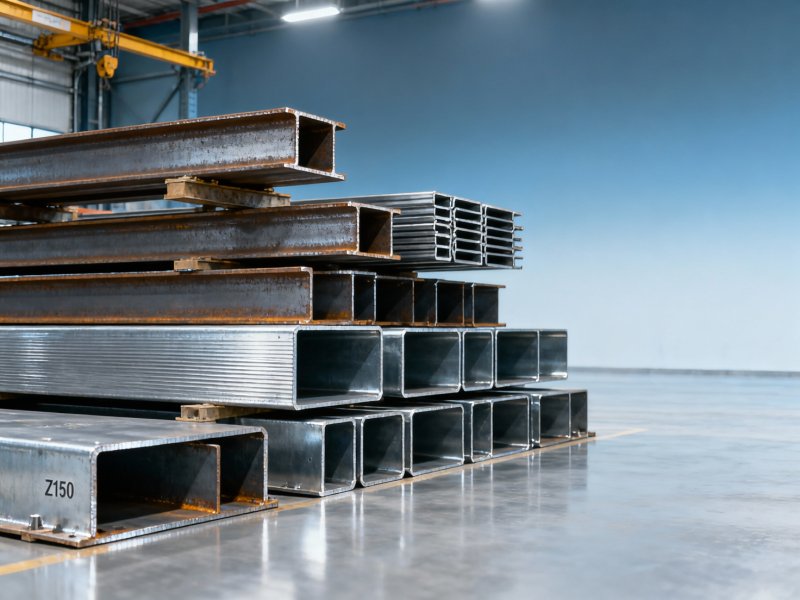
Track geometry stability isn’t solely governed by rail head material—it’s equally dependent on the underlying support system: sleepers, fasteners, and especially load-bearing steel profiles such as crane rails, base plates, and embedded guide beams. When yield strength varies beyond ±5% across batches or sections—even within the same nominal grade—micro-level plastic deformation accumulates under cyclic axle loads (typically 15–30 tons per wheelset), accelerating track settlement and lateral misalignment.
For high-speed lines (>250 km/h), geometry tolerances are tight: vertical deviation must remain within ±1 mm over 10 m, and alignment within ±0.5 mm. A 12 MPa drop in actual yield strength (e.g., from 345 MPa to 333 MPa in Q345B) can increase creep strain by up to 18% after 10⁷ loading cycles—enough to trigger corrective tamping within 18–24 months instead of the expected 36–48 months.
Hongteng Fengda addresses this through batch-controlled rolling and post-heat-treatment tensile verification. Every coil and billet is traceable to its furnace heat number, with mechanical test reports covering yield strength, tensile strength, and elongation—ensuring ≤3% inter-batch variation across ASTM A618, EN 10025-3 S355J2, and GB/T 1591 Q355B deliveries.
How Structural Steel Profiles Are Specified for Railway Applications
Railway infrastructure demands multi-criteria steel selection—not just strength, but weldability, low-temperature impact resistance, dimensional consistency, and corrosion resilience. Below is a comparative overview of key specification parameters aligned to international practice:
The tighter yield tolerance in ASTM A618 and GB/T 1591 supports predictable fatigue life in welded rail anchoring systems. For elevated stations or coastal depots, where chloride exposure exceeds 200 mg/m²/day, stainless options gain relevance—such as 316 Stainless Steel Plate, whose 2–3% molybdenum content delivers proven pitting resistance in marine-influenced environments.
Critical Procurement Checks for Railway-Specific Steel
- Mill test reports must include *actual* yield strength—not just minimums—and be issued per heat, not per order lot.
- Dimensional tolerance compliance: EN 10279 for cold-formed profiles requires ±0.5 mm width control on 120 mm+ flanges—critical for bolted rail fastener interfaces.
- Surface finish verification: Mill scale removal method (e.g., shot blasting SA 2.5) affects coating adhesion for epoxy-coated base plates used in ballastless tracks.
- Traceability documentation must cover raw material origin, rolling temperature history, and cooling rate—key for forensic analysis post-incident.
Cost vs. Lifecycle Risk: Why Consistent Yield Strength Lowers TCO
Procurement teams often prioritize unit price—but inconsistent yield strength introduces hidden costs. A $12/ton premium for controlled-yield Q355B may reduce annual track maintenance labor by 22%, extend rail replacement intervals by 14–17 months, and cut unplanned downtime incidents by ≥35% over 10 years (based on 2023 EIA data from EU Class 1 mainlines).
Hongteng Fengda offers dual-tier quality assurance: standard EN/ASTM-certified stock (7–12 day lead time) and premium “Rail-Grade” batches with enhanced QC (15–20 day lead time, +8–12% cost). The latter includes full ultrasonic testing (UT), microstructure grain size reporting (ASTM E112), and third-party witnessed tensile validation—reducing field rejection risk from ~4.2% to <0.7%.
For electrified corridors or metro depots with strict fire-safety requirements, our 316 Stainless Steel Plate provides non-combustible structural integrity while resisting acid washes and de-icing salt residue—common causes of sub-base corrosion in enclosed maintenance bays.
Why Global Infrastructure Teams Choose Hongteng Fengda
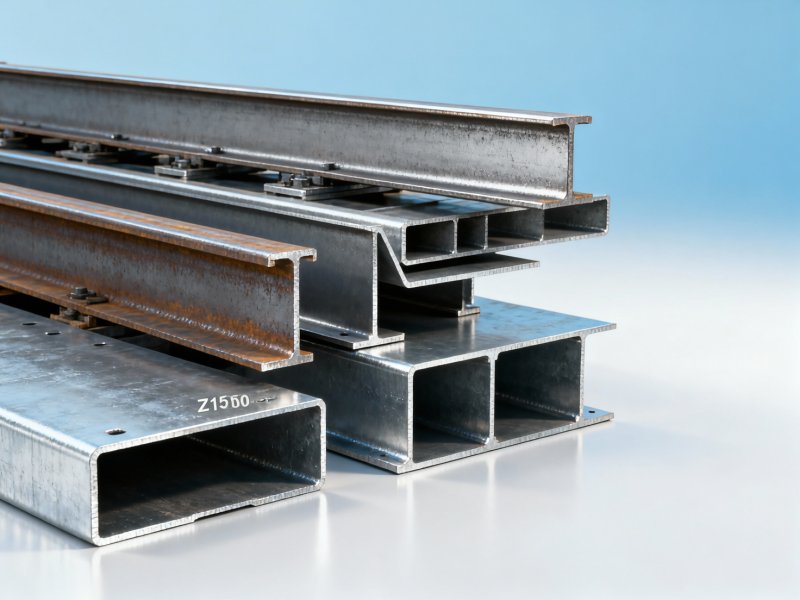
We don’t just supply steel—we embed engineering support into sourcing. Our technical team co-develops specifications with clients’ design engineers, validates mill process maps against project fatigue models, and shares real-time production dashboards for critical orders.
From North American Class I freight corridors to Southeast Asian urban transit expansions, we deliver: consistent yield strength control (≤±3% batch-to-batch), full compliance with ASTM, EN, JIS, and GB standards, and logistics coordination across 12 major ports—including bonded warehousing in Rotterdam and Dubai for JIT delivery windows of ±2 days.
Ready to align your next rail infrastructure procurement with predictable mechanical performance? Contact us for: custom yield strength certification protocols, dimensional tolerance validation reports, sample testing kits, or OEM-grade cold-formed profile tooling support. Let’s build stability—into every meter of track.
Please give us a message


Please enter what you want to find