In HVAC and fluid transport projects, choosing the right steel coil pipe can directly affect system efficiency, durability, and installation costs. For project managers and engineering leaders, understanding its practical applications helps improve material selection, reduce sourcing risks, and ensure reliable performance across commercial, industrial, and infrastructure systems.
Why steel coil pipe matters in HVAC and fluid systems
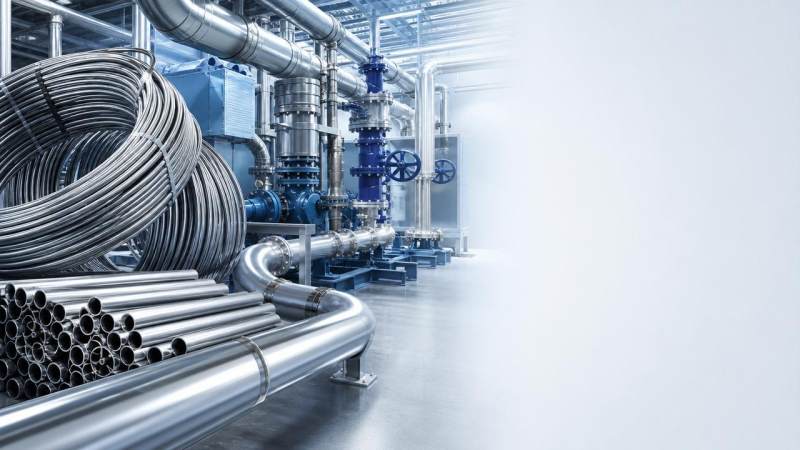
For most project managers, the real question is not whether steel coil pipe can be used, but where it delivers the best balance of cost, durability, and installation efficiency.
In HVAC and fluid systems, steel coil pipe is valued for strength, pressure resistance, fabrication flexibility, and suitability for long pipe runs, bends, and compact routing layouts.
Compared with some alternative materials, it performs better in demanding mechanical environments, especially where systems face vibration, temperature variation, outdoor exposure, or industrial operating conditions.
That makes it especially relevant in commercial buildings, factories, energy facilities, water circulation lines, and infrastructure projects where long-term reliability matters more than the lowest initial material price.
From a project delivery perspective, the right pipe specification can reduce maintenance frequency, support safer system operation, and help avoid expensive rework caused by early corrosion or poor fit-up.
What searchers usually want to know before selecting steel coil pipe
When engineering leaders search for steel coil pipe applications, they are usually trying to make a practical decision rather than looking for a basic material definition.
They want to know which HVAC and fluid systems are suitable, what environmental limits apply, how the pipe affects total installed cost, and what sourcing risks must be controlled.
They also care about compatibility with project standards, fabrication methods, coatings, transportation conditions, and whether the selected material will support stable performance over the asset lifecycle.
In other words, the decision is rarely about pipe alone. It is about system performance, schedule confidence, maintenance exposure, and procurement reliability at scale.
Common applications of steel coil pipe in HVAC systems
In HVAC projects, steel coil pipe is commonly used in chilled water lines, hot water circulation systems, condenser water loops, ventilation support applications, and mechanical service routing.
Its mechanical strength makes it suitable for medium to large commercial systems, especially in hospitals, malls, office towers, transport hubs, and industrial buildings with complex layouts.
For chilled and hot water distribution, properly specified steel coil pipe offers dependable pressure handling and can be fabricated to suit long-distance routing across plant rooms and riser networks.
It is also useful in central utility plants, where equipment rooms demand durable piping that can tolerate structural movement, operational vibration, and repeated thermal cycling over time.
Where HVAC systems include external routing or semi-exposed plant areas, corrosion protection becomes a major decision factor, especially in humid, coastal, or polluted environments.
Project teams often prefer steel solutions when they need higher mechanical security, stronger support for heavy-duty system loads, and better resistance to accidental impact during installation or operation.
How steel coil pipe is used in broader fluid transport systems
Beyond HVAC, steel coil pipe serves in process water, fire protection, compressed utility lines, drainage support systems, oil transfer, and selected chemical or industrial fluid networks.
In industrial facilities, the material is often selected where operational pressure, structural rigidity, and long-term service stability are more important than ultra-lightweight installation.
For municipal or infrastructure-related applications, it can support water movement, equipment connections, and utility circulation systems that demand predictable mechanical performance over many years.
Its usefulness increases when projects require custom bending, section forming, or coordinated fabrication for plant-specific routing that would be harder to achieve with rigid straight-length supply only.
However, application suitability always depends on the transported medium, working temperature, coating system, connection design, and relevant local code requirements.
What project managers should evaluate before approving the material
The first priority is operating condition. Confirm pressure range, flow characteristics, temperature cycle, indoor or outdoor exposure, and the likelihood of corrosive contact from water chemistry or atmosphere.
The second priority is lifecycle economics. A lower purchase price does not always mean lower project cost if the pipe requires more maintenance, replacement, or corrosion mitigation later.
The third priority is fabrication and installation efficiency. Coil-based supply can support continuous processing, customized lengths, and easier adaptation to space-constrained mechanical layouts in some projects.
The fourth priority is standards compliance. Global projects often require alignment with ASTM, EN, JIS, or GB standards, plus traceability records and third-party inspection support.
Finally, evaluate supplier capability. Stable production capacity, dimensional consistency, coating quality, packing protection, and delivery reliability all affect project outcomes just as much as material grade.
Corrosion resistance: a key factor in real-world performance
In many HVAC and fluid systems, corrosion is the issue that determines whether a piping choice performs for years or becomes a hidden operating liability.
Internal corrosion can result from water quality, oxygen content, scaling, or chemical imbalance. External corrosion may come from humidity, condensation, salt exposure, or industrial pollution.
That is why coating and substrate choice should be reviewed early, especially for rooftop equipment areas, exposed service corridors, manufacturing plants, and marine-influenced climates.
In some support, cladding, or formed component applications related to pipe systems, corrosion-resistant coil materials can improve service life while reducing maintenance interventions.
For example, DX52D Galvalume Steel Coil is designed from low-carbon steel for cold forming and can withstand plastic deformation without fracturing.
Its yield strength does not exceed 260 MPa, tensile strength ranges from 300 to 360 MPa, and elongation after fracture is no less than 28%, supporting practical fabrication performance.
It is available in widths from 500 to 1500mm, thicknesses from 0.12mm to 4mm, and lengths from 100mm to 12000mm, giving flexibility for varied project processing needs.
For buyers focused on durability, this type of galvalume material offers long-term corrosion resistance that can outperform standard galvanized coating by roughly two to six times in suitable conditions.
With ISO 9001, SGS, and BV-related quality assurance references, such materials can be valuable in fabricated HVAC accessories, protective casings, and fluid-system-related formed steel components.
Where steel coil pipe creates business value for engineering projects
For project managers, material choice must connect directly to delivery performance. Steel coil pipe can create value when it supports faster fabrication, fewer failures, and better system dependability.
That value is clearest in projects where downtime is expensive, access for future repair is limited, or mechanical systems are expected to run continuously under commercial or industrial loads.
It also helps when procurement teams need standardization across multiple sites, because steel products are easier to align with repeatable specifications, inspections, and supplier qualification processes.
In large developments, reducing sourcing risk is often as important as technical performance. Reliable manufacturers with export experience can simplify documentation, packaging, lead times, and communication.
For international buyers, this is where experienced structural steel producers can add practical support beyond the base product by offering custom processing and standards-based supply coordination.
Installation, fabrication, and logistics considerations
Even a technically suitable pipe can cause project problems if fabrication tolerances, joining methods, or delivery conditions are not planned carefully from the start.
Review whether the system requires welding, threading, grooving, or custom forming, and make sure the selected steel grade supports the intended processing route without excessive waste or delay.
Dimensional consistency matters because poor tolerance control affects fit-up, support spacing, insulation application, and final commissioning quality across the mechanical system.
Packaging is another overlooked issue. Long-distance export projects need proper bundling, moisture protection, labeling, and handling instructions to prevent damage before installation begins.
Coordinating these details early can reduce field modification, labor overruns, and disputes between procurement, fabrication, and site installation teams.
How to reduce sourcing risk when buying for global projects
For engineering buyers, supplier evaluation should go beyond unit price. Check manufacturing capability, export history, inspection systems, response speed, and willingness to support custom requirements.
Ask for material test documents, coating information, dimensional tolerances, and confirmation of the standards relevant to your project market or consultant specification.
It is also wise to review whether the supplier can maintain stable output across repeated orders, since many large HVAC and utility projects depend on phased deliveries over time.
Companies with modern production facilities and strict quality control are usually better positioned to support consistent supply for commercial, industrial, and infrastructure developments.
For global contractors and developers, working with an exporter that understands documentation, lead-time pressure, and project communication can significantly reduce procurement friction.
When steel coil pipe is the right choice and when it is not
Steel coil pipe is the right choice when strength, pressure performance, durability, and fabrication flexibility outweigh the benefits of lighter or lower-cost alternative materials.
It is especially suitable in central HVAC plants, industrial utility systems, exposed service environments, and projects where mechanical reliability is critical to operating continuity.
It may be less suitable in highly aggressive chemical environments without proper internal and external protection, or in systems where weight reduction is the primary design objective.
It also may not be the best option where ultra-fast manual installation with minimal joining equipment is the dominant requirement and operating conditions are relatively light.
The best decision comes from matching the material to actual system demands, not from assuming one pipe type is ideal for every fluid application.
Final takeaway for project managers and engineering leaders
Steel coil pipe plays an important role in HVAC and fluid systems because it combines structural reliability, application flexibility, and long-term service potential when specified correctly.
For project managers, the key is to evaluate it through the lens of lifecycle value, corrosion resistance, fabrication fit, standards compliance, and supplier dependability.
If your project involves demanding operating conditions, complex routing, or high consequences from system failure, steel coil pipe often becomes a strong and practical choice.
By focusing on application requirements instead of material assumptions, buyers can reduce sourcing risk, improve installation outcomes, and achieve more reliable system performance over time.
Please give us a message


Please enter what you want to find