As global sourcing becomes more complex, steel coil manufacturers in 2026 are being evaluated not only by output capacity but also by quality consistency, certification compliance, and delivery reliability.
For business decisions, these trends matter because supply instability can raise costs, delay schedules, and increase downstream fabrication risks in steel-intensive projects.
This guide answers the most important questions about steel coil manufacturers, with practical benchmarks for comparing suppliers in the evolving steel market.
What is changing for steel coil manufacturers in 2026?
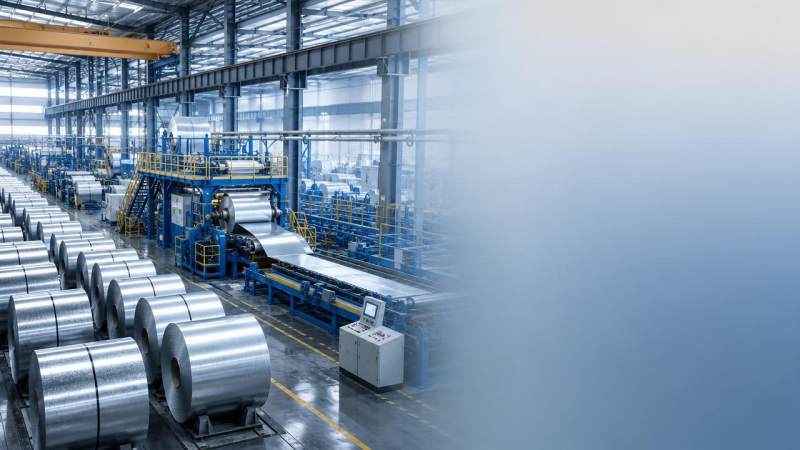
The biggest shift is that scale alone is no longer enough. Steel coil manufacturers must now prove stable output, traceable quality, and predictable shipment performance.
Buyers increasingly compare mills on production continuity, coating accuracy, mechanical property control, and documentation quality, not just headline tonnage.
In 2026, market volatility, energy costs, and trade rules continue to reshape sourcing. As a result, supplier resilience becomes a central evaluation factor.
Many steel coil manufacturers are investing in automation, inspection systems, and data-based process control. These upgrades improve flatness, thickness tolerance, and lot consistency.
Another key trend is demand for certified export-ready products. International buyers expect compliance with ASTM, EN, JIS, or GB requirements without repeated clarification.
Reliable mills are also strengthening communication around lead times, packing, and test certificates. Clear information reduces disputes after shipment.
Why does production capacity still matter when choosing steel coil manufacturers?
Capacity still matters because high-volume projects need shipment continuity. A supplier with weak scheduling can create gaps even if quoted prices look attractive.
However, nominal annual output should never be viewed alone. Useful capacity means available rolling time, raw material access, and realistic delivery allocation.
When comparing steel coil manufacturers, check these capacity indicators:
- Monthly production stability across peak and off-peak periods
- Ability to handle mixed specifications in one order
- Backup arrangements for substrate, coating, or slitting
- Export loading efficiency and container planning
- Historical on-time delivery rate
Large capacity is valuable for framework contracts, infrastructure programs, and OEM supply chains. Yet oversized capacity with poor planning can still cause uneven delivery.
The best steel coil manufacturers combine scale with scheduling discipline. That combination protects project timelines more effectively than low prices alone.
How should quality be judged beyond basic certificates?
Certificates are important, but they are only the starting point. Real quality performance appears in repeatability, process control, and problem resolution speed.
Strong steel coil manufacturers usually maintain disciplined inspection from raw material intake to final packing. This reduces variation between batches.
Useful quality checkpoints include chemical composition, yield strength, tensile strength, coating thickness, width tolerance, and surface condition.
It is also worth checking whether the mill can support secondary fabrication needs. Many projects combine coil procurement with structural steel processing.
For example, in workshop and roofing systems, compatible components such as Z-beam may be required alongside coil-based materials.
This profile is commonly used in large-scale steel structure workshops, purlins, wall beams, lightweight roofs, brackets, and light manufacturing supports.
Typical material options include Q235B, Q345B, Q420C, SS400, S355, A36, and A572 grades, with thickness from 6mm to 25mm.
Available forms may include perforated or galvanized coated versions, lengths from 2m to 12m or customized, and tolerances around ±1%.
When one supplier understands both coil quality and structural application requirements, coordination becomes smoother and technical mismatches are reduced.
Which certifications and compliance points matter most in export trade?
The most relevant certifications depend on destination market and end use. Still, several compliance points are widely expected from steel coil manufacturers.
Common requirements include ISO-based quality systems, third-party inspection support, and product conformity to ASTM, EN, JIS, or GB standards.
For processed structural items, CE, SGS, and BV documentation may also support acceptance, especially where project audits are strict.
Good compliance practice is not only about having certificates on file. It also means accurate mill test certificates, traceable heat numbers, and consistent labeling.
Ask whether documents are prepared before loading, whether inspection photos are available, and whether packing lists match actual bundle details.
Dependable steel coil manufacturers understand that documentation errors can delay customs clearance as seriously as production delays.
What risks are often missed when comparing steel coil manufacturers?
A common mistake is focusing only on unit price. Low quotations can hide thinner coating, relaxed tolerance control, or uncertain raw material sourcing.
Another risk is assuming samples always represent full production. Batch consistency is often more important than isolated sample performance.
Delivery promises also deserve scrutiny. Some steel coil manufacturers quote short lead times but depend on outsourced processing without firm slot control.
Watch for these warning signs:
- Incomplete test reports or unclear grade mapping
- Vague answers on coating mass or tolerance range
- No clear claim procedure for quality disputes
- Frequent changes in shipment schedule
- Packing methods unsuited for long-distance export
These issues can increase total landed cost even when invoice pricing appears competitive at first glance.
How can a supplier be evaluated more efficiently in 2026?
A practical approach is to score steel coil manufacturers across capacity, quality, compliance, communication, and delivery execution.
The table below provides a simple evaluation framework.
This method helps compare steel coil manufacturers with objective criteria instead of relying on price impressions or broad marketing claims.
How do these trends affect sourcing strategy for structural steel projects?
The 2026 trend is toward integrated, lower-risk sourcing. Buyers increasingly prefer suppliers that can support both material stability and application-specific understanding.
For structural steel projects, this means looking beyond commodity availability. Compatibility with fabricated sections, coating needs, and installation schedules is essential.
Hongteng Fengda, as a structural steel manufacturer and exporter from China, supports this need through stable production, strict quality control, and export-oriented service.
Its product range includes angle steel, channel steel, steel beams, cold formed steel profiles, and customized structural steel components for global construction and industrial use.
Compliance with ASTM, EN, JIS, and GB standards helps reduce sourcing uncertainty across different regional project requirements.
In a market where steel coil manufacturers are judged by more than capacity, dependable technical support and reliable lead times become competitive advantages.
Final takeaway: how should steel coil manufacturers be shortlisted?
In 2026, the best steel coil manufacturers are those that balance scale, quality, compliance, and delivery control.
A useful shortlist should include suppliers with proven production stability, transparent inspection practices, and clear export documentation processes.
It is wise to request recent test certificates, confirm realistic lead times, and review how the supplier handles nonconformity and shipment coordination.
For structural and industrial applications, prioritize partners that understand both steel material performance and downstream project requirements.
That approach can reduce procurement risk, improve cost control, and strengthen long-term supply reliability in a more demanding global steel environment.
Please give us a message


Please enter what you want to find