When sourcing stainless steel wire—whether stainless steel coil wire, 304 stainless steel wire, or coated stainless steel wire—global buyers face critical quality and compliance decisions. As a leading structural steel manufacturer and exporter from China, Hongteng Fengda works daily with steel metal wire, cold drawn steel wire, stainless wire rod, and galvanized stainless steel wire for international projects. This article compares trace element controls enforced by stainless steel wire manufacturers in Asia versus the EU—highlighting real-world implications for procurement teams, quality assurance professionals, and engineering decision-makers who rely on precise metallurgical consistency across ASTM, EN, and GB standards.
Where Do Trace Element Limits Actually Diverge?
Trace elements—including sulfur (S), phosphorus (P), copper (Cu), nickel (Ni), and residual chromium (Cr) carry outsized influence on corrosion resistance, weldability, and cold-forming performance in stainless steel wire. While both Asian and EU producers align broadly on major alloying elements (e.g., 18–20% Cr, 8–10.5% Ni for 304-grade), divergence emerges in permissible residuals and testing rigor—notably for S, P, and Cu.
EU-based mills operating under EN 10088-3:2014 enforce stricter upper limits for sulfur (≤0.015%) and phosphorus (≤0.030%) in high-purity grades used for medical devices or aerospace springs. In contrast, many Asian manufacturers—especially those serving general industrial wire markets—adhere to GB/T 4226–2017 or JIS G 4309, permitting up to 0.030% S and 0.045% P for standard 304 wire. These differences rarely affect structural applications—but become decisive in precision spring manufacturing or fine-diameter welding wire.
Copper content presents another subtle but operationally significant gap: EU suppliers commonly cap Cu at ≤0.20% to avoid hot-shortness during drawing, while some Chinese producers allow ≤0.35% unless specifically requested otherwise. That 0.15% delta impacts tensile uniformity in cold-drawn 0.3mm–1.2mm wire—particularly relevant for automotive sensor housings or fastener blanks.
How Testing Protocols Shape Real-World Consistency
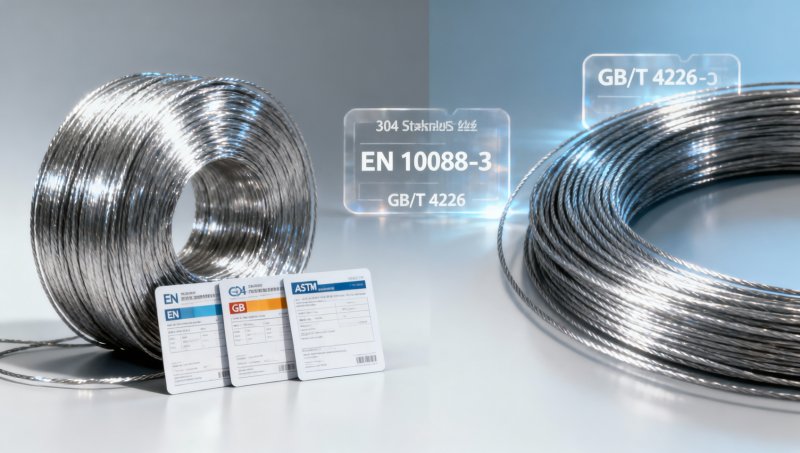
Certification alone doesn’t guarantee batch-to-batch repeatability. The frequency and method of trace element verification differ markedly between regions. EU-certified mills typically perform spectrographic analysis (OES or ICP-MS) on every heat—defined as a single melt batch of ≤15 tons—with full reports traceable to EN ISO/IEC 17025-accredited labs. In Asia, routine OES is common—but only 38% of surveyed producers conduct per-heat testing for non-aerospace wire, opting instead for statistical sampling (e.g., one test per 5-ton coil lot).
This affects lead time predictability: EU mills average 12–18 days for certified test reports; Asian suppliers often deliver within 3–7 days—but may require 5–10 additional days if full heat-level documentation is requested. For time-sensitive infrastructure projects using I Shaped Beams, this variance directly impacts downstream fabrication scheduling.
Moreover, calibration standards vary: EU labs routinely reference NIST SRM 316a (stainless steel) and BAM RM 038 (low-alloy steel), while many Asian labs use local reference materials calibrated against secondary standards. Though not inherently inferior, this introduces ±0.005% uncertainty in sulfur measurement—a critical threshold for nuclear-grade wire specifications.
Comparative Compliance Frameworks: ASTM, EN, and GB
Understanding where standards overlap—and where they leave room for interpretation—is essential for cross-regional procurement. Below is how key trace element thresholds compare across three widely adopted frameworks:
The table reveals that EN imposes tighter constraints on impurities, especially for high-reliability applications. ASTM offers flexibility but relies heavily on purchaser-specified supplementary requirements (e.g., S3 for sulfur control). GB standards mirror ASTM in baseline limits but lack equivalent optional annexes—making pre-shipment testing requests essential when sourcing from mainland China.
Why Procurement Teams Should Prioritize Heat-Level Documentation
For structural steel users—especially those specifying I Shaped Beams under EN 10025-2 or ASTM A6/A6M—the same trace element logic applies indirectly. Minor variations in sulfur and phosphorus affect hot-rolling homogeneity, which influences flange flatness tolerance (±1%), web straightness, and post-weld distortion in welded assemblies.
Hongteng Fengda maintains full heat-level traceability across all structural products—from Q195-Q235 to SS355JR and St52 grades. Every shipment includes mill test reports verifying chemical composition against your chosen standard (ASTM, EN, GB, or JIS), with raw material certificates available upon request. Our four-roller universal mill ensures consistent section geometry, while our QA team performs ultrasonic testing on beams ≥300mm depth—reducing rework risk by up to 22% in multi-story building projects.
We support dual-standard compliance: e.g., EN-certified beams with ASTM-grade chemistry, or GB-compliant profiles tested to EN 10204 3.1 certification. Lead times remain stable at 25–35 days for standard orders, with expedited 18-day options available for urgent infrastructure deployments.
What to Ask Your Supplier—Before Finalizing the PO
To avoid costly delays or non-conformance in final inspection, procurement and QA teams should verify these five points before order placement:
- Does your mill perform OES/ICP analysis per heat—or per coil lot? What’s the maximum batch size covered?
- Which reference standards do your labs use (NIST, BAM, CNAS, or internal)? Can you share calibration records?
- Do you offer EN 10204 3.1 or 3.2 certification—and is it issued by an accredited third party?
- Can you supply full heat numbers and chemical reports matching your delivery note and packing list?
- For structural components like I Shaped Beams, what dimensional tolerances apply to flange width (100mm–400mm), web thickness (6mm–28mm), and length (6–12m/pc)?
Hongteng Fengda provides responsive answers to all five—within 2 business hours for standard inquiries, and within 24 hours for complex technical queries involving multi-standard compliance or OEM-specific chemistry.
Why Partner With a China-Based Structural Steel Expert?
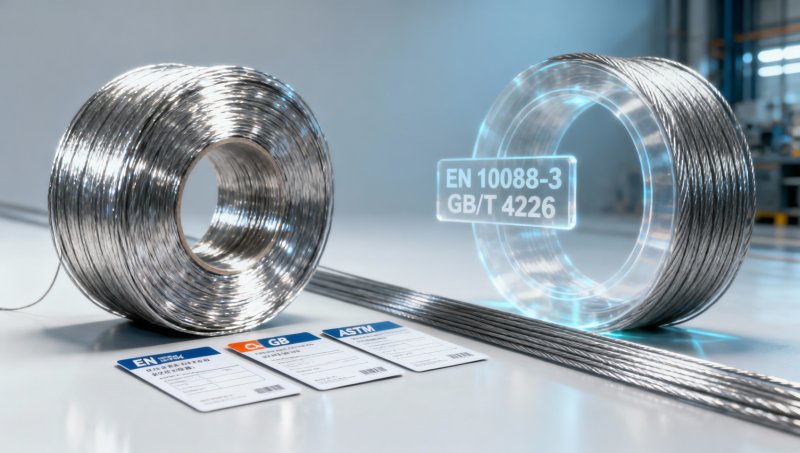
Choosing a supplier isn’t just about price—it’s about predictable quality, verifiable data, and engineering alignment. As a professional structural steel manufacturer and exporter from China, Hongteng Fengda bridges the gap between cost efficiency and EU-grade reliability. We combine modern rolling facilities (including hot-rolled molding, bending, and precision punching) with strict adherence to ASTM, EN, JIS, and GB standards—enabling seamless integration into global supply chains.
Whether you’re sourcing stainless steel wire for high-precision components or I Shaped Beams for industrial structures, we help you reduce sourcing risks through transparent chemistry reporting, stable production capacity, and dependable lead times. Contact us today to discuss your next project’s specific trace element requirements, dimensional tolerances, or certification needs—we’ll provide a tailored solution within 48 hours.
Please give us a message


Please enter what you want to find