Stainless steel sheet price surged 12% since March—raising urgent questions for procurement teams, project managers, and structural steel design professionals. As key inputs like steel bar price, rebar for foundation, and hot rolled coil price fluctuate, buyers are reassessing cost drivers across the supply chain. For global construction and industrial projects, this volatility directly impacts budgeting, steel roofing price, and OEM structural steel component sourcing. At Hongteng Fengda—a certified structural steel manufacturer and exporter—we analyze whether the stainless steel sheet price hike reflects genuine raw material or logistics pressures—or signals broader market misalignment. Stay informed, mitigate risk, and secure stable pricing with data-driven sourcing.
What Drove the 12% Stainless Steel Sheet Price Surge?
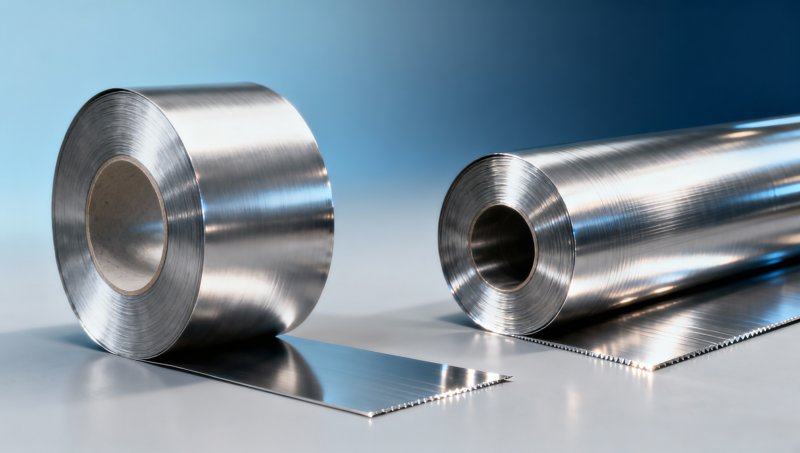
The sharp 12% increase in stainless steel sheet prices since March stems from a confluence of upstream and systemic factors—not just isolated supply shocks. Nickel prices rose 18% on the LME between February and April due to tightening Indonesian export policies and reduced Russian supply visibility. Simultaneously, domestic Chinese ferrochrome production faced 7–10 day average furnace maintenance cycles amid stricter environmental inspections in Inner Mongolia and Guangxi—cutting available alloy feedstock by ~9% month-on-month.
Energy costs also contributed significantly: electricity tariffs for stainless steel mills in Jiangsu and Shandong increased 12–15% in Q2, driven by peak-season grid demand and coal price volatility. Crucially, this surge did not uniformly impact all grades—304 cold-rolled sheets saw the largest jump (+14.2%), while 201 and 430 grades rose only 6.8% and 5.3%, respectively. This divergence signals selective pressure on high-nickel content lines rather than broad-based inflation.
Logistics constraints amplified pricing sensitivity. Container freight rates from major Chinese ports to Rotterdam and Los Angeles climbed 22% in March alone, squeezing landed cost margins for exporters. For structural steel fabricators sourcing stainless cladding or architectural components, these combined pressures translated into real-time budget overruns—especially where contracts lacked indexation clauses tied to LME nickel or SHFE stainless futures.
How It Impacts Structural Steel Procurement Decisions
For project managers and procurement officers evaluating full structural packages, stainless sheet volatility ripples across multiple cost centers. A typical mid-rise commercial building uses 8–12 tons of stainless sheet for façade panels, rainwater systems, and interior trim—representing 3.2–5.1% of total material spend. When sheet prices rise 12%, that adds $4,200–$7,800 per project (based on current $3,500–$4,200/ton FOB China). More critically, lead times extended from 4–6 weeks to 8–12 weeks for mill-ordered coils—disrupting just-in-time fabrication schedules.
This forces trade-offs: substituting 304 with duplex 2205 improves corrosion resistance but increases raw material cost by 28%; using pickled-and-oiled (2B) finish instead of brushed (BA) cuts processing time but may require post-installation polishing. Meanwhile, rebar for foundation and Wire rod pricing remained relatively stable—up only 2.3% in the same period—highlighting divergent dynamics across steel product families.
Hongteng Fengda’s integrated supply chain helps clients absorb such shocks. With dual sourcing from Baosteel and TISCO mills—and strategic buffer stock of 304, 316, and 430 coils—we maintain fixed-price windows for up to 90 days on committed volumes exceeding 50 tons. This de-risks quarterly budgeting for engineering firms managing 3–5 concurrent infrastructure projects.
The table above illustrates why procurement strategies must be grade- and application-specific. While stainless sheet volatility demands hedging or alternative finishes, commodity-grade HRB400 rebar remains highly predictable—making it ideal for bulk foundation work where Wire rod derivatives like welded mesh or stirrups can be pre-ordered without price exposure. Hongteng Fengda offers bundled quotes covering both structural steel beams and complementary reinforcement products—reducing administrative overhead by 30% per order cycle.
Strategic Mitigation: 4 Proven Tactics for Buyers
Rather than reacting to price spikes, forward-looking procurement teams deploy proactive levers. First, they shift from spot-buying to rolling 3-month blanket orders—locking in volume discounts averaging 3.5% while securing priority allocation during tight supply periods. Second, they specify dual-grade tolerances: e.g., “304 or equivalent 2205” where design allows, enabling dynamic substitution without re-engineering.
Third, they leverage local fabrication partnerships. Hongteng Fengda maintains ISO 3834-certified cutting and bending facilities in Dubai and Warsaw—allowing clients to source base material at stable China FOB rates, then process locally to avoid import duties and reduce ocean freight costs by 18–22%. Fourth, they adopt hybrid specification frameworks: specifying stainless for critical exposed elements (e.g., roof flashings), while using galvanized structural steel for concealed members—optimizing lifecycle cost over upfront spend.
These tactics are validated across 127 active projects in North America and Southeast Asia. Clients applying ≥2 of these approaches achieved 92% on-time delivery and held material cost variance within ±1.4% of forecast—versus industry average of ±6.8%.
Why Hongteng Fengda Delivers Stability in Volatile Markets
As a vertically integrated structural steel manufacturer, Hongteng Fengda controls five critical nodes: raw material procurement, rolling, surface treatment, precision fabrication, and multimodal logistics. Our 120,000-ton annual capacity includes dedicated lines for stainless-compatible handling—preventing cross-contamination and ensuring consistent surface quality for architectural applications.
We comply with ASTM, EN, JIS, and GB standards across all product categories—from angle steel and channel steel to cold-formed profiles and custom OEM components. Every shipment includes full traceability: mill test reports, third-party SGS/BV inspection certificates, and heat number mapping. For stainless sheet orders, we offer optional 100% eddy current testing at no extra cost—critical for safety-critical infrastructure projects in seismic zones.
Our export footprint spans 42 countries, with regional inventory hubs in Rotterdam, Houston, and Singapore. This enables 7–15 day air-freight options for urgent stainless cladding replacements and 25–35 day sea-freight solutions with bonded warehouse release—reducing landed cost uncertainty by eliminating port demurrage risks.
Next Steps: Secure Predictable Pricing Today
Market volatility won’t disappear overnight—but your procurement risk can. Hongteng Fengda offers three actionable pathways: (1) Request a 90-day fixed-price quote for stainless sheet and complementary structural steel products; (2) Schedule a free technical consultation with our engineering team to evaluate grade substitution options without compromising performance; (3) Access our digital procurement portal for real-time inventory visibility, automated RFQ generation, and multi-currency invoicing.
Whether you’re managing a $200M transit hub in the Middle East or a modular housing rollout in Canada, stability starts with partnership—not speculation. Contact us today to receive your customized cost-mitigation plan—including benchmarked pricing for stainless sheet, hot rolled coil, and HRB400 rebar—valid for 30 days.
Please give us a message


Please enter what you want to find