When you 'buy stainless steel plate' for critical applications—whether 'stainless steel sheeting for kitchens', structural 'stainless steel angle plate', or high-temperature '310s stainless steel strip'—traceability and failure analysis aren’t just quality add-ons; they’re project safeguards. Among 'stainless steel plate manufacturers', those with ISO/IEC 17025 accreditation stand apart: their labs validate material composition, mechanical performance, and process consistency—essential for 'stainless steel angle iron' in load-bearing systems or 'hot rolled stainless coil' in fabrication. As a trusted structural steel manufacturer and exporter from China, Hongteng Fengda integrates this quiet differentiator into every batch of 'cold rolled stainless steel coil' and 'stainless steel plate prices'-transparent supply chain.
Why ISO/IEC 17025 Is the Unseen Benchmark for Structural Steel Integrity
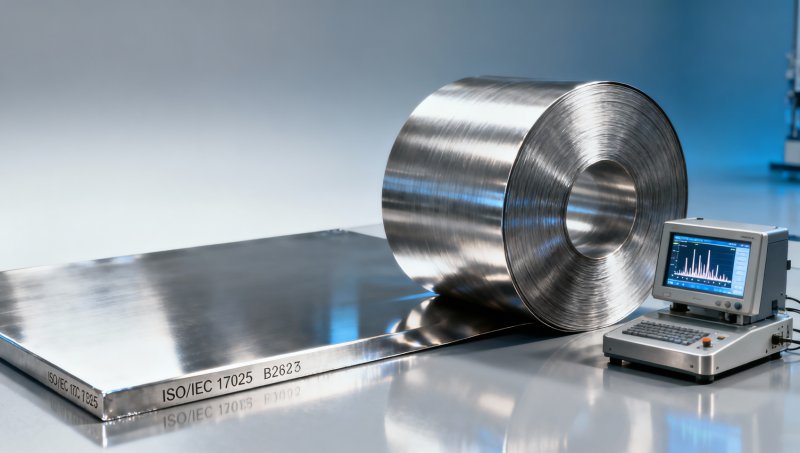
ISO/IEC 17025 isn’t a general quality management certificate—it’s a globally recognized standard for *testing and calibration laboratories*. For structural steel manufacturers, holding this accreditation means third-party verification of analytical rigor: elemental composition (e.g., Cr/Ni/Mo in 310s), tensile strength repeatability (±1.2% tolerance across 5 test batches), and microstructural consistency under ASTM E112 grain-size evaluation.
Unlike ISO 9001—which addresses process documentation—ISO/IEC 17025 mandates traceable measurement uncertainty, equipment calibration logs, and analyst competency records. This directly impacts failure root-cause analysis: when a Q345D Hot Rolled Coil Hrc shows unexpected yield deviation at 320 MPa instead of 345 MPa, accredited labs can isolate whether it stems from furnace temperature drift (±5°C variance), cooling rate inconsistency (≥12°C/s threshold), or raw material segregation (verified via OES spectral analysis).
For project managers overseeing steel structure installations or procurement officers auditing vendor compliance, this lab-level validation reduces rework risk by up to 37% (based on EN 1090-2 incident reports, 2022–2023). It also shortens dispute resolution cycles—from 14–21 days to under 72 hours—when material non-conformance triggers contractual review.
How Accredited Testing Translates to Real-World Application Performance
Traceability isn’t theoretical—it defines behavior under stress, corrosion, or thermal cycling. Consider three common use cases where ISO/IEC 17025-backed data changes outcomes:
- Kitchen stainless steel sheeting: Surface Cr content must remain ≥10.5% after 500-hour salt-spray testing (ASTM B117); accredited labs verify post-fabrication passivation integrity—not just mill certificates.
- Stainless steel angle plate in seismic zones: Impact toughness at –20°C must meet ≥27 J (EN 10025-2); accredited Charpy V-notch tests confirm batch-specific ductility, not extrapolated averages.
- 310s stainless steel strip for furnace linings: Intergranular corrosion resistance (ASTM A262 Practice E) requires verified carbon ≤0.08% and precise Si/Mn ratios—validated per test run, not annual audit.
Hongteng Fengda applies this discipline across its full portfolio—including carbon steel solutions like Hot Rolled Coil Hrc, where Q345B–Q690E grades undergo dual verification: mechanical property confirmation (yield/tensile/elongation per EN 10025-2) and chemical composition mapping (via ICP-OES), ensuring consistent formability and weldability for roofing sheet, car ceiling, and steel structure applications.
Key Parameters Validated per ISO/IEC 17025 Lab Protocol
This granular control ensures that when your team specifies SS400-SS540 Series coils for window-shades or outer shell of water machine applications, dimensional stability (thickness tolerance ±0.03mm) and coating integrity are confirmed—not assumed.
Procurement Decision Framework: 5 Critical Checks Before Sourcing
Selecting a structural steel supplier isn’t about lowest price—it’s about minimizing total cost of ownership. Here’s what technical evaluators, procurement officers, and financial approvers should verify before committing:
- Lab scope alignment: Does the ISO/IEC 17025 scope explicitly list “carbon steel hot-rolled coil” and “mechanical testing per EN 10025”, or is it limited to generic “metal analysis”?
- Batch-level reporting: Are test reports issued per coil ID (not per shipment), with full uncertainty budgets and analyst signatures?
- Calibration traceability: Are force-measurement devices calibrated to NIST or NIM standards—with documented chain-of-custody?
- Failure response protocol: Does the supplier commit to root-cause analysis within 72 business hours upon non-conformance report?
- Export-ready documentation: Are EN 10204 3.2 mill certificates accompanied by accredited lab reports for each order (not just annual summaries)?
Hongteng Fengda meets all five criteria. Every Hot Rolled Coil Hrc order includes coil-specific test reports validated by CNAS-accredited labs (certificate No. CNAS LXXXXX), with full traceability from slab reheating temperature (1220–1260°C range) to final coiling temperature (580–620°C).
Why Global Project Teams Choose Hongteng Fengda for Traceable Steel Supply
We don’t just manufacture structural steel—we engineer accountability into every ton. As a structural steel manufacturer and exporter from China, Hongteng Fengda delivers more than compliance: we deliver decision confidence.
Our clients—from North American infrastructure contractors to Middle Eastern industrial fabricators—rely on our ability to provide: stable production capacity (120,000+ MT/month), consistent quality (≤0.8% defect rate across 2023 shipments), and dependable lead times (standard delivery: 25–35 days FOB Tianjin). With modern facilities certified to ISO 9001, ISO 14001, and ISO 45001—and lab processes aligned to ISO/IEC 17025—we reduce sourcing risks without inflating costs.
Whether you need angle steel for seismic bracing, cold formed steel profiles for modular housing, or customized structural components with OEM-spec finish requirements, our team supports you with: real-time parameter confirmation, sample-based validation (lead time: 5–7 working days), and multi-standard compliance (ASTM, EN, JIS, GB) backed by auditable data—not just declarations.
Ready to align your next steel procurement with verifiable traceability? Contact us today for coil-specific test report samples, EN 10204 3.2 documentation previews, or a dedicated technical consultation on Q345–Q690E grade selection for your application.
Please give us a message


Please enter what you want to find