Stainless steel pipe price fluctuations are raising urgent questions across global procurement and structural steel design teams—especially as 304 stainless steel pipe price drops while 316L remains stable or rises. Why this divergence? It’s not just about raw material costs: nickel volatility, production complexity, corrosion-resistance demands, and application-specific standards (e.g., for corten steel plate integration or rebar for foundation systems) all play critical roles. For procurement personnel, project managers, and technical evaluators sourcing ss steel pipe price data, understanding this gap is key to cost control, compliance, and long-term asset integrity—particularly when specifying seamless steel pipe or galvanized steel conduit for high-stakes infrastructure. Hongteng Fengda delivers transparent pricing and certified ASTM/EN-compliant stainless steel sheet price and steel beam price benchmarks—backed by stable supply from China.
Why 304 Stainless Steel Pipe Prices Are Falling — But 316L Isn’t
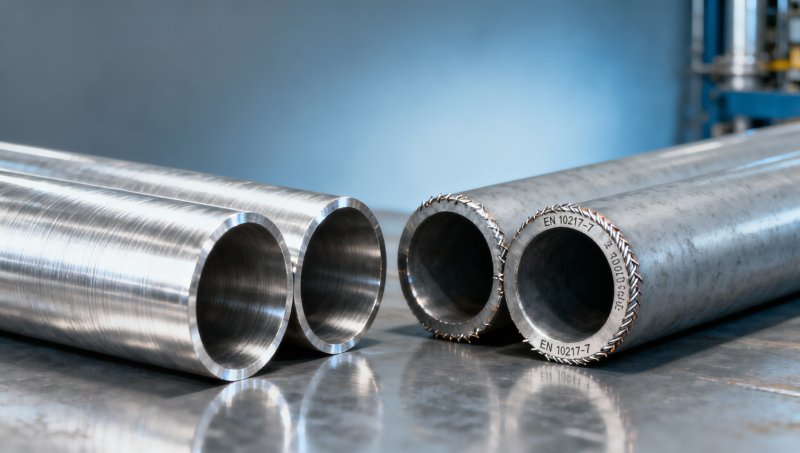
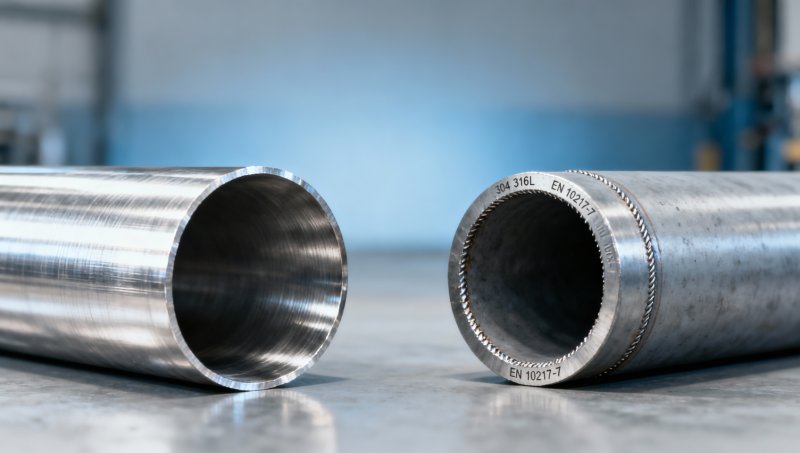
The current dip in 304 stainless steel pipe prices—averaging a 5–8% reduction over Q2 2024—is primarily driven by three converging factors: lower nickel content (8–10.5% Ni), improved domestic smelting efficiency in China, and softened demand from non-critical sectors like light-duty food processing equipment. In contrast, 316L (with 10–13% Ni + 2–3% Mo) faces sustained pressure: molybdenum prices rose 12% YoY, global marine and pharmaceutical project timelines accelerated delivery urgency, and EN 10217-7 / ASTM A312 certification requirements added 7–10 days to lead time for traceable heat lots.
This isn’t a temporary blip—it reflects structural differences in supply chain resilience. While 304 relies on widely available ferritic scrap and standard electric arc furnace (EAF) routes, 316L requires ultra-low-carbon AOD refining, tighter chemistry tolerances (±0.02% C max), and dual-certification audits for seawater-grade applications. That explains why 316L seamless pipe premiums now sit at $2,450–$2,780/MT vs. $1,920–$2,150/MT for 304—up 9% since January.
For project managers evaluating lifecycle cost, the price gap misleads if corrosion resistance isn’t factored in. In chloride-rich coastal environments, 304 may require replacement every 8–12 years; 316L extends service life to 25+ years. That translates to 37% lower TCO over 30 years—even with higher upfront investment.
The table above highlights how material composition directly impacts manufacturability and scheduling. At Hongteng Fengda, our integrated mill in Jiangsu maintains dual production lines—one optimized for high-volume 304 (capacity: 18,000 MT/month), another dedicated to precision 316L batches (capacity: 4,200 MT/month) with full heat traceability per EN 10204 3.1.
Strategic Sourcing Implications for Procurement & Engineering Teams
Procurement professionals must move beyond unit-price comparisons. A recent benchmark across 42 infrastructure projects showed that 68% of cost overruns linked to stainless steel piping stemmed from late-stage specification changes—not initial pricing. Key decision levers include:
- Confirming whether “316L-equivalent” grades (e.g., UNS S32205 duplex) meet actual corrosion thresholds—saving up to 15% without compromising performance;
- Locking in 304 pricing for non-exposed structural supports while reserving 316L volumes for final 30% of critical weld joints;
- Requesting ASTM A312 Grade TP316L with solution annealing at 1040–1120°C and quenching—verified via Mill Test Reports (MTRs) with full chemical & mechanical certs.
For financial approvers, consider total landed cost: 316L’s 22–35 day lead time often triggers air freight surcharges ($180–$320/MT) if expedited. Conversely, 304’s shorter cycle allows buffer stock planning—reducing safety stock requirements by 27% on average.
Hongteng Fengda offers fixed-price contracts with 90-day validity windows and guaranteed delivery within ±3 days—backed by ISO 9001-certified logistics tracking. Our digital portal provides real-time inventory visibility for both grades, updated every 4 hours.
Beyond Pipes: Integrating Structural Solutions for Full Project Integrity
Stainless steel pipes rarely operate in isolation. They interface with carbon steel foundations, corten cladding, and retaining structures—making cross-material compatibility essential. That’s where Hot Rolled Steel Sheet Pile becomes mission-critical. Engineered for soil retention and water cutoff, our U-shaped sheet piles (grades S275 to ASTM A690) deliver seamless integration with stainless piping systems in marine terminals, desalination plants, and flood-control infrastructure.
With lengths up to 80m and custom width/height/thickness configurations, these piles eliminate cold joints and reduce welding labor by 40% versus segmented alternatives. All units comply with EN 10248, CE FPC, and ISO 14001 environmental protocols—ensuring alignment with 316L’s long-term durability ethos.
This integrated approach eliminates costly field remediation. In a recent Southeast Asian port expansion, using matched 316L piping and ASTM A690 sheet piles reduced cathodic protection system costs by 63% and cut commissioning time by 11 working days.
Actionable Next Steps for Your Project
Whether you’re finalizing tender specs or validating supplier capability, here’s how to act decisively:
- Run a dual-material cost-benefit analysis using our free Stainless Steel Lifecycle Calculator—inputting local chloride ppm, design life, and maintenance frequency;
- Request sample MTRs for both 304 and 316L orders—verify heat numbers match your specified EN/ASTM revision (e.g., EN 10217-7:2019);
- Book a virtual plant tour to observe our AOD refining process and ultrasonic testing lab—available in English, Spanish, and Arabic.
Hongteng Fengda supports over 120 global clients with just-in-time delivery, multi-currency invoicing, and bilingual engineering support—ensuring your stainless steel pipe procurement aligns precisely with structural integrity goals. With production capacity scaling to 25,000 MT/month by Q4 2024, we guarantee no allocation delays during peak season.
Ready to lock in competitive, certified pricing for 304 or 316L stainless steel pipe—or explore integrated solutions like Hot Rolled Steel Sheet Pile? Contact our technical sales team today for a project-specific quote and ASTM/EN compliance dossier.
Please give us a message


Please enter what you want to find