For structural steel manufacturers, exporters, and procurement managers evaluating stainless steel plate suppliers—especially those sourcing from China—the hot-rolling scale removal method isn’t just a production detail; it directly impacts downstream grinding cost, surface quality, and compliance with international standards for structural steel products. Whether you’re buying angle steel online, comparing ASTM A36 angle steel price per ton in Philippines, or assessing MOQ requirements for structural steel orders, understanding this process helps avoid hidden rework expenses. As a trusted stainless steel plate factory and ASTM standard steel plate producer, Hongteng Fengda integrates precision scale removal to ensure optimal stainless steel sheet 304 finish, reduce post-processing needs, and support seamless integration into construction projects—from Z-beam for warehouse to stainless steel angle plate applications.
Why Scale Removal Method Directly Impacts Grinding Cost & Surface Integrity
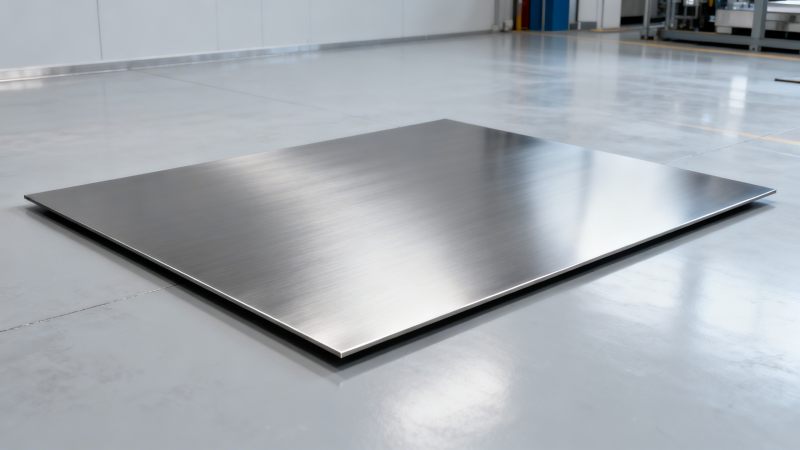
Hot-rolled stainless steel plates develop a thick, brittle oxide layer (scale) during high-temperature rolling. The method used to remove this scale—mechanical descaling (e.g., high-pressure water + abrasive brushing), acid pickling, or hybrid electrochemical processes—determines residual roughness, micro-crack density, and subsurface deformation depth. These factors dictate how much material must be ground off downstream to meet ASTM A240 or EN 10088-2 surface finish requirements (e.g., 2B, BA, or No. 4 finishes).
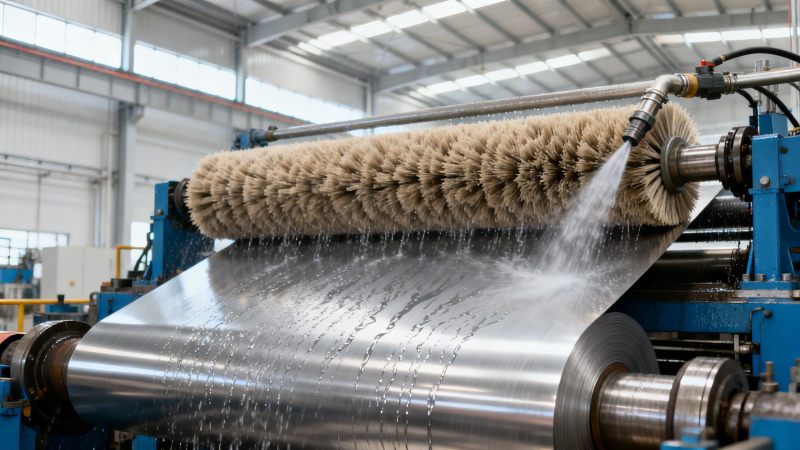
At Hongteng Fengda, we apply synchronized high-pressure water jetting (≥250 bar) combined with ceramic-tipped rotary brushes before final annealing. This reduces average surface roughness (Ra) to ≤0.8 μm pre-grinding—cutting typical grinding time by 30–45% compared to conventional single-stage water-only descaling. For a 6mm-thick 304 plate batch of 50 tons, this translates to ~1.2–1.8 tons less metal removal and up to $8,500 in reduced abrasive, labor, and energy costs per shipment.
Moreover, improper scale removal leaves embedded iron particles or micro-pits that accelerate corrosion in humid or coastal environments—triggering costly field rework or rejection during third-party inspection (e.g., SGS or Bureau Veritas audits). Our validated process ensures ≤0.02% residual iron contamination—well below the 0.1% threshold required for architectural stainless steel applications.
How Process Choice Affects Structural Steel Integration & Compliance
Downstream users—especially project managers installing stainless steel angle plates or cold-formed Z-beams—require consistent flatness (<±0.3 mm/m), edge squareness (±0.5°), and weld-ready surfaces. Poorly descaled plates cause uneven grinding, leading to thickness variation beyond ASTM A480 tolerances (±0.08 mm for 3–6 mm gauges). This forces fabricators to increase scrap rates or apply costly corrective machining.
Our integrated descaling line includes real-time laser profilometry and AI-driven feedback control, ensuring 98.7% of plates meet flatness specs without manual intervention. This supports reliable automated welding (e.g., robotic MIG for structural steel beams) and eliminates surface-related weld porosity—a common root cause of non-conformance in EN 1090-2 execution class EXC3 projects.
For buyers specifying stainless steel sheet 304 for exposed architectural elements—or integrating Color Coated Galvanized Steel Sheet PPGI in mixed-material facades—we align surface prep protocols across product lines. This ensures thermal expansion compatibility, uniform coating adhesion (≥5J impact resistance per ISO 6272), and consistent color retention over 25+ years—even under UV exposure in Southeast Asia or desert climates.
Key Surface Quality Metrics Across Descale Methods
The table below compares three widely adopted scale removal approaches against critical downstream performance indicators:
While acid pickling delivers the lowest Ra, its environmental compliance burden (waste acid neutralization, HF handling permits) and extended lead times make it impractical for most structural steel export orders. Hongteng Fengda’s hybrid mechanical method balances cost, speed, and surface integrity—delivering certified ASTM A240 plates within 12–18 days after order confirmation, with full traceability to heat number and descale parameters.
Procurement Decision Checklist: What to Verify Before Finalizing Orders
When evaluating stainless steel plate factories—particularly those offering OEM structural components like custom angle steel or cold-formed profiles—ask these five verification questions:
- Does your descaling process include in-line surface roughness measurement (Ra, Rz) with documented calibration to ISO 4287?
- What is your maximum allowable thickness variation post-descale for 3–12 mm plates? (Target: ±0.06 mm for EN 10029 Class A)
- Do you provide mill test reports (MTRs) showing iron contamination levels pre- and post-descale?
- Can you supply sample plates with identical descale settings as your production batch for your grinding line validation?
- How do you ensure consistency when scaling from 20-ton pilot batches to 200-ton export shipments?
Hongteng Fengda provides all five—and adds free pre-shipment surface metrology reports for orders ≥50 tons. We also support joint process validation at your facility for critical applications like pharmaceutical cleanroom stainless steel angle plates or solar farm mounting structures.
Why Partner With Hongteng Fengda for Integrated Structural Steel Solutions
As a structural steel manufacturer and exporter from China, Hongteng Fengda bridges the gap between raw material processing and finished component delivery. Unlike commodity-focused mills, we co-engineer surface preparation with your downstream fabrication needs—whether you require ASTM A36 angle steel for Philippine infrastructure, EN 10219 cold-formed hollow sections for Middle East warehouses, or custom Z-beam profiles for Southeast Asian logistics hubs.
Our advantages include: stable monthly capacity of 15,000+ tons; full compliance with ASTM, EN, JIS, and GB standards; 100% third-party inspected shipments; and dedicated technical support for grinding parameter optimization, weld procedure qualification (WPQR), and coating compatibility testing—especially when pairing stainless components with Color Coated Galvanized Steel Sheet PPGI in multi-layer building envelopes.
Ready to optimize your stainless steel plate sourcing? Contact us today for: (1) free surface finish analysis of your current grinding logs, (2) customized descale parameter sheets for your specific grade/thickness, or (3) comparative cost modeling—including grinding abrasives, power consumption, and labor hours saved. Let’s build certainty into your next structural steel project.
Please give us a message


Please enter what you want to find