As global supply chains, energy costs, and industrial demand continue to shift, stainless steel pipe price expectations for 2026 are becoming a key concern for business decision-makers. Understanding the factors behind future pricing trends can help buyers control procurement costs, reduce sourcing risks, and make more informed purchasing plans in a competitive international steel market.
What is driving stainless steel pipe price trends in 2026?
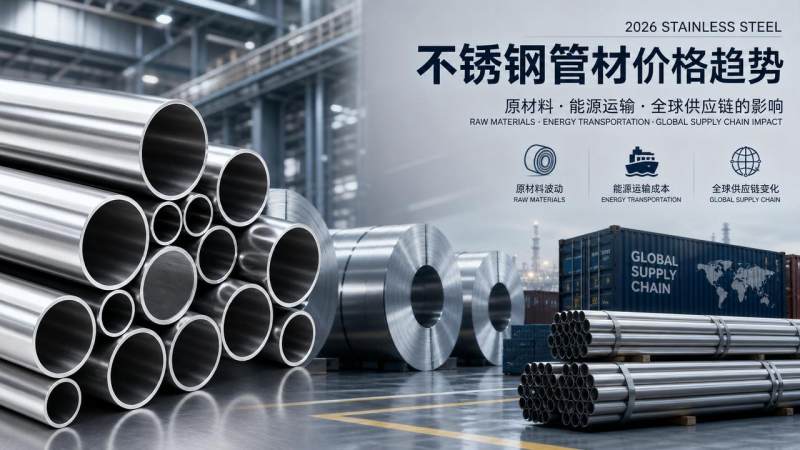
The stainless steel pipe price in 2026 will likely be shaped by several linked cost drivers. Raw material volatility remains the most important one.
Nickel, chromium, and molybdenum directly affect stainless steel production costs. When these alloy inputs rise, the stainless steel pipe price usually follows.
Energy is another major influence. Steel melting, rolling, welding, and finishing all depend on electricity, gas, and transport fuel.
If power prices remain elevated in Asia, Europe, or North America, export quotations may stay firm. That can support a higher stainless steel pipe price.
Freight also matters. Ocean shipping has stabilized compared with past disruptions, but route pressure can return quickly during geopolitical tension.
Environmental policy may add another layer. Emission controls, carbon compliance, and cleaner production investments can gradually increase base steel processing costs.
In short, 2026 pricing will not depend on one factor. It will reflect a combined effect of materials, energy, freight, policy, and mill operating rates.
Will stainless steel pipe price go up or stabilize in 2026?
A sharp one-direction move is less certain than a pattern of regional fluctuation. Many buyers should expect volatility rather than a simple rise or fall.
If industrial construction, energy, water treatment, and mechanical manufacturing improve together, stainless steel pipe price levels may trend upward.
If demand remains uneven, mills may compete more aggressively on standard grades. That could keep some pipe categories relatively stable.
The most likely scenario is selective growth. Premium grades, special sizes, and urgent delivery orders may see faster increases than common specifications.
Buyers should also separate short-term quotation swings from medium-term contract trends. Spot market movement does not always represent annual procurement reality.
For 2026, a moderate upward bias with periodic corrections appears more realistic than extreme price inflation. Timing and sourcing strategy will matter greatly.
Which sectors will feel stainless steel pipe price changes more strongly?
Not every steel-consuming sector experiences the same impact. Sensitivity depends on material grade, order frequency, lead time pressure, and total project volume.
Construction and infrastructure projects often feel cost changes quickly. Large pipe volumes make even small unit increases significant across total budgets.
Food processing, chemical systems, and water applications are also exposed. These sectors often require corrosion-resistant grades and stricter quality consistency.
Energy and industrial fabrication may face an even greater impact. They frequently use thicker walls, special dimensions, or higher alloy content.
At the same time, related stainless products can signal wider market conditions. Midstream demand for filtration and industrial screening often reflects manufacturing activity.
For example, Stainless Steel Welded Mesh is widely used in filters, sieves, chemical processes, mining, architecture, and residential applications.
Available grades include SS 201, 304, 304L, 316, 316L, and 430. It offers rust resistance, corrosion resistance, heat tolerance, strength, and durability.
Technical ranges are broad, including diameter from 0.0008″ to 0.12″, mesh from 2 to 635 mesh, and roll width up to 240″.
When demand rises across these stainless applications, it often supports broader stainless consumption. That can indirectly influence stainless steel pipe price direction.
How should buyers evaluate stainless steel pipe price beyond the quote?
A low quote is not always a low total cost. The real stainless steel pipe price includes quality risk, production stability, freight, and delivery reliability.
Start by checking grade accuracy and standard compliance. ASTM, EN, JIS, and GB alignment can affect usability, inspection, and downstream certification.
Then review dimensional tolerance, wall thickness consistency, and surface finish. Rework, rejection, and delay often cost more than a higher initial quote.
Lead time is equally important. A stable supplier can protect project schedules when mills face sudden demand spikes or raw material shortages.
It is also useful to compare by sourcing model:
- Spot buying offers flexibility but exposes orders to market swings.
- Quarterly contracts improve budgeting visibility.
- Mixed sourcing balances risk between fixed and floating stainless steel pipe price levels.
Working with a capable Chinese steel exporter can help reduce risk. Strong production control and export experience often improve consistency and shipment planning.
Hongteng Fengda supports global projects with structural steel products, OEM solutions, international standards compliance, and dependable lead times.
What mistakes can increase stainless steel pipe price risk in 2026?
One common mistake is delaying purchases until urgent demand appears. Late orders reduce negotiation space and often raise logistics costs.
Another mistake is comparing offers without matching specifications. Grade, thickness, tolerance, welding standard, and surface treatment must be aligned.
Some buyers focus only on ex-works price. However, duty, inland transport, inspection, packaging, and destination port charges can change the final result.
Ignoring supplier capacity is risky too. A low stainless steel pipe price means little if delivery slips during a critical project stage.
Overbuying can also hurt cost control. If 2026 prices soften temporarily, excess inventory may tie up cash and increase storage pressure.
The best approach is structured planning, not reactive buying. Forecasting demand and reviewing supplier options early usually improves cost outcomes.
How can businesses prepare for stainless steel pipe price changes in 2026?
Preparation starts with visibility. Track alloy surcharges, energy costs, freight conditions, and regional demand indicators on a regular schedule.
Next, segment purchasing by urgency and value. High-volume standard items should not be managed the same way as special stainless pipe orders.
Practical actions include:
- Lock part of annual volume through framework agreements.
- Keep alternative qualified sources in different regions.
- Review project schedules and purchase earlier for critical items.
- Standardize specifications where possible to improve buying leverage.
- Evaluate total landed stainless steel pipe price, not only base quotes.
Those steps help reduce exposure to sudden spikes. They also support better negotiation when the market becomes tight.
Quick FAQ table: what should you watch in 2026?
The stainless steel pipe price outlook for 2026 points to a market shaped by raw materials, energy, freight, and demand recovery patterns.
Prices may not move uniformly, but volatility is likely to remain an important feature. Smart preparation can reduce budget pressure and supply disruption.
The most effective response is early planning, supplier evaluation, and total-cost comparison. That approach improves control even when the market becomes uncertain.
If you are reviewing steel sourcing options for 2026, align technical requirements, lead time expectations, and regional cost trends before placing orders.
Please give us a message


Please enter what you want to find