Understanding stainless steel angle price is essential for business evaluators comparing suppliers, project budgets, and long-term procurement risks. Quotes can vary widely depending on material grade, dimensions, surface finish, order volume, international standards, and market conditions. For buyers sourcing from China, working with a reliable structural steel manufacturer helps ensure consistent quality, transparent pricing, and dependable delivery for construction, industrial, and manufacturing projects.
For procurement teams, the lowest number on a quotation is rarely the full cost. A realistic stainless steel angle price should reflect technical compliance, cutting tolerance, packaging method, logistics route, payment terms, inspection requirements, and supplier stability over a 6–24 month sourcing cycle.
What Is Included in a Stainless Steel Angle Quote?
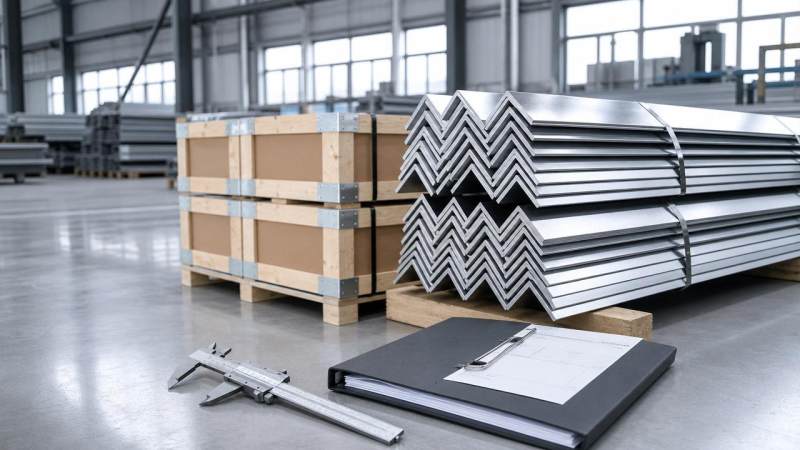
A stainless steel angle quote normally includes much more than the base metal value. Business evaluators should review at least 5 cost layers: raw material, forming process, surface treatment, inspection, and export handling. Missing one layer can distort supplier comparisons.
Material Grade and Chemical Composition
The selected grade is one of the strongest drivers of stainless steel angle price. Common grades such as 304, 316, 201, and 430 have different nickel, chromium, and molybdenum contents. Higher corrosion resistance usually means higher alloy cost.
For example, 316 stainless steel angles are often selected for coastal, chemical, or marine environments because molybdenum improves pitting resistance. However, compared with 304, the quote may be noticeably higher during periods of nickel or molybdenum volatility.
Dimensions, Thickness, and Weight Calculation
Angle steel is usually quoted by metric ton, piece, or meter. Leg size, thickness, length, and tolerance all influence the final stainless steel angle price. A 50×50×5 mm angle and a 100×100×10 mm angle follow different rolling, cutting, and packing requirements.
For budget review, buyers should confirm whether the supplier calculates theoretical weight or actual weight. A 1%–3% difference may appear small, but it can affect large construction orders exceeding 100 tons.
The following table summarizes common quotation factors that evaluators should check before approving a supplier shortlist.
The key conclusion is simple: a comparable stainless steel angle price must be based on the same grade, size, tolerance, finish, packaging, and trade term. Without this alignment, price comparison can become misleading.
Key Market and Production Factors Behind Price Changes
Stainless steel angle price is not fixed for long periods. In many B2B projects, quotations may be valid for only 3–7 days when alloy markets move quickly. Evaluators should understand both material and manufacturing variables.
Raw Material Volatility
Nickel, chromium, and scrap stainless steel are important inputs. When alloy prices rise, mills and processors may update quotations within the same week. This is why serious suppliers usually state a validity period and price adjustment basis.
For long-term projects, buyers can request 2 pricing models: spot pricing for immediate shipment and framework pricing for planned monthly releases. This helps control risk when procurement covers 3–6 construction phases.
Manufacturing Route and Surface Requirement
Hot-rolled angles are often chosen for structural applications where strength and cost efficiency matter. Cold-formed or specially fabricated profiles may require additional forming steps, tighter dimensional control, and more inspection time.
Surface finish also changes stainless steel angle price. A basic pickled surface may be adequate for industrial frames, while polished visible components require more labor, abrasive materials, and protective packaging.
4 Practical Checks Before Accepting a Price Revision
- Ask whether the revision is caused by alloy cost, production cost, freight, or exchange rate movement.
- Confirm if existing inventory can hold the original price for 1–2 shipment batches.
- Review whether alternative grades can meet the same service conditions.
- Check whether the new quote changes payment terms, lead time, or packaging scope.
These checks help evaluators distinguish reasonable market adjustment from unclear pricing behavior. Transparent suppliers can explain the cost driver without changing technical conditions unexpectedly.
How Standards, Inspection, and Documentation Affect Procurement Value
International buyers should not evaluate stainless steel angle price without checking standards. ASTM, EN, JIS, and GB requirements can differ in mechanical properties, dimensional tolerance, test method, and documentation format.
Why Standard Compliance Matters
A lower quote may create hidden risk if the product cannot pass project acceptance. For public construction, industrial equipment, and manufacturing frames, non-compliant material can delay installation by 2–4 weeks or require replacement.
Business evaluators should request mill test certificates, heat number traceability, dimensional inspection records, and packing lists. For critical projects, third-party inspection before shipment can reduce dispute risk.
The table below shows how documentation and quality control items influence both risk and total procurement value.
A complete documentation package may add small upfront cost, but it often prevents larger losses from rejection, rework, demurrage, or installation delay. This is central to evaluating stainless steel angle price professionally.
Supplier Evaluation for Buyers Sourcing from China
China remains a major sourcing base for structural steel products because of production capacity, broad specifications, and export experience. However, supplier evaluation should combine price, quality, delivery, and communication performance.
Beyond Unit Price: Total Procurement Cost
A stainless steel angle price quoted FOB may look lower than a CFR or CIF quote, but logistics responsibility changes. Evaluators should compare offers under the same Incoterms and include port charges, insurance, customs documents, and unloading needs.
For mixed structural steel orders, consolidated supply can improve coordination. Hongteng Fengda manufactures and exports angle steel, channel steel, steel beams, cold formed profiles, and customized structural components for global construction and industrial projects.
Production Capacity and Lead Time Reliability
Lead time matters when site installation depends on steel arrival. Standard sizes may be prepared faster, while customized dimensions, special surface treatment, or OEM structural components may require 2–5 additional production steps.
A practical evaluation should include monthly output capacity, typical delivery cycle, document response time, and experience with target regions such as North America, Europe, the Middle East, or Southeast Asia.
6 Supplier Questions That Reveal Real Capability
- Can the supplier quote according to ASTM, EN, JIS, or GB standards?
- Can they provide mill test certificates with batch traceability?
- What is the usual lead time for 20-ton, 50-ton, and 100-ton orders?
- Can they combine stainless steel angles with other structural profiles?
- How are bundles protected for container loading and long sea freight?
- How quickly can technical drawings or specification changes be reviewed?
These questions help separate a simple trader from a stable structural steel partner. They also make stainless steel angle price easier to interpret across multiple suppliers.
Integrating Stainless Steel Angles with Broader Structural Steel Procurement
Many projects do not purchase stainless steel angles alone. Construction and industrial buyers may also need carbon steel beams, channels, rebars, plates, and customized profiles. Coordinated sourcing can reduce administrative work and delivery conflicts.
Project Packages and Reinforcement Needs
In reinforced concrete construction, buyers may evaluate stainless steel angle price together with reinforcing bar requirements. For high-strength reinforcement, HRB600 Rebar provides a standard yield strength of 600 MPa.
This hot-rolled ribbed reinforcing bar is available in specifications such as φ6, φ8, φ10, φ12, φ16, φ20, φ25, φ32, φ40, and φ50, with common lengths including 1 m, 4 m, 6 m, 8 m, and 12 m.
Compared with HRB400 grade steel bars, HRB600 can offer about 39% higher strength, helping reduce the required reinforcement ratio and decrease steel consumption when properly specified by project engineers.
Procurement Benefits of Consolidated Structural Steel Supply
Combining angle steel, channel steel, steel beams, cold formed profiles, and reinforcement products can simplify contract management. It can also improve container utilization when dimensions and delivery batches are planned 2–3 weeks in advance.
- Fewer supplier interfaces for technical confirmation and document review.
- More consistent packaging and marking across different steel products.
- Improved shipment coordination for multi-stage construction schedules.
- Better visibility over quality control, inspection, and export documentation.
For business evaluators, consolidated sourcing does not mean ignoring stainless steel angle price. It means reviewing unit price together with supply reliability, compatibility, inspection control, and total landed cost.
How to Compare Quotes and Avoid Common Pricing Mistakes
A structured comparison method helps buyers avoid accepting an incomplete or risky offer. Before final negotiation, every stainless steel angle price should be checked against the same technical, commercial, and logistics baseline.
Use a 5-Step Quote Review Process
- Confirm grade, standard, size, thickness, length, and required tolerance.
- Verify surface finish, edge condition, and cutting or drilling requirements.
- Compare MOQ, unit weight, theoretical weight basis, and order volume.
- Align trade terms such as EXW, FOB, CFR, or CIF before comparing totals.
- Review certificate, inspection, packing, delivery time, and payment conditions.
This process usually takes less than 1 business day for a standard inquiry, but it can prevent expensive mistakes during production, shipment, or project acceptance.
Common Mistakes in Price Comparison
One common mistake is comparing different grades as if they were interchangeable. Another is ignoring surface finish. A polished angle and a basic industrial angle may look similar in a short email quote but differ in processing cost.
Buyers should also avoid focusing only on the first purchase. For repeat orders over 12 months, supplier stability, response time, and quality consistency may create more value than a small initial discount.
When a Low Quote Requires Extra Caution
- The supplier cannot clearly state material grade or applicable standard.
- The quote excludes certificates, inspection, export packaging, or loading photos.
- The validity period is unclear despite volatile alloy market conditions.
- The supplier changes thickness tolerance after order confirmation.
A professional stainless steel angle price should be specific enough for engineering, purchasing, finance, and logistics teams to review without repeated clarification.
Building a Reliable Purchasing Decision
For business evaluators, stainless steel angle price is a decision point, not just a number. The best quote should balance alloy grade, dimensional accuracy, standard compliance, inspection reliability, packaging quality, and delivery certainty.
Hongteng Fengda supports global buyers with structural steel manufacturing, customized solutions, and export service for construction, industrial, and manufacturing projects. Products can be supplied according to major standards, including ASTM, EN, JIS, and GB.
If you are comparing suppliers, preparing a project budget, or planning long-term procurement from China, share your specifications, quantity, standard, destination port, and delivery schedule. Contact us to get a practical quote, discuss technical details, or request a customized structural steel solution.
Please give us a message


Please enter what you want to find