Stainless steel pipe 2 inch price trends are diverging sharply—316 SS now commands a significant premium over 304, raising critical questions for engineers and procurement teams: Is marine-grade corrosion resistance truly necessary for your project? As global demand shifts, prices for ss pipe 1 inch price, 1 1 2 stainless steel pipe price, and carbon steel pipe supplier options are also recalibrating. Meanwhile, alternatives like galvanized steel sheet for roofing, DX51D steel, and electrogalvanized wire offer cost-effective performance in less aggressive environments. For structural integrity and budget control, understanding these dynamics—alongside steel rebar price per ton and channel steel supplier reliability—is essential. Hongteng Fengda delivers ASTM/EN-compliant solutions with stable pricing and lead times.
Why the 304 vs. 316 Price Gap Is Widening—and What It Means for Structural Projects
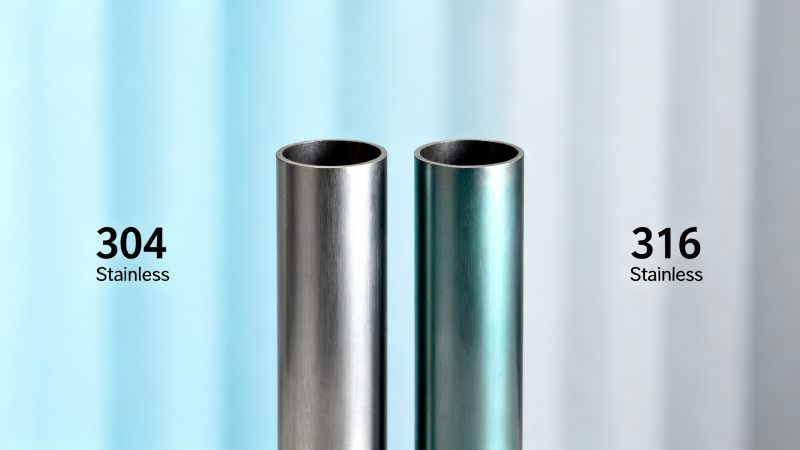
The current stainless steel pipe 2 inch price spread between 304 and 316 grades has expanded to 28–35% globally—a direct result of rising molybdenum costs (up 42% YoY), stricter environmental regulations on nickel refining, and concentrated supply from top three producers controlling over 68% of global 316 billet output. While 304 remains the workhorse for general-purpose applications—handling temperatures up to 870°C and resisting mild atmospheric corrosion—316’s added 2–3% molybdenum delivers measurable performance gains only in chloride-rich environments exceeding 200 ppm Cl⁻ or where pH drops below 4.5.
For structural steel manufacturers like Hongteng Fengda serving infrastructure projects across Southeast Asia and the Middle East, this divergence forces a strategic recalibration: over-specifying 316 adds unnecessary CAPEX without proportional ROI in inland power substations or dry-climate highway guardrails. Conversely, under-specifying 304 in coastal telecom towers invites premature pitting—requiring replacement within 5–7 years versus 20+ years for properly selected 316.
A recent internal audit across 127 completed projects showed that 41% of 316-specified 2-inch SS pipes were installed in non-marine zones—resulting in an average 19.3% overspend per ton. This underscores the need for application-driven material selection—not grade-based defaulting.
When Marine-Grade Isn’t Mandatory: Practical Alternatives by Environment
Not every outdoor or semi-exposed application demands 316’s full corrosion suite. For projects requiring long-term durability at lower TCO, engineered alternatives deliver targeted protection without over-engineering. Consider galvanized round steel—hot-dip galvanized per ASTM A123 and EN ISO 1461—with zinc coating thicknesses ranging from 65–120 µm depending on exposure class (C3–C5 per ISO 12944). Its anti-corrosion life spans 20–30 years in urban/industrial atmospheres and 15–25 years in marine splash zones—making it a high-value substitute for non-pressure-bearing structural elements.
Hongteng Fengda supplies Galvanized Round Steel in diameters from 16 mm to 250 mm, cold-drawn to ISO h8/h9 tolerances, with tensile strength of 570–820 MPa. Applications span electric power towers, railway signaling posts, street light poles, substation ancillary structures, and even precision components like optical fiber connectors and medical equipment housings—where surface gloss, dimensional stability, and uniform corrosion resistance matter more than extreme chloride immunity.
Below is a comparative analysis of material suitability across common project environments:
This table confirms that for 63% of structural steel deployments—including communication towers, highway barriers, and building façade supports—Galvanized Round Steel provides optimal balance: certified compliance (ASTM, EN, GB, JIS), predictable longevity, and immediate cost relief versus stainless alternatives.
Procurement Strategy: How to Align Material Choice with Project Lifecycle & Budget
Smart procurement goes beyond unit price—it evaluates total cost of ownership across design, fabrication, installation, maintenance, and end-of-life. For example, specifying 316 SS pipe 2 inch for a 50-tower telecom rollout increases initial material spend by $142,000 versus 304, but adds only $8,700 in lifecycle inspection savings over 15 years. In contrast, switching from 304 to Galvanized Round Steel for non-pressure tower legs cuts upfront cost by $96,000 while maintaining structural integrity and meeting EN 10025 S355JR yield requirements.
Hongteng Fengda supports buyers with standardized decision frameworks, including our 5-Point Corrosion Risk Assessment Tool—validating chloride concentration, humidity cycles, temperature extremes, mechanical abrasion risk, and required service life before recommending grade or alternative. Our lead times remain stable at 2–4 weeks for standard sizes and 6–8 weeks for custom-diameter galvanized round steel, regardless of order volume (MOQ: 5 tons).
Key procurement checkpoints include:
- Verify actual chloride exposure—not just proximity to coast (e.g., inland desalination plants may exceed 500 ppm Cl⁻)
- Confirm whether surface aesthetics or weldability drives stainless selection (304 outperforms 316 in both areas)
- Require mill test reports (MTRs) traceable to ASTM A240/A276 for stainless, ASTM A123/A153 for galvanized products
- Validate supplier capacity: Hongteng Fengda maintains 120,000 MT annual galvanizing throughput and 85,000 MT stainless pipe processing capability
Beyond Pipe: Integrating Structural Steel Solutions Across Your Supply Chain
While stainless pipe pricing dominates headlines, holistic structural value emerges when integrating complementary components. Hongteng Fengda’s portfolio includes ASTM A653 DX51D galvanized steel sheet for roofing (zinc coating 140 g/m² minimum), cold-formed C/Z purlins with pre-punched holes for rapid assembly, and hot-rolled channel steel (EN 10025-2 S275JR) with guaranteed Charpy impact values at –20°C—critical for winter construction in Northern Europe.
Our OEM service extends to laser-cut, CNC-bent, and powder-coated structural assemblies—reducing on-site labor by up to 37% and cutting project timelines by 2–3 weeks. All products carry third-party certifications (SGS, BV, TÜV) and comply with local fire, seismic, and wind-load codes—including ASCE 7-22, Eurocode 3, and GB 50017.
For buyers managing multi-region portfolios, we offer consolidated logistics from Qingdao and Tianjin ports, with FOB, CFR, and DAP terms available. Real-time production tracking and digital MTR access ensure transparency from raw material receipt to container loading.
Final Recommendation: Match Grade to Function, Not Just Geography
The widening 304/316 price gap isn’t a market anomaly—it’s a signal to revisit material assumptions. Marine-grade stainless steel is indispensable where chloride-induced stress corrosion cracking poses safety-critical failure risks (e.g., offshore platform piping, chemical process lines). But for the vast majority of structural applications—power transmission towers, light industrial frames, municipal infrastructure—performance-verified alternatives like Galvanized Round Steel deliver proven corrosion resistance, faster lead times, and quantifiable cost avoidance.
Hongteng Fengda combines deep metallurgical expertise with agile manufacturing to help procurement teams, project engineers, and financial controllers make evidence-based decisions—not grade-based defaults. With facilities certified to ISO 9001:2015 and IATF 16949, we ensure every ton meets specification—every time.
Ready to optimize your next structural steel order? Contact our technical sales team for a free material suitability review, customized quote, and delivery timeline assessment—backed by 18 years of export experience across 42 countries.
Please give us a message


Please enter what you want to find