When you source SS plate or ASTM A36 angle steel for construction projects, ISO 9001 certification is just the baseline — not proof of full material traceability. For procurement managers, engineers, and project leaders evaluating structural steel suppliers like Hongteng Fengda, critical questions remain: How transparent is your heat-to-shipment tracking? Can you verify mill test reports against actual coils? Do your SS plate manufacturers support real-time lot-level traceability across EN, ASTM, and GB standards? This article reveals what ‘certified’ doesn’t tell you — and why traceability impacts quality control, compliance audits, and long-term structural steel lifespan.
Why “ISO 9001 Certified” Alone Doesn’t Guarantee Material Traceability
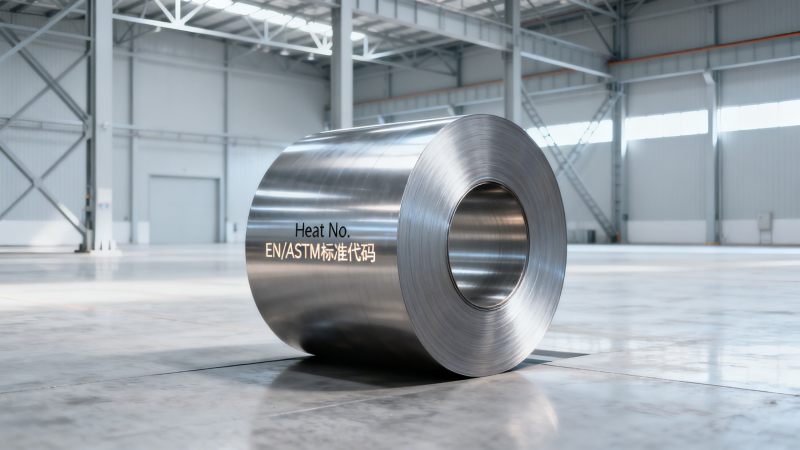
ISO 9001 certifies a supplier’s quality management *system*, not the physical lineage of each steel coil, billet, or plate. It confirms documented procedures exist — but not whether those procedures are executed consistently across heats, shifts, or export batches. In structural steel manufacturing, traceability means linking every delivered piece to its original melt batch, chemical analysis, mechanical test report, rolling date, heat treatment log, and final inspection record.
For global buyers in North America or the EU, gaps here trigger real risk: non-compliant material entering critical infrastructure (e.g., bridges, high-rises), failed third-party audits, delayed project handovers, or costly field rework. At Hongteng Fengda, we implement a 6-step traceability protocol — from raw material receipt to container loading — with digital logs cross-referenced to physical tags on every bundle. This goes beyond ISO 9001 into EN 10204 Type 3.1 compliance and ASTM A6/A6M verification workflows.
Unlike generic certifications, our system captures time-stamped data at 4 key checkpoints: (1) incoming raw coil verification (heat number, mill certificate match), (2) hot/cold rolling process parameters, (3) post-processing testing (tensile, bend, impact), and (4) final packaging & shipping documentation. All records are retained for ≥10 years — accessible upon request for audit support.
What Full Traceability Actually Covers — vs. What ISO 9001 Does Not
This table underscores a core distinction: ISO 9001 validates *how* you manage documents; true traceability validates *what* those documents represent in the physical world — and whether they can be retrieved, verified, and audited under real-world conditions.
How Traceability Impacts Real-World Procurement Decisions
Procurement teams face tight deadlines, multi-tier supply chains, and escalating compliance requirements. Without granular traceability, sourcing SS plate becomes a gamble: one mismatched heat number can delay a $2.4M wind turbine foundation by 3–5 weeks. At Hongteng Fengda, we reduce that risk via standardized traceability deliverables included in every export shipment: heat-specific MTRs, EN 10204 3.1 declarations, and QR-coded bundle tags linking directly to test data.
For technical evaluators and project managers, traceability also enables predictive maintenance planning. Knowing the exact composition and processing history of 304 Stainless Square steel rod used in coastal marine structures helps model chloride-induced stress corrosion over 25+ years — far beyond what generic stainless steel specs provide.
Our clients report up to 40% faster internal QA sign-off when full traceability packages are provided pre-shipment — eliminating manual reconciliation between invoices, packing lists, and mill reports. This translates directly to reduced administrative overhead and earlier project cash flow realization.
5 Critical Traceability Checks Before Finalizing Your SS Plate Order
- Request sample MTRs tied to specific heat numbers — verify if chemical & mechanical values match your spec (e.g., ASTM A240 for SS plate)
- Confirm digital access method: Is there a secure portal? Are reports timestamped and tamper-evident?
- Ask how lot-level traceability handles mixed-heat orders (e.g., multiple coils in one container) — does each bundle retain individual heat ID?
- Validate retention period: Minimum 10 years is industry best practice for structural applications
- Check integration readiness: Can traceability data feed into your ERP or CMMS (e.g., SAP, Oracle) via API or CSV export?
Beyond Certification: Hongteng Fengda’s Traceability Infrastructure
As a structural steel manufacturer and exporter from China, Hongteng Fengda operates two ISO 9001-certified production bases — one dedicated to hot-rolled profiles (angle, channel, beams), another to precision cold-formed and stainless components. Our traceability backbone includes RFID-enabled coil tracking, automated lab data capture (tensile machines linked to LIMS), and blockchain-verified documentation for select EU and North American contracts.
We support all major international standards — ASTM, EN, JIS, GB, DIN — with parallel reporting. For example, a single order of 304 Stainless Square steel rod can include both ASTM A276 and EN 10088-3 certified MTRs, each mapped to the same heat number and test batch. Delivery lead times average 18–25 days for standard sizes, with expedited options available for urgent project milestones.
Our quality team conducts 3-stage inspections: raw material verification (100% heat number check), in-process dimensional & surface checks (every 2 hours), and final batch testing (100% for critical projects, AQL Level II for standard orders). All results are traceable to operator ID, machine ID, and timestamp — not just departmental logs.
Why Choose Hongteng Fengda for Traceable Structural Steel?
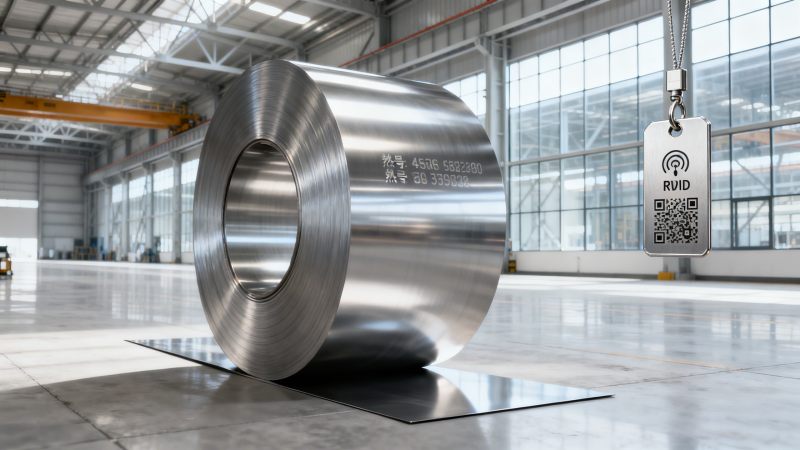
Because traceability isn’t an add-on — it’s engineered into our production DNA. We don’t just ship steel; we ship verifiable assurance. Whether you’re specifying ASTM A36 angle steel for a Middle East refinery, EN 10025 S355J2 beams for a European logistics hub, or custom cold-formed profiles for Southeast Asian industrial plants, our traceability framework delivers:
- End-to-end digital heat tracking — from furnace tap to container seal
- MTRs issued within 24 hours of final testing, with EN 10204 3.1 or 3.2 options
- Multi-standard compliance reporting (ASTM/EN/GB/JIS) per order — no retesting required
- Customizable traceability packages: QR-tagged bundles, ERP-integrated XML exports, or printed heat maps for site QA
- Dedicated traceability support: 1:1 engineer consultation, audit prep assistance, and rapid document retrieval (≤4 business hours)
Ready to move beyond “certified” to truly traceable sourcing? Contact our technical sales team to request a traceability package sample, discuss your next ASTM or EN-compliant order, or schedule a virtual factory tour with live traceability demo.
Please give us a message


Please enter what you want to find