SS pipe price changes can directly affect project budgets, sourcing plans, and delivery decisions for global buyers. From raw material volatility and grade selection to production capacity, international demand, and freight costs, several factors can push the cost up quickly. For business decision-makers, understanding what drives ss pipe pricing is essential to reducing procurement risks and improving long-term purchasing efficiency.
SS Pipe Price Swings Are Becoming More Visible Across Global Steel Trade
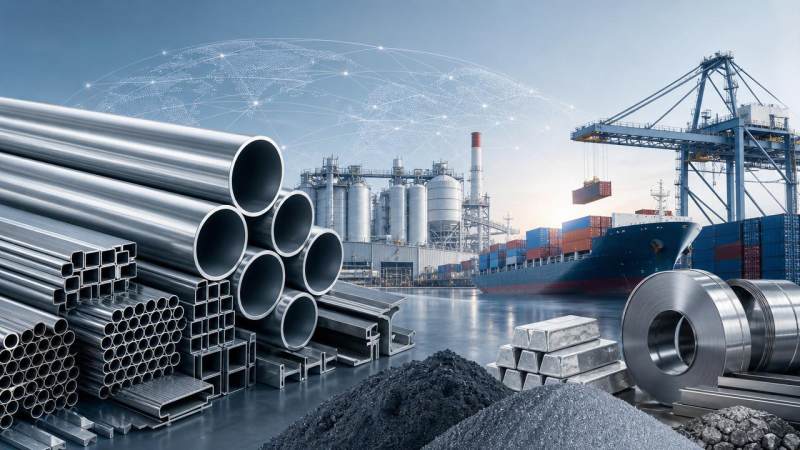
Recent market behavior shows that ss pipe costs no longer move in a slow, predictable pattern. Price swings now happen faster and often spread across regions within weeks.
This change is closely tied to the wider steel supply chain. Stainless raw materials, energy costs, freight pressure, and lead time constraints increasingly move together.
In many projects, ss pipe is not a standalone item. It connects with structural steel demand, industrial fabrication schedules, and infrastructure investment cycles.
When demand rises in construction, processing, energy, or manufacturing, suppliers often adjust offers quickly. Even a small upstream shock can lift ss pipe cost noticeably.
Several Trend Signals Usually Appear Before SS Pipe Cost Moves Higher
Price increases rarely come from one cause alone. Most ss pipe increases develop after several market signals begin aligning at the same time.
- Nickel and chromium prices start climbing.
- Major mills shorten discount windows or reduce spot availability.
- Export freight and container rates move upward.
- Regional inventory falls below normal replacement levels.
- Project demand rebounds after delayed approvals.
- Currency changes weaken import purchasing power.
Watching these signals together gives a more accurate view than tracking one number. SS pipe pricing is usually the result of combined pressure, not isolated events.
What Usually Drives SS Pipe Price Up in Real Market Conditions
The table below summarizes the main drivers behind higher ss pipe prices and explains how each factor affects final offers.
Raw material volatility is still the first pressure point
Among all factors, alloy movement is usually the strongest trigger. When nickel jumps, stainless mills recalculate costs and often revise ss pipe prices immediately.
Chromium, molybdenum, scrap, and energy also matter. For grades such as 316, molybdenum can create extra upward pressure beyond standard market movement.
Specification complexity can quietly lift cost
Not every ss pipe order follows standard dimensions. Nonstandard diameters, strict tolerances, polished finishes, and special testing can raise conversion cost significantly.
Small quantity orders can also cost more per ton. Setup time, changeover effort, and lower batch efficiency reduce pricing flexibility for suppliers.
Rising SS Pipe Prices Affect More Than Material Budgets Alone
When ss pipe becomes more expensive, the impact reaches planning, scheduling, and working capital. The effect is wider than the visible unit price on a quotation sheet.
- Budget approvals may slow if estimated totals exceed early assumptions.
- Alternative grades may be reviewed to protect total project cost.
- Delivery timing can shift when buyers wait for price stability.
- Cash flow pressure increases when inventory must be secured earlier.
- Supplier comparison becomes more difficult during volatile periods.
For cross-border orders, landed cost can change faster than factory price. Exchange rates, packing methods, freight mode, and destination port conditions all reshape the final result.
This is why many steel buyers now track total sourcing cost, not only the headline ss pipe offer. The smarter view is cost plus timing plus supply certainty.
The Most Important Areas to Watch When SS Pipe Market Pressure Builds
In a rising market, attention should stay on a few practical checkpoints. These indicators help reduce surprises before ss pipe prices move out of range.
- Check alloy trend direction weekly, not monthly.
- Separate spot demand from long-term demand signals.
- Review whether the required grade is truly necessary.
- Confirm production lead time before internal approval completes.
- Compare ex-works, FOB, and delivered pricing structures carefully.
- Evaluate supplier consistency, not just the lowest offer.
A reliable steel supply partner can help stabilize outcomes during volatile periods. Strong quality control and dependable scheduling often save more than a short-term discount.
Hongteng Fengda, a structural steel manufacturer and exporter from China, supports global projects with stable production, international standards compliance, and customized steel solutions.
Its experience across North America, Europe, the Middle East, and Southeast Asia reflects the importance of supply continuity when steel market conditions tighten.
A Smarter Response to SS Pipe Price Swings Starts With Better Timing
The best response is not panic buying. It is structured planning based on timing, specifications, and supplier coordination.
Another useful strategy is to compare ss pipe demand with adjacent stainless applications. Sometimes broader stainless movement reveals upcoming pricing pressure before pipe offers change.
For example, rising demand in filtration, architecture, and industrial processing can indicate stronger stainless consumption overall. That often supports firmer pricing across related products.
Market Awareness Creates Better Purchasing Outcomes in Stainless Steel
SS pipe pricing is driven by a chain of connected forces. Raw materials, grade choice, manufacturing load, freight, and trade conditions all shape the final number.
The most effective approach is to monitor trend signals early, validate real demand, and align orders with reliable production capacity. That reduces cost shocks and improves delivery confidence.
For buyers working across broader stainless applications, it is also useful to review related products with strong corrosion resistance and durable performance characteristics.
One example is 306 Stainless Steel Welded Mesh, available in grades such as SS 201, 304, 304L, 316, 316L, and 430.
It is suitable for filters, sieve systems, chemical industry, mining, architecture, and residences, with mesh options from 2-635 mesh and roll width up to 240 inches.
Its resistance to rust, corrosion, acid, alkali, heat, and chemicals makes it valuable where stainless performance and long service life are critical.
Please give us a message


Please enter what you want to find