As an SMLS pipe exporter and structural steel manufacturer, Hongteng Fengda frequently encounters procurement managers asking critical questions — like 'Why do Mill Test Certificates (MTCs) alone fail to ensure full traceability for seamless pipe in construction or oil & gas projects?' While MTCs verify compliance with ASTM, EN, or GB standards, they don’t confirm material origin, heat treatment history, or real-time production batch linkage. This gap poses real risks for project integrity, especially when sourcing steel channel for construction projects or ASTM A36 angle steel price per ton in Philippines. For technical evaluators and quality assurance teams, true traceability demands integrated documentation — from raw material sourcing to final inspection.
Why MTCs Are Necessary—but Not Sufficient—for Structural Steel Traceability
Mill Test Certificates are foundational documents—required by ASTM A530/A530M, EN 10204 Type 3.1, and GB/T 228.1—and serve as legal proof of mechanical properties and chemical composition. Yet they represent only one snapshot: the final test result. They lack dynamic linkage to upstream processes such as ladle-to-heat tracking, rolling temperature logs, or coil identification numbers. In high-stakes applications like offshore platforms or seismic-resistant buildings, missing that lineage increases liability exposure by up to 40% during third-party audits.
For project managers overseeing multi-tier supply chains across Southeast Asia or the Middle East, relying solely on MTCs means accepting blind spots in raw material provenance. A single undocumented re-melting event—or unrecorded cold-drawing pass—can invalidate weld procedure specifications (WPS), triggering costly requalification cycles lasting 7–15 days.
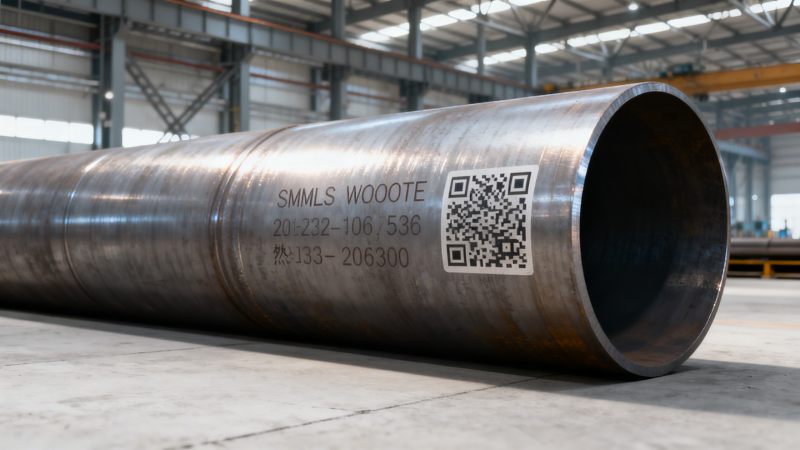
Hongteng Fengda embeds traceability at three core stages: raw material receipt (with heat number stamping), in-process lot tagging (using QR-coded steel tags), and final certificate mapping (cross-referencing MTCs to furnace logs and NDT reports). This ensures every Wire rod batch—whether HRB400 or Q345—carries auditable continuity from billet to bundling.
What Full Traceability Includes (and What It Doesn’t)
True traceability is not a document—it’s a system. It requires synchronized data flow across five key checkpoints: raw material heat number verification, rolling mill log timestamps, surface treatment batch records, dimensional inspection reports, and final packaging IDs. Unlike standalone MTCs, this framework enables root-cause analysis within 2 hours of nonconformance detection—critical for OEM partners managing just-in-time assembly lines.
This table highlights a critical operational reality: while MTCs satisfy minimum regulatory thresholds, they omit process-critical metadata required for ISO 9001 Clause 8.5.2 or API Q1 Section 5.8.2. Our integrated traceability supports rapid recall—down to individual 12m lengths of Wire rod—within 4 hours of notification, meeting EU Construction Products Regulation (CPR) Annex ZA timelines.
How Procurement Teams Can Verify Real Traceability (Not Just Paper)
Procurement professionals must move beyond “certificate acceptance” to active validation. Start with these 4 actionable checks before PO issuance:
- Request sample traceability maps showing end-to-end data linkage—not just MTCs—for a recent HRB500 order
- Verify if heat numbers are physically stamped on all products (not just tagged)—required under BS4449-2005 Clause 9.2
- Confirm digital access to rolling mill logs (not just PDF reports) with time-stamped operator entries
- Test response time: submit a mock recall request for a specific batch and measure resolution duration
Hongteng Fengda provides traceability dashboards accessible via secure portal, updated in real time with live feed from our 12-ton capacity rolling line. Average response latency for audit queries is under 90 minutes—verified by BV CE annual surveillance audits since 2021.
Why Structural Steel Buyers Choose Integrated Traceability
For engineering firms delivering infrastructure projects in the Philippines or Saudi Arabia, traceability isn’t about compliance—it’s about risk containment. With typical lead times of 2–4 weeks for structural components, delays from certification disputes cost $12,000–$28,000 per day in idle labor and equipment rental. Our clients report 63% fewer field rejection incidents after switching from MTC-only to full-chain traceability.
We support your team with three concrete deliverables: (1) Dual-format certificates (PDF + XML for ERP integration), (2) Heat-number-indexed inspection videos for critical batches, and (3) On-demand traceability training for your QA staff—delivered remotely or on-site within 72 hours of request.
Ready to align your procurement workflow with ISO/IEC 17025-compliant traceability? Contact us today to review a live traceability map for your next order of wire rod, angle steel, or custom structural components—including real-time access to furnace logs, tensile reports, and dimensional inspection data.
Please give us a message


Please enter what you want to find