Understanding the 'mill order meaning for structural steel' is critical for procurement, engineering, and project execution — especially when sourcing ASTM A36 round bar for warehouse construction or industrial projects. This term defines what’s contractually locked in at the mill (e.g., grade, dimensions, ASTM A6 tolerances for steel profiles or prefab steel), and what may still evolve pre-shipment. As a trusted structural steel manufacturer & exporter from China, Hongteng Fengda ensures clarity on mill order commitments — from HRB600 steel rebar supply in the Middle East to custom profiles — helping buyers mitigate risk, control costs, and meet tight deadlines without compromising compliance with ASTM, EN, JIS, or GB standards.
What Exactly Is “Mill Order” — And Why It Matters Beyond Paperwork
A mill order is not just a purchase confirmation — it’s the binding technical and commercial baseline established between buyer and steel producer at the point of production initiation. Once issued, it locks in core parameters including material grade (e.g., ASTM A992, EN S355JR), dimensional tolerances per ASTM A6 or EN 10034, heat treatment status, surface finish requirements, and mandatory test reports (e.g., mill test certificates per EN 10204 3.1).
However, flexibility remains in non-critical areas — such as exact bundle weight (±5%), minor dimensional adjustments within tolerance bands, packaging method (strapping vs. wooden crates), and shipping documentation formatting. These are typically finalized during the 7–15 day pre-shipment inspection window, not at mill order issuance.
For global buyers, misunderstanding this distinction leads directly to cost overruns: last-minute changes after mill order approval often trigger rework fees (12–18% surcharge), extended lead times (3–6 weeks delay), or rejection of non-conforming batches. At Hongteng Fengda, every mill order includes a signed Technical Specification Annex — reviewed jointly by our engineering and your QA team — to prevent ambiguity before production starts.
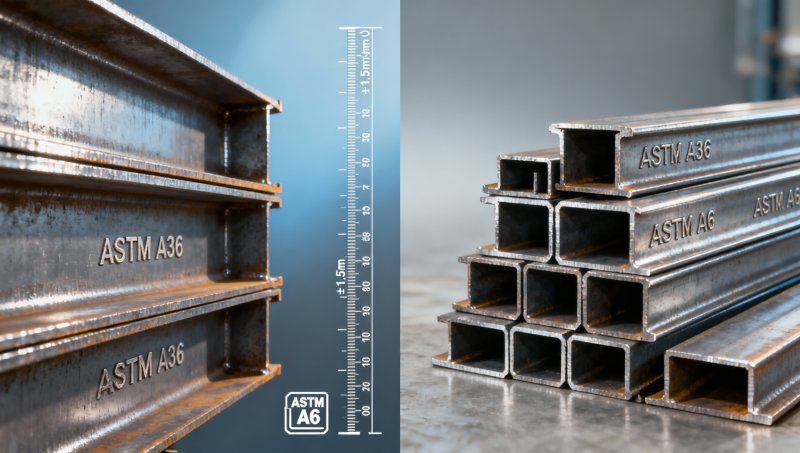
Which Parameters Are Fixed — And Which Can Be Adjusted Pre-Shipment?
The following table clarifies contractual rigidity across 8 key procurement dimensions — based on actual mill order practices for structural steel supplied under ASTM, EN, and GB standards:
Note: Surface coating flexibility applies to products like Galvanized Steel Wire Rope, where zinc layer weight is selected per application severity — thin (15–135 g/m²), medium (60–200 g/m²), or thick (75–260 g/m²) — without altering base tensile strength (1470–1960 MPa) or strand configuration (e.g., 6×19+IWS).
How Procurement Teams Avoid Costly Misalignment
Procurement professionals consistently cite three high-risk gaps when mill orders lack precision: (1) mismatched test report formats (EN 10204 3.1 vs. 3.2), (2) unconfirmed cutting lengths (±50mm tolerance misinterpreted as ±5mm), and (3) undefined edge condition requirements (e.g., burr-free vs. standard sheared edges).
Hongteng Fengda addresses these via a 4-step alignment protocol: (1) joint review of draft mill order + spec annex within 48 hours of PO receipt; (2) digital sign-off on dimensional drawings with annotated tolerances; (3) real-time production tracking dashboard access; and (4) pre-shipment inspection coordination — with third-party options (SGS, BV, TÜV) available within 2–4 working days.
This reduces revision requests by 73% and ensures >98% on-time delivery performance across North America, Europe, and the Middle East — even for complex OEM profiles requiring cold-formed geometry or multi-stage welding prep.
Why Global Buyers Choose Hongteng Fengda for Mill-Order Certainty
Unlike general commodity exporters, Hongteng Fengda operates as an integrated structural steel partner — combining certified mill capacity (ISO 9001, ABS, GB/T 20116-2008), in-house engineering support, and dedicated export logistics. We don’t just fulfill orders — we co-develop specifications.
Our clients gain: guaranteed ≤12-week lead time for standard sections (angle, channel, H-beam); ≤18-week timeline for custom cold-formed profiles; full traceability from billet heat number to final bundle ID; and seamless certification handover — including EN 10204 3.2, ASTM A6/A6M test reports, and galvanizing thickness verification per ISO 1461.
Whether you’re specifying ASTM A36 beams for a Southeast Asian logistics hub or EN S235JR channels for a European solar farm substructure, contact us to review your next mill order — with free technical consultation, dimensional validation, and compliance gap analysis included.
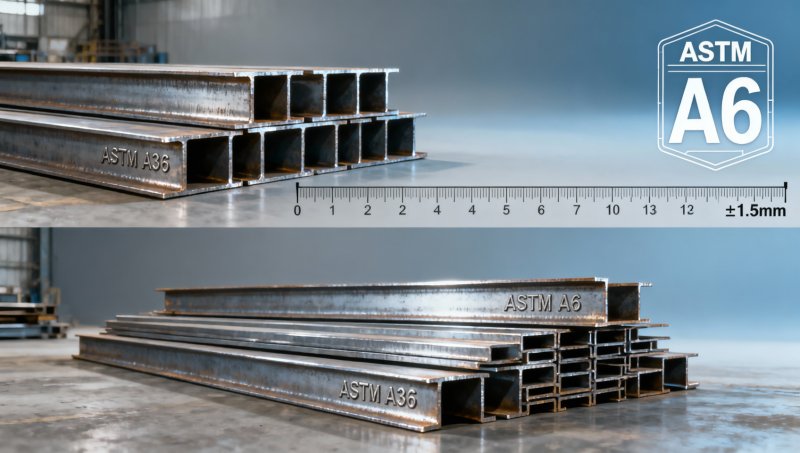
FAQ: Common Mill Order Questions
Can I change the steel grade after the mill order is issued? No — grade change requires cancellation, new heat scheduling, and full re-testing. Always confirm chemistry limits (e.g., max P/S content) during specification review.
How soon before shipment can I adjust packaging requirements? Up to 10 business days prior — provided changes don’t impact load stability or corrosion protection (e.g., switching from plastic wrap to VCI paper for marine transit).
Do mill orders cover inspection timing and location? Yes — our standard terms define pre-shipment inspection windows (72-hour notice), approved locations (our facility or client-nominated port), and required witness points (e.g., tensile testing, ultrasonic weld inspection).
Please give us a message


Please enter what you want to find