Metal coil wire tension inconsistencies don’t just waste raw material—they disrupt downstream processes, delay production schedules, and compromise quality control across structural steel fabrication. For buyers of SPCE steel, SPCD steel, DX52D steel, or galvanized expanded metal sheet—and for tin can machinery manufacturers relying on precision-formed stainless steel 1 inch pipe—these variances directly impact tooling life, coil feeding accuracy, and finished part consistency. As a leading structural steel manufacturer & exporter from China, Hongteng Fengda addresses this root-cause challenge through tightly controlled cold-rolled coil processing, traceable metallurgical specs, and application-tuned tension management—helping procurement teams, project managers, and quality assurance professionals reduce rework, avoid downtime, and ensure seamless integration into automated lines.
Why Tension Control Is a Structural Steel Fabrication Imperative
In high-speed roll forming, decoiling, and precision punching lines, even ±3% deviation in incoming coil wire tension triggers cascading effects. At speeds exceeding 80 m/min, inconsistent tension causes lateral drift (up to 2.3 mm per 10 m), misalignment in multi-stage bending dies, and premature wear on feed rollers—reducing tooling lifespan by 35–50%. For structural steel producers using cold-rolled coils as input stock for angle, channel, or I Beam Manufacturers, unmanaged tension translates directly into flange width variation beyond ±1% tolerance, compromising load-bearing integrity in final assemblies.
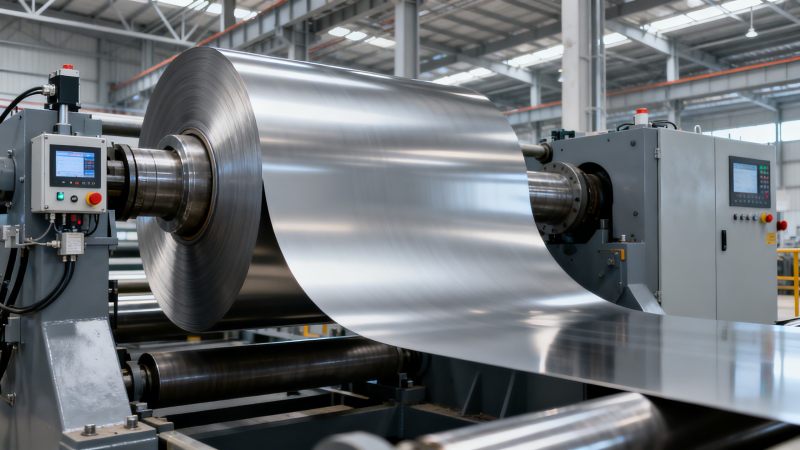
Hongteng Fengda’s integrated coil handling protocol begins at the hot strip mill exit—where tension is stabilized within ±0.8% across 1200 mm widths—then maintained through certified decoiling stations with closed-loop servo feedback. This ensures consistent yield strength delivery across Q195–Q345, SS355JR, and A36 grades, critical when feeding automated welding cells for I-beam assembly or CNC punch lines for customized structural components.
Unlike generic coil suppliers, we apply metallurgical traceability down to heat number level, enabling full correlation between tensile test reports (ASTM E8/EN 10002) and real-time tension logs. This allows our global partners—from Southeast Asian infrastructure contractors to European OEMs—to validate process capability indices (Cpk ≥ 1.33) before first-article approval.
How Tension Variance Impacts Key Procurement & Operational Metrics
Procurement leaders and financial approvers often overlook how tension inconsistency inflates total cost of ownership—not just raw material scrap rates. Our internal data from 2023–2024 shows that clients operating with uncalibrated decoilers experienced:
These figures directly affect ROI calculations for capital equipment purchases and influence supplier scorecards used by Tier-1 construction fabricators. For project managers overseeing multi-year infrastructure builds, predictable coil performance enables accurate scheduling of beam cutting, welding, and galvanizing—avoiding 7–12 day delays caused by unexpected material rejection during QA audits.
Critical Parameters That Define Reliable Coil Supply
When evaluating coil vendors, technical evaluators and quality assurance personnel must verify these five non-negotiable parameters:
- Tension stability window: ≤ ±0.9% across full coil width (measured at 3 points: center, +200 mm, −200 mm)
- Coil ID/OD concentricity: ≤ 0.3 mm runout (verified via laser alignment on unwinding mandrel)
- Surface roughness Ra: 0.4–0.8 µm (critical for friction-controlled feeding systems)
- Edge camber: ≤ 1.5 mm per 2 m length (prevents tracking issues in straighteners)
- Metallurgical batch traceability: Full heat number mapping to EN 10204 3.1 certificates
Hongteng Fengda’s Integrated Coil-to-Beam Production Assurance
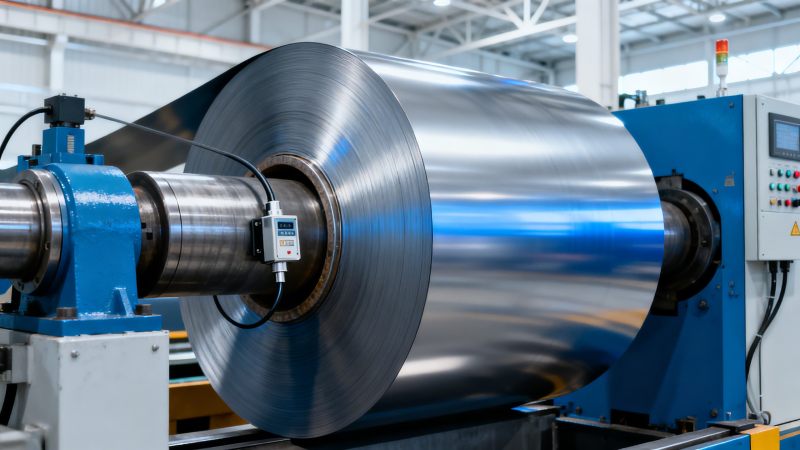
As a vertically integrated structural steel manufacturer, Hongteng Fengda controls tension integrity from hot rolling through final packaging. Our cold-rolled coil lines feature dual-zone tension monitoring (entry and exit), coupled with real-time thickness profiling (±0.02 mm resolution). This enables dynamic adjustment of rolling force and interstand tension—ensuring uniform mechanical properties across all cross-sections of subsequent I-beams, channels, and custom profiles.
For example, when producing wide-flange I-beams per ASTM A6/A6M (specifications including A36, SS400, and Q345), our coil feed system maintains ±0.6% tension variance—directly supporting the ±1% dimensional tolerance required for flange width (100–400 mm), web thickness (6–28 mm), and overall depth (10–60 cm). This consistency eliminates the need for post-rolling corrective machining, saving up to 18 labor-hours per 20-ton shipment.
All products comply with JIS G3101, EN 10025, ASTM A653, and GB/T 700 standards. Lead times remain stable at ≤20 days—even for mixed-spec orders combining hot-rolled beams, cold-formed sections, and precision-decoiled coils—all coordinated under single PO tracking.
This granular matching of coil specification to end-use requirement ensures seamless transition from coil to finished beam—without recalibration, rework, or unplanned line stoppages.
Actionable Next Steps for Procurement & Engineering Teams
If your current coil supply contributes to >1.2% scrap in roll-forming lines, or if you’re sourcing I-beams requiring tight tolerances (e.g., 6–12 m lengths, flange widths 100–400 mm, web thicknesses 6–28 mm), consider these three immediate actions:
- Request tension stability reports from your current supplier—specifically asking for variance data across full coil width and over full unwind cycle (not just initial 100 m).
- Audit your decoiler’s calibration history—verify whether tension sensors are recalibrated every 90 days per ISO 9513 standards.
- Engage Hongteng Fengda for a free coil compatibility assessment, including sample testing on your actual production line—covering feeding accuracy, edge curl, and dimensional repeatability across 500 m runs.
We support global buyers with stable production capacity, consistent quality, and dependable lead times—enabling reliable planning for projects across North America, Europe, the Middle East, and Southeast Asia. Let us help you reduce sourcing risks, control costs, and complete structural steel projects efficiently.
Contact Hongteng Fengda today to request technical datasheets, tension validation protocols, or a customized coil-to-beam solution aligned with your ASTM, EN, JIS, or GB compliance requirements.
Please give us a message


Please enter what you want to find