For faster-moving steel supply chains, metal angle iron with holes is becoming a practical stock item rather than a special-order material.
It shortens preparation time, reduces drilling work, and helps projects move from quotation to delivery with fewer delays.
In construction, fabrication, shelving, framing, and support systems, ready-stock metal angle iron with holes creates immediate value through speed, flexibility, and lower handling costs.
As global buyers look for stable steel sources, dependable stock options also improve turnover, simplify planning, and reduce sourcing risk across multiple markets.
Why metal angle iron with holes is moving into faster-selling steel categories
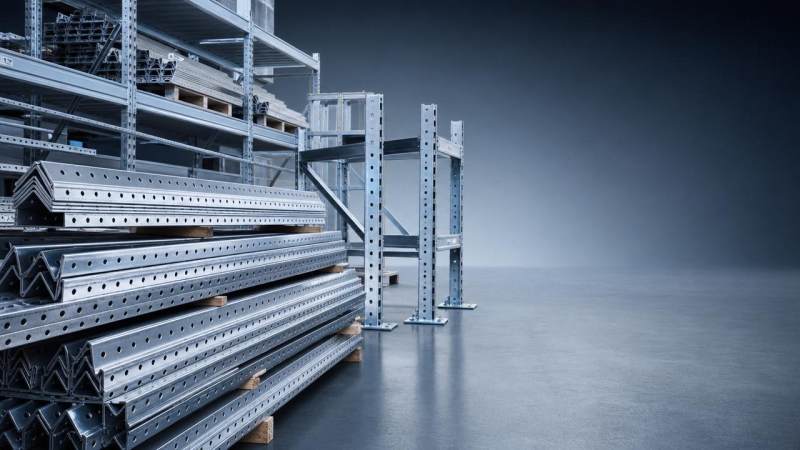
Demand patterns in steel distribution have changed noticeably during recent years.
Buyers increasingly prefer semi-finished structural materials that save workshop time without sacrificing strength or specification consistency.
That shift supports the rise of metal angle iron with holes as a high-rotation inventory choice.
Compared with plain angle steel, perforated angle products can move faster because they are easier to install in common support, framing, rack, and bracket applications.
Projects with tight schedules often favor stock materials that reduce fabrication steps on site.
This is especially relevant where labor costs are rising and site efficiency matters more than before.
Hongteng Fengda, a structural steel manufacturer and exporter from China, supports this demand with stable production, customized solutions, and compliance with ASTM, EN, JIS, and GB standards.
The strongest market signals point to ready-to-install steel solutions
Several signals explain why metal angle iron with holes is gaining stronger commercial relevance in the steel industry.
- More projects are using modular assembly methods.
- Fabricators want to reduce secondary drilling and cutting.
- Inventory planning now favors versatile structural steel products.
- End users expect shorter lead times for standard support components.
- Export buyers value stock consistency across repeated orders.
These signals are not temporary. They reflect a broader move toward flexible, lower-processing steel supply.
In many markets, metal angle iron with holes now fits both general inventory and project-specific demand.
What is driving the shift
Why stock availability matters more than simple unit price
A lower steel price does not always produce a lower total project cost.
When plain material needs extra drilling, alignment, and labor, hidden costs can quickly rise.
That is why stock metal angle iron with holes often performs better in real project economics.
It helps reduce fabrication hours, simplify installation, and improve delivery responsiveness for urgent jobs.
For steel supply businesses, this also means faster dispatch and fewer processing bottlenecks.
Commercial advantages of stocking perforated angle steel
- Higher inventory versatility across shelving, supports, frames, and guards
- Better responsiveness to small and medium mixed orders
- Lower dependence on local secondary processing capacity
- Improved customer retention through repeatable specifications
- Reduced installation delays in field applications
This makes metal angle iron with holes suitable for buyers who prioritize speed, predictability, and inventory efficiency.
Application demand is broadening beyond traditional framing uses
The use of metal angle iron with holes is no longer limited to basic construction supports.
It is increasingly selected for industrial fit-outs, storage systems, equipment bases, protective structures, and light structural reinforcement.
Because hole patterns support quicker connection, the material adapts well to repeat assembly environments.
This trend aligns with wider interest in standardized steel components across export markets.
Related demand can also connect with broader structural supply categories.
For example, some infrastructure and railing projects may require complementary products such as Rail for railway, bridge railing, or deck handrail applications.
Available grades include U74, U71Mn, PD2, PD3, Q235, 55Q, and 50Q, with lengths from 12m to 30m and thickness from 3mm to 24mm.
These products are offered in oil, black, galvanized, or painted finishes, supported by ISO9001-2008 and ISO14001:2004 certification.
How the shift affects sourcing, stocking, and project execution
The rise of metal angle iron with holes affects more than product selection.
It changes how steel is stocked, quoted, and moved through the supply chain.
Effects on supply operations
- Stock planning becomes more application-oriented
- Mixed-specification shipments become easier to organize
- Lead time competitiveness becomes a stronger sales factor
- Quality consistency becomes more important for repeat projects
Effects on project performance
- Site assembly can start earlier
- Rework risk drops when hole spacing is consistent
- Steel waste can be reduced in repetitive installations
- Budget control improves through lower labor intensity
In practical terms, metal angle iron with holes supports both operational speed and commercial predictability.
What deserves closer attention when selecting stock metal angle iron with holes
Not all stock options deliver the same value.
Selection should focus on specification fit, consistency, and exporter reliability rather than only price visibility.
- Check steel grade compatibility with end-use load requirements
- Confirm hole spacing, angle dimensions, and thickness tolerances
- Review surface treatment options for indoor or outdoor use
- Evaluate packaging, export documentation, and delivery stability
- Ask whether OEM or customized punching patterns are available
A reliable Chinese structural steel supplier can add value through stable production, quality control, and flexibility across standard and customized requirements.
A practical response strategy for the next buying cycle
The current direction is clear: steel buyers increasingly reward speed, adaptability, and ready-to-use formats.
Metal angle iron with holes fits this direction because it balances structural utility with faster turnover potential.
For businesses seeking stronger steel turnover, metal angle iron with holes is more than a basic commodity.
It is a practical response to faster projects, tighter labor conditions, and growing demand for flexible structural steel supply.
The next step is to compare stock specifications, confirm quality standards, and work with a supplier that can support both regular volumes and customized structural steel needs.
Please give us a message


Please enter what you want to find