Lightweight structural steel is not simply about buying less metal. The real decision is whether reducing section weight can still meet load, span, fabrication, safety, and lifecycle cost requirements. In many projects, the answer is yes—if the steel grade, section design, and manufacturing quality are chosen correctly. For engineers, buyers, and project managers, the best approach is to compare total project value rather than material price per ton alone.
What buyers really need to know about cost vs performance
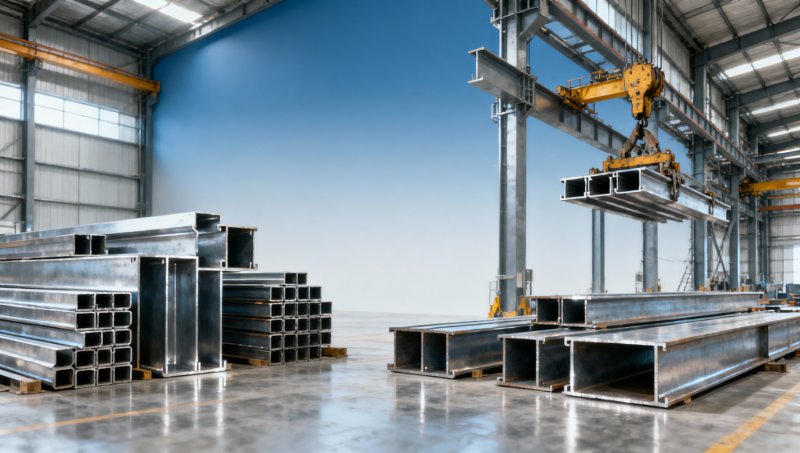
When people search for “lightweight structural steel: cost vs performance,” they are usually not looking for theory alone. They want to know whether lighter steel sections can lower project cost without creating new risks in strength, welding, installation, or long-term durability.
The short answer is that lightweight structural steel often improves value in the right application because it can reduce dead load, simplify transport, speed installation, and lower foundation demand. However, it is not automatically the cheapest option in every case. A lighter section made from higher strength structural steel may cost more per ton, and some designs require stricter fabrication control to deliver the expected performance.
That is why decision-makers should evaluate lightweight steel using five practical questions:
- Will it meet structural load and deflection requirements?
- Will it reduce total installed cost, not just raw material weight?
- Will it simplify logistics, handling, and erection?
- Will it maintain safety, compliance, and service life?
- Will the supplier deliver consistent quality to the required standard?
For construction firms, industrial users, distributors, and procurement teams, these questions matter more than a simple “lighter is better” assumption.
Where lightweight structural steel creates real savings
The strongest business case for lightweight structural steel appears when lower weight affects more than one cost category. This is where many projects gain measurable savings.
1. Reduced structural dead load
A lighter frame reduces the permanent load acting on columns, beams, slabs, and foundations. In some buildings and industrial structures, that means secondary members and substructures can also be optimized.
2. Lower transportation and handling cost
Lighter members are often easier and cheaper to ship, especially in export projects. They may also reduce crane demand, site handling time, and labor intensity during installation.
3. Faster erection
If section design is optimized correctly, lighter components can be easier to position and connect. This can help compress project schedules, which is often more valuable than material savings alone.
4. Better use in modular and prefabricated systems
Many modern factories, warehouses, equipment platforms, and commercial structures benefit from lighter profiles because they support off-site fabrication and efficient site assembly.
5. Potential lifecycle value
If the steel also offers reliable corrosion protection, dimensional consistency, and stable quality, it can reduce maintenance risk and support longer service performance.
These advantages are especially relevant in building frames, industrial workshops, mezzanines, equipment support systems, bridge-related components, and even reinforcement-related support structures such as rebar for retaining wall applications where overall load paths and material efficiency matter.
When lightweight steel may not be the lowest-cost option
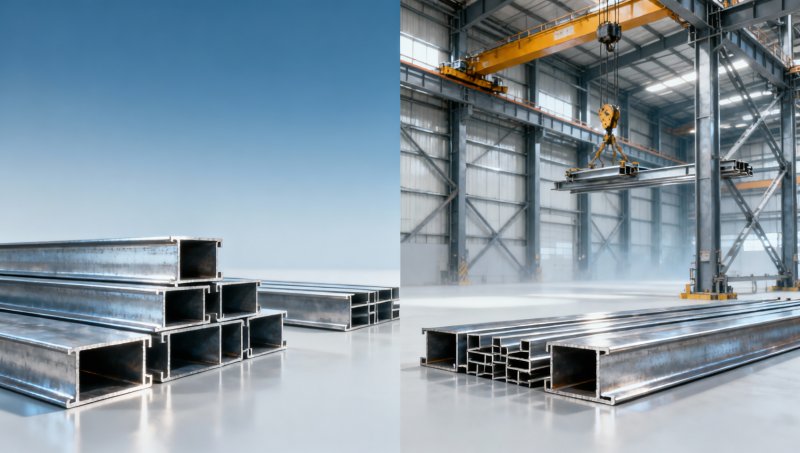
Lightweight structural steel should not be selected only because it sounds efficient. In some situations, a heavier or more conventional section may offer a better total result.
Here are common cases where the trade-off needs closer review:
- High deflection sensitivity: A section may satisfy strength requirements but still perform poorly in stiffness-sensitive applications.
- Complex fabrication: Some optimized designs require more welding, cutting, or precision fabrication, offsetting raw material savings.
- Harsh service environments: Coastal, chemical, or high-humidity conditions may shift the decision toward durability and protective treatment over minimum weight.
- Connection-heavy structures: If joints, plates, and reinforcement details become more complex, the lighter main section may not reduce the installed cost.
- Limited supplier consistency: If tolerances, straightness, or mechanical properties vary too much, lightweight design margins can be harder to control safely.
For this reason, technical review should include not just yield strength and section size, but also buckling behavior, fabrication impact, coating requirements, code compliance, and expected field conditions.
How to compare lightweight structural steel correctly
A useful comparison method is to evaluate steel options across the full project chain instead of only checking the quoted tonnage price.
Use this framework:
- Material cost: Price per ton and expected consumption
- Structural efficiency: Load-bearing capacity relative to section weight
- Fabrication cost: Cutting, punching, welding, bending, and finishing
- Logistics cost: Packing, container loading, inland transport, export handling
- Installation cost: Lifting equipment, labor hours, site speed
- Compliance risk: Whether the steel meets ASTM, EN, JIS, or GB requirements
- Quality risk: Tolerance control, test certificates, consistency between batches
- Lifecycle cost: Coating, corrosion maintenance, replacement risk
This approach helps financial approvers, project leaders, and procurement managers avoid a common mistake: choosing the cheapest steel quote that leads to higher downstream cost.
Why section choice matters as much as steel grade
In lightweight design, performance does not come from steel grade alone. Section geometry also has a major influence on strength, stiffness, fabrication practicality, and installed efficiency.
For example, I-beams remain a common choice for industrial structure support because they offer efficient load distribution and proven performance in beams and frames. Depending on the design goal, light I-beams may help reduce weight through narrow flanges, thinner webs, and economical cross-sections, while wide flange options can provide stronger section behavior and easier load handling in other applications.
For buyers comparing section solutions for industrial structures, products such as I Beam Manufacturers can be relevant where standardized and custom dimensions are needed. Available material grades may include Q195-Q235, Q345, SS355JR, SS400, A36, ST37-2, S235J0, S235J2, and St52, with typical thickness ranges from 4.5mm to 15.8mm, flange widths from 100mm to 400mm, web dimensions up to 900mm, and production processes such as hot rolled molding, punching, cutting, bending, and welding. For technical buyers, the practical value lies in matching section size, tolerance, standard compliance, and lead time to the project rather than choosing by price alone.
What engineers, procurement teams, and managers should check before buying
To make a sound decision, cross-functional teams should align technical and commercial checks early. The most reliable purchasing decisions usually come from combining design review with supplier capability review.
Engineering checks
- Required load, span, and support conditions
- Strength, stiffness, and stability performance
- Compatibility with connection design and fabrication method
- Fire, corrosion, and safety requirements
- Applicable code or market standard
Procurement and commercial checks
- Price basis and quantity breakpoints
- Production capacity and lead time stability
- Tolerance control and inspection process
- Mill test certificates and traceability
- Export packing and shipping experience
- Responsiveness for OEM or custom steel components
Quality and project delivery checks
- Dimensional consistency across batches
- Surface condition and coating readiness
- Third-party inspection support if needed
- Clear communication on substitutions and deviations
For international sourcing, a manufacturer with broad standards coverage and stable export execution can help reduce sourcing risk significantly. This is particularly important for enterprises balancing technical performance with schedule and budget control.
How to make the final decision on lightweight structural steel
If the project goal is lower total installed cost, faster construction, easier transport, or better structural efficiency, lightweight structural steel can be an excellent choice. But the best result comes when it is selected through a total-value review.
A practical rule is simple:
- Choose lightweight steel when lower mass creates measurable savings in foundations, transport, handling, and installation.
- Be cautious when stiffness, connection complexity, corrosion exposure, or fabrication demands could erase those savings.
- Work with suppliers that can prove compliance, maintain tolerances, and support custom requirements reliably.
In other words, cost vs performance is not a conflict between cheap steel and strong steel. It is a decision about how to balance weight, structural behavior, manufacturability, logistics, and service life for the actual use case.
For most industrial and construction buyers, the right lightweight structural steel solution is the one that delivers safe performance and lowers total project burden—not merely the one with the lowest per-ton quote. When section design, steel grade, and supplier quality are aligned, lightweight steel can improve both engineering value and commercial return.
Please give us a message


Please enter what you want to find