When evaluating long-term construction investments, financial approvers must look beyond initial material prices to understand true value. A comprehensive lifecycle cost analysis of Steel Roofing versus traditional tiles reveals significant insights into total ownership expenses. While upfront material costs may vary, Steel Roofing consistently delivers superior durability, significantly lower maintenance requirements, and enhanced energy efficiency over decades. This guide breaks down the critical financial metrics to help you make data-driven decisions that maximize return on investment and minimize long-term operational expenditures for your next commercial project.
The Initial Capital Expenditure (CapEx) Reality
The most common friction point in material selection is the initial purchase price. Traditional clay or concrete tiles often appear cheaper per square meter on a basic material quote. However, this narrow view ignores the structural implications of material weight. Clay and concrete tiles are exceptionally heavy, often requiring 600 to 1,000 pounds per square foot of dead load support. This weight dictates the entire structural design of the building.
When the roof load increases, the requirements for the underlying framework scale up accordingly. In commercial and industrial construction, the roof load directly influences the tonnage of steel beams, channel steel, and purlins needed. By transitioning to a lighter Steel Roofing system, which typically adds only 50 to 100 pounds per square foot, project teams can significantly reduce the structural steel requirements. As a structural steel manufacturer and exporter, Hongteng Fengda frequently collaborates with engineering teams to optimize these frameworks. Supplying standard specifications and customized structural steel components that comply with ASTM, EN, JIS, and GB standards allows global buyers to control structural CapEx without compromising safety margins. The savings on the primary steel structure often offset, or even exceed, the initial price difference of the roofing material itself.
Operational Expenditure and Maintenance Cycles
Financial models for commercial properties must account for Operational Expenditure (OpEx) over a 20 to 40-year horizon. Traditional tiles are brittle. They are susceptible to micro-cracking from thermal shock, hail, or even the weight of maintenance personnel walking on the roof to clean gutters or inspect HVAC units. Each broken tile creates a potential water ingress point, leading to interior damage, mold remediation costs, and the labor-intensive process of sourcing and replacing individual pieces.
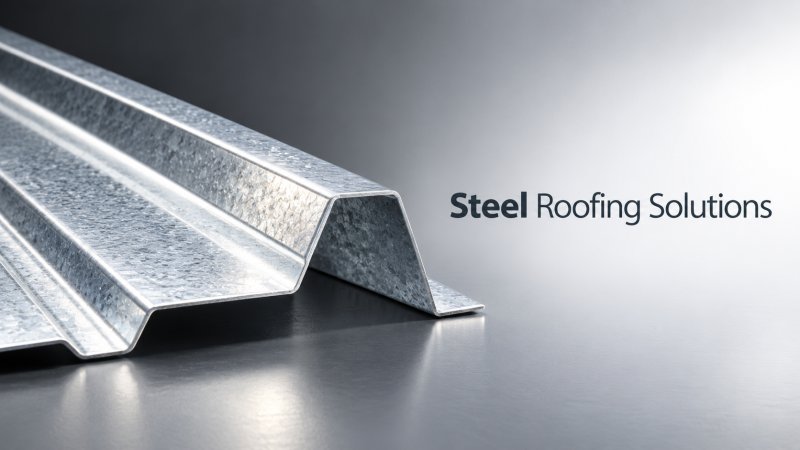
Steel roofing systems, particularly those utilizing continuous hot-dip plating, eliminate these fragmented maintenance issues. For facilities requiring robust corrosion resistance, specifying high-quality Galv Sheeting with a zinc coating between 60 and 275g/m² provides a verifiable baseline for lifespan projections. The interlocking panel design means there are no individual pieces to dislodge. Maintenance is generally reduced to periodic inspections and clearing of debris, which drastically lowers the cumulative labor costs associated with roof upkeep over the building's life.
Energy Efficiency and End-of-Life Residual Value
Energy costs are a major line item in facility management. Traditional dark tiles absorb solar radiation, transferring heat into the building envelope and increasing cooling loads. Modern Steel Roofing can be manufactured with reflective pigments or cool-roof coatings that reflect solar radiant heat. In warm climates, this reflectivity can reduce peak cooling demand by a noticeable margin, directly improving the building's operational energy profile and supporting corporate sustainability targets.
Equally important, yet often overlooked by financial approvers, is the end-of-life residual value. At the end of a 50-year service life, a traditional tile roof is essentially construction and demolition waste. Disposing of tons of broken clay or concrete incurs significant landfill fees. Steel roofing, conversely, is 100% recyclable. The scrap value of the steel at the end of its lifecycle provides a financial offset that can be factored into the Net Present Value (NPV) calculation of the project. This residual value transforms the roof from a sunk cost into an asset with a recoverable baseline.
Risk Mitigation and Insurance Implications
Risk carries a cost, and commercial property insurance premiums reflect the vulnerability of the building envelope. Traditional tiles have poor wind uplift resistance compared to mechanically fastened steel panels. In high-wind regions, the risk of tile displacement during a storm increases the likelihood of water damage and subsequent business interruption. Steel roofing systems are engineered to meet strict wind uplift ratings and offer superior fire resistance, as steel is non-combustible.
By specifying materials that meet rigorous international testing standards, facility owners can often negotiate more favorable terms on property insurance. Furthermore, the speed of installation for large-format steel panels reduces the time the building envelope is exposed during construction, lowering the risk of weather-related delays and associated financing costs. Working with a reliable partner who maintains stable production capacity and dependable lead times ensures that these risk mitigation strategies are not compromised by supply chain delays.
Structuring the Financial Argument for Approval
When presenting this analysis to a board or financial committee, the focus must shift from unit price to total cost of ownership. A robust lifecycle cost model should include the initial material cost, the structural steel savings, the discounted present value of projected maintenance labor, the energy savings from reflective properties, and the scrap value at decommissioning.
It is also critical to ensure that the materials specified actually perform as modeled. This requires sourcing from manufacturers with strict quality control and modern facilities capable of delivering consistent yield and tensile strengths. Whether the project requires standard profiles or customized structural components, verifying that the supplier complies with major international standards ensures that the financial projections are built on reliable engineering data, not optimistic assumptions. Ultimately, choosing Steel Roofing is not just a construction decision; it is a long-term financial strategy that protects capital, reduces operational drag, and enhances the overall asset value of the commercial property.
Please give us a message


Please enter what you want to find