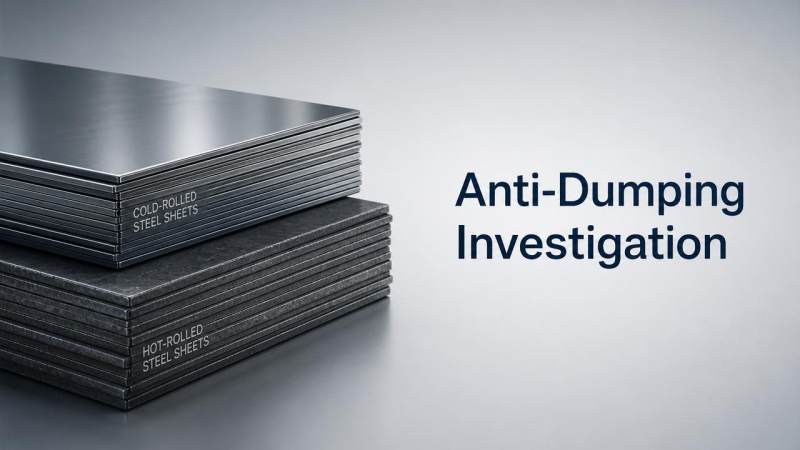
On June 1, 2026, Japan's Ministry of Finance initiated an anti-dumping investigation into cold-rolled and hot-rolled iron or non-alloy steel strips/plates originating from mainland China, Taiwan, and South Korea. The move, requested by major Japanese steel producers including Nippon Steel and JFE Steel, signals potential trade friction in the steel sector, with immediate implications for export compliance and supply chain stability.
Key Details of the Investigation
The probe covers all major tariff codes (7209, 7208, 7225, etc.) for the specified steel products. This comprehensive scope suggests Japan's intent to scrutinize the entire import landscape rather than targeting specific subcategories. The investigation was formally triggered by a petition from Japan's four largest steelmakers, indicating coordinated industry pressure.
Supply Chain Implications
Immediate Compliance Challenges
Exporters to Japan must now navigate heightened documentation requirements, particularly regarding origin verification and pricing declarations. The retrospective nature of potential duties creates urgent back-office workload for customs brokers and trade compliance teams.
Procurement Strategy Reassessment
Japanese manufacturers relying on these steel imports face two parallel risks: possible duty liabilities on existing contracts and future supply uncertainty. Automotive parts suppliers and construction material producers appear most exposed given their just-in-time inventory models.
Critical Action Points for Businesses
Contractual Safeguards
Importers should immediately review force majeure clauses and price adjustment mechanisms in active contracts. Particular attention should be paid to allocation of potential anti-dumping liabilities between trading parties.
Origin Documentation
Enhanced verification of certificates of origin becomes essential, especially for products with transshipment history or multi-country processing. Korean exporters may need to differentiate their supply chains from Chinese counterparts.
Cost Modeling Updates
All parties should run scenario analyses incorporating possible duty rates ranging from 10-40%, based on historical anti-dumping cases in Japan. Logistics teams must evaluate alternative shipping routes to mitigate potential clearance delays.
Market Dynamics Under Scrutiny
This investigation reflects Japan's strategic balancing act - protecting domestic producers while maintaining stable industrial inputs. The breadth of product coverage suggests this is more than a routine trade remedy action, potentially heralding stricter enforcement of regional content requirements in Japan's manufacturing sector.
A Measured Response Required
While the investigation's outcome remains uncertain, its initiation alone has already altered trade risk calculations. Businesses should treat this as an operational priority rather than a distant regulatory development, but avoid overreaction until preliminary determinations emerge in Q3 2026.
Information Sources
This analysis is based on the official announcement by Japan's Ministry of Finance dated June 1, 2026. Typical sources for tracking developments include WTO notifications, customs bulletins, and statements from involved steel associations. The specific determination timetable and calculation methodology remain pending official disclosure.
Please give us a message


Please enter what you want to find