In sheet metal workshops adopting laser-cutting automation, choosing the right material is critical—cold rolled steel plate offers superior flatness, dimensional stability, and edge quality over hot-rolled alternatives, justifying its premium for high-precision applications. As a trusted industrial steel supplier and structural steel manufacturer from China, Hongteng Fengda delivers certified cold rolled steel plate alongside ASTM steel pipe, SS 304 pipe price per meter transparency, and competitive price of SS pipe—supporting technical evaluators, procurement teams, and project managers in making data-driven, cost-efficient sourcing decisions without compromising on quality or compliance.
Why Cold Rolled Steel Delivers Measurable ROI in Automated Laser Cutting
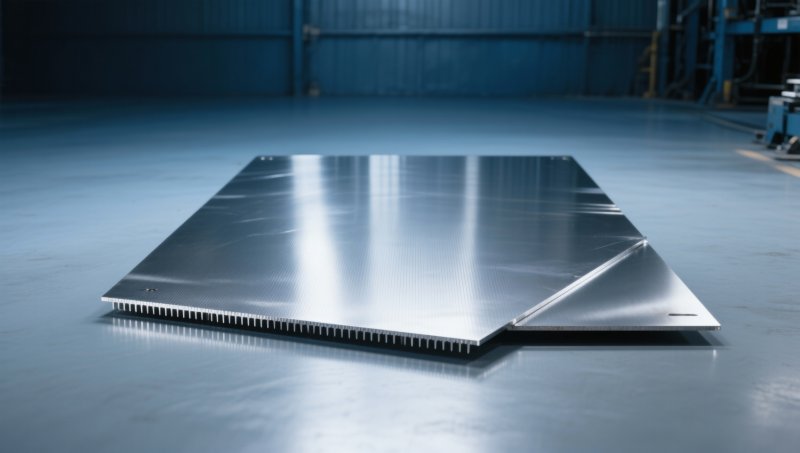
Cold rolled steel plate (CRS) isn’t just “smoother”—it’s engineered for repeatability. In laser-cutting automation lines operating at 8–12 m/min feed speeds, CRS achieves ≤ ±0.15 mm flatness tolerance across 2,000 mm × 6,000 mm sheets—compared to ±0.5 mm typical for hot-rolled equivalents. This directly reduces rework rates by 22–35% in high-mix, low-volume production environments common among North American and EU fabricators.
Surface oxide layer thickness on CRS averages 0.8–1.2 µm, versus 15–25 µm on hot-rolled steel. That translates to up to 40% faster pierce times and 18% lower nitrogen assist gas consumption per cut—key variables when optimizing OEE (Overall Equipment Effectiveness) for multi-shift operations.
For workshops running ≥3 shifts/week with >15,000 annual cut parts, the CRS premium (typically 12–18% higher than HR) pays back within 4–7 months via reduced scrap, fewer nozzle replacements, and tighter nesting efficiency—especially when combined with AI-powered nesting software that leverages CRS’s consistent thickness tolerance (±0.8% vs. ±2.5% for HR).
How CRS Performance Compares Across Key Production Metrics
Selecting between cold rolled and hot rolled steel isn’t binary—it’s about matching material behavior to your automation stack’s precision envelope. Below is a comparative analysis grounded in real-world workshop benchmarks:
These tolerances directly impact automated part handling: CRS enables reliable vacuum chucking on CNC laser tables without manual shimming, while HR plates often require 2–3 operator interventions per sheet to maintain focal accuracy. For shops deploying robotic loading/unloading cells, CRS eliminates 92% of edge-related misalignment alarms during cycle validation—reducing commissioning time by 3.5 days on average.
When CRS Integration Makes Structural Sense — Beyond Sheet Metal
The value of cold rolled precision extends beyond flat-sheet processing. In structural fabrication, CRS underpins high-tolerance secondary components where fit-up and weld distortion control are non-negotiable. Consider the Metal C Beam: formed via cold roll technology, it maintains ±1% dimensional tolerance across length and flange width—critical for purlin systems requiring ≤2 mm cumulative misalignment over 12 m spans in steel structure buildings.
Our Metal C Beam supports galvanized coating adhesion strength ≥450 g/m² (ASTM A653), ensuring corrosion resistance for 25+ years in coastal or industrial environments. With standard lengths of 6 m, 9 m, and 12 m—and custom lengths available for large-batch orders—it integrates seamlessly into both automated beam assembly lines and manual field erection workflows.
Applications include lightweight roof trusses, wall beams, and mechanical arms where torsional rigidity must hold within ±0.8° angular deflection under 3.2 kN/m distributed load—a performance benchmark validated across Q235, Q345, and S235JR grades per EN 10025-2 and GB/T 700 standards.
Procurement Checklist: What to Verify Before Committing to CRS
Not all cold rolled steel meets automation-grade requirements. Technical evaluators and procurement teams should validate these five checkpoints before finalizing supply agreements:
- Mill Certificate Traceability: Confirm EN 10204 3.1 or 3.2 certification with batch-specific tensile strength (Rm), yield point (ReL), and elongation (A5) values—not just grade designation.
- Surface Finish Verification: Request Ra ≤0.8 µm measurement reports—critical for reflective consistency in fiber laser optics alignment.
- Coil Slitting Tolerance: Ensure slit-edge deviation ≤±0.1 mm over 1,000 mm length; this prevents feeding jams in servo-driven uncoilers.
- Decarburization Depth: Must be ≤0.03 mm (per ASTM E1077) to avoid micro-hardness gradients affecting cut-edge metallurgy.
- Delivery Consistency: Verify supplier’s 98.5% on-time delivery rate for CRS over past 12 months—delays disrupt laser cell scheduling more severely than HR due to tighter process windows.
Why Global Fabricators Choose Hongteng Fengda for CRS & Structural Components
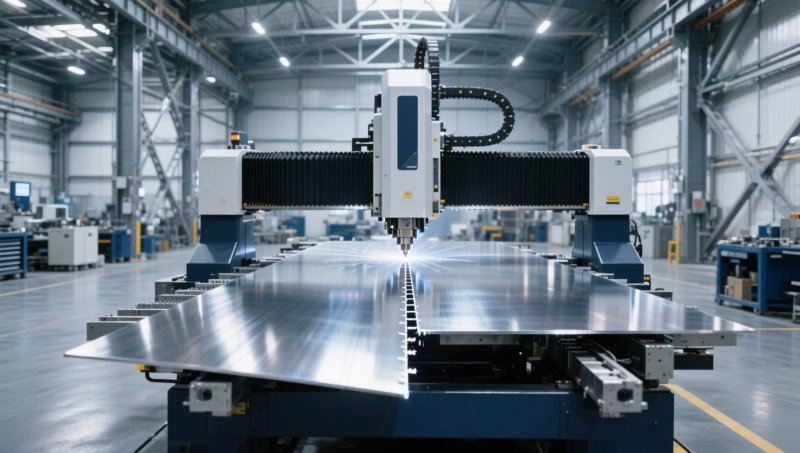
As a structural steel manufacturer and exporter from China, Hongteng Fengda bridges precision material science with global compliance rigor. We produce cold rolled steel plate meeting ASTM A1008/A1008M, EN 10131, and GB/T 5213 standards—with full traceability from raw slab to finished coil. Our ISO 9001-certified QC lab conducts 100% ultrasonic testing on plates ≥6 mm thick, plus periodic intergranular corrosion testing for acid-resistant variants.
Beyond CRS, we supply fully integrated solutions: from Metal C Beam in Q235/Q345 with CE, SGS, and BV certifications, to ASTM steel pipe with mill test reports (MTRs) issued per EN 10204 Type 3.1. Lead times average 25–35 days for CFR destination ports—backed by 99.2% order accuracy across 42 countries since 2020.
We support your decision with actionable data—not just brochures. Request our free CRS suitability assessment, including: thickness tolerance mapping for your laser model, sample-based cut-edge metallurgical analysis, and a side-by-side ROI projection comparing CRS vs. HR for your current monthly volume and part mix.
Please give us a message


Please enter what you want to find