When sourcing structural steel for global construction projects, understanding which international standards truly impact on-site performance — not just paperwork — is critical. Whether you're looking to buy angle steel online, compare ASTM A36 angle steel price per ton in the Philippines, or evaluate MOQ requirements for structural steel orders, compliance with ASTM, EN, JIS, and GB standards directly affects safety, lifespan, and installation efficiency. As a trusted structural steel manufacturer & exporter from China, Hongteng Fengda bridges the gap between certification and real-world reliability — helping procurement managers, project engineers, and quality controllers ask the right questions and avoid common defects in steel beams, supply chain delays, or costly rework.
Which Standards Actually Drive On-Site Performance — Not Just Paper Compliance?
Many buyers assume that “certified to ASTM A653” or “EN 10025-2 compliant” guarantees seamless field performance. In reality, only 3–4 key clauses within each standard govern weldability, dimensional tolerance, tensile consistency, and surface defect thresholds — all of which directly affect bolting speed, beam alignment, and fatigue resistance during erection.
For example, ASTM A653 Grade G90 galvanized coating thickness must be ≥ 0.90 oz/ft² (275 g/m²) — but if local humidity exceeds 80% RH for >72 consecutive hours pre-installation, unsealed cut edges may show white rust within 48 hours unless passivated per ASTM A924 Annex D. That’s why Hongteng Fengda performs batch-level salt-spray validation (ASTM B117, 96-hour test) on every export order — not just certificate submission.
Similarly, EN 10025-2 S355JR requires Charpy V-notch impact energy ≥ 27 J at +20°C — yet many Middle Eastern projects demand ≥ 40 J at –10°C for desert night-time installations. We proactively offer S355J2+N (EN 10025-2) as standard for GCC deliveries — eliminating last-minute requalification delays.
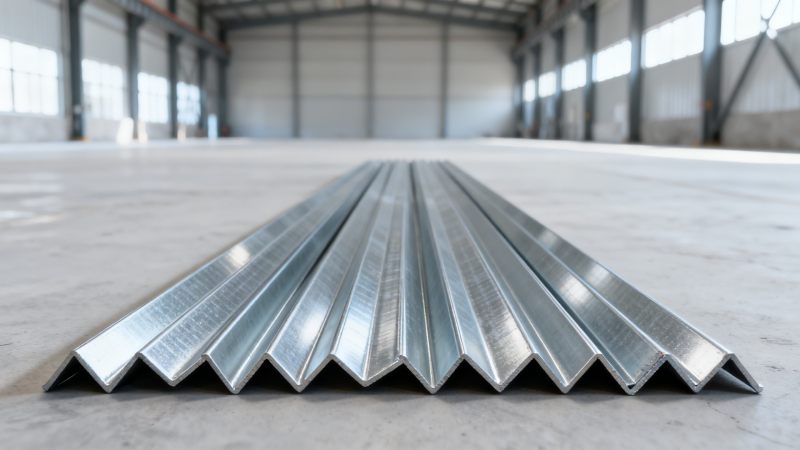
How to Prioritize Standards by Role: From Procurement to Site Supervision
Different stakeholders need different standard insights — and misalignment here causes rework, hold points, or rejected shipments. Below is how key roles should filter standards based on their decision weight:
This tiered view helps procurement teams build supplier scorecards — not just checklists — and enables site supervisors to validate compliance without waiting for lab reports. At Hongteng Fengda, we issue role-specific compliance summaries: one-page technical sheets for engineers, bulk-certification packs for QA, and MOQ-adjusted delivery schedules for logistics planners — all aligned to your project timeline.
Why Material Grade Matters More Than Certification Label Alone
A certified ASTM A36 beam isn’t automatically suitable for seismic bracing in California — nor is an EN 10025-2 S235JR profile ideal for coastal desalination plant supports. The real differentiator lies in traceable material history: carbon equivalent (CEV), micro-alloying consistency, and cold-working response.
Take 306 Stainless Square steel rod: while often grouped with 304/316 grades, its 201 stainless steel base offers higher formability than 300-series grades — ideal for complex bending in urban decoration engineering or medical instrument frames where tight radii (<12mm) are required. Its yield strength (≥275 MPa) and elongation (≥55–60%) ensure reliable cold-forming without cracking — a key reason it’s specified for automotive trim parts and shipbuilding brackets under ISO 3506-1 Class A2.
Unlike generic “stainless steel rods”, our 306 Stainless Square steel rod undergoes full heat-batch spectrographic analysis (per ASTM E1086), with certificates listing actual Cr/Ni/Mn ratios — not just minimums. This transparency lets your metallurgist verify corrosion resistance in chloride-rich environments (e.g., Southeast Asian ports) without third-party retesting.
What You Gain When Standards Meet Real-World Execution
Hongteng Fengda doesn’t treat standards as static checkboxes — we embed them into production rhythm. Every coil is laser-marked with heat number, mill test report ID, and applicable standard revision (e.g., “ASTM A653M-23b”). Our QC team conducts 100% visual inspection for surface defects per EN 10204 3.2 criteria — not just sampling — because one missed scale inclusion can cause weld porosity in structural joints.
We support global buyers with three execution advantages:
- Pre-shipment dimensional audit: All beams, angles, and channels measured at 3 points per meter (not just ends) — with digital caliper logs traceable to ISO/IEC 17025-accredited labs.
- On-demand certification packaging: Choose ASTM-only, dual-standard (ASTM+EN), or triple-certified (ASTM+EN+GB) documentation — delivered digitally within 24 hours of shipment release.
- Project-aligned lead times: Fixed 21–28 day production cycle for standard sections; 35–45 days for custom cold-formed profiles — guaranteed in contract, not brochure.
Whether you’re evaluating ASTM A36 angle steel price per ton in the Philippines, validating JIS G3101 SS400 compliance for a Tokyo high-rise, or specifying 201 stainless square rods for hospital retrofitting, our team provides direct access to mill test reports, chemical logs, and dimensional records — no gatekeepers, no delays.
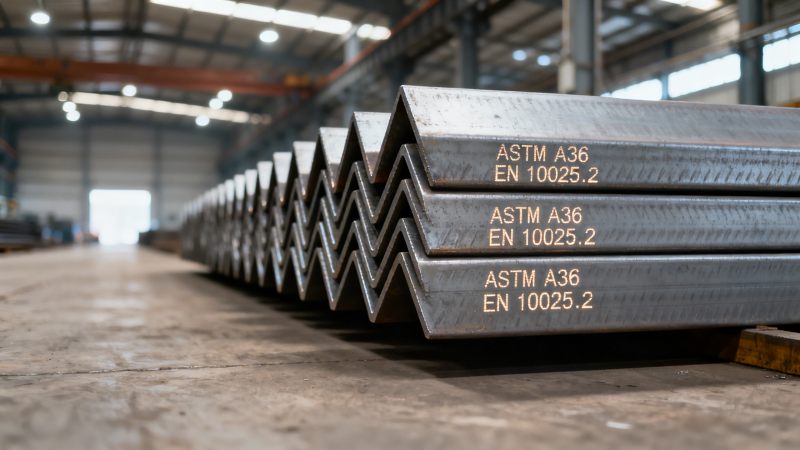
Ready to Align Standards With Your Next Project’s Reality?
Stop reconciling paper compliance with on-site performance. Tell us your project location, application (e.g., “seismic bracing in Istanbul”, “food-grade conveyor frame in Singapore”), and required certifications — and we’ll deliver:
- Free standard-gap analysis: Which clauses matter most for your site conditions and inspection regime?
- Customized compliance pack: Full MTRs, dimensional logs, and coating thickness maps — formatted for your QA team’s audit checklist.
- Sample-ready options: Pre-tested 306 Stainless Square steel rod samples (18mm × 18mm × 1m) shipped within 5 working days — with full traceability data.
Contact Hongteng Fengda today for a no-obligation technical consultation — and receive a project-specific compliance roadmap within 48 business hours.
Please give us a message


Please enter what you want to find