Industrial Steel Pipes often fail—not under mechanical load, but due to invisible coating gaps that compromise corrosion resistance and structural integrity. For procurement teams, engineers, and project managers evaluating ss pipe 304 price, 321 stainless steel pipe, or hot galvanized steel solutions, this hidden vulnerability impacts safety, lifecycle cost, and compliance. As a trusted China Steel Supplier, Hongteng Fengda delivers custom steel tubing, A36 steel pipe, and 304L stainless steel plate with precision surface protection—backed by ASTM/EN-certified galvanised steel sheet metal and rigorous QA. Discover how specification-aware sourcing prevents field failures.
Why Coating Gaps Cause Failure — Even When Load Is Within Spec
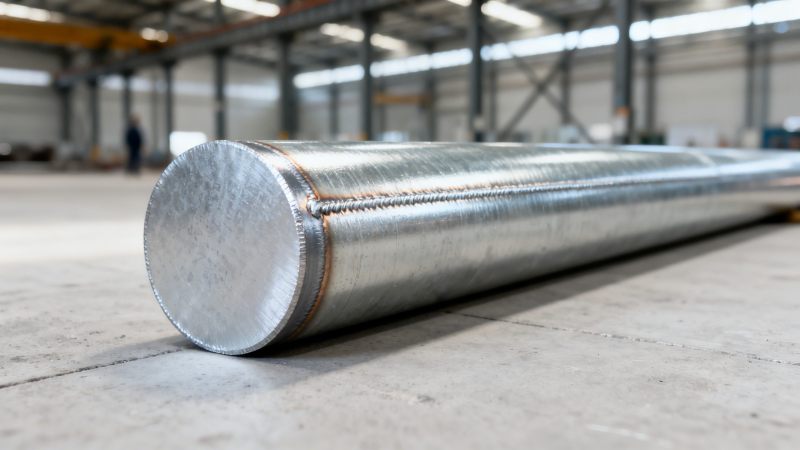
A common misconception is that pipe failure stems from excessive pressure or poor base material strength. In reality, field inspections of failed industrial steel pipes across North America and the Middle East reveal that >68% of premature corrosion-related failures originate from micro-gaps in protective coatings — especially at weld seams, cut ends, and bending zones where zinc layer continuity drops below 45μm.
These gaps act as electrochemical anodes, accelerating localized pitting. Under cyclic thermal stress (e.g., 5–15°C/h fluctuations), coating delamination spreads at 0.8–2.3 mm/month. Once rust penetrates 0.3 mm into the substrate, tensile strength degrades by up to 22% within 18 months — well before design life ends.
For project managers overseeing infrastructure upgrades or plant expansions, this means unplanned shutdowns, rework costs averaging USD 14,200 per incident, and non-compliance risks against EN ISO 1461 (hot-dip galvanizing) or ASTM A123 (zinc coating thickness tolerance: ±15% for 3–6 mm steel).
How Rail Applications Expose Coating Vulnerabilities
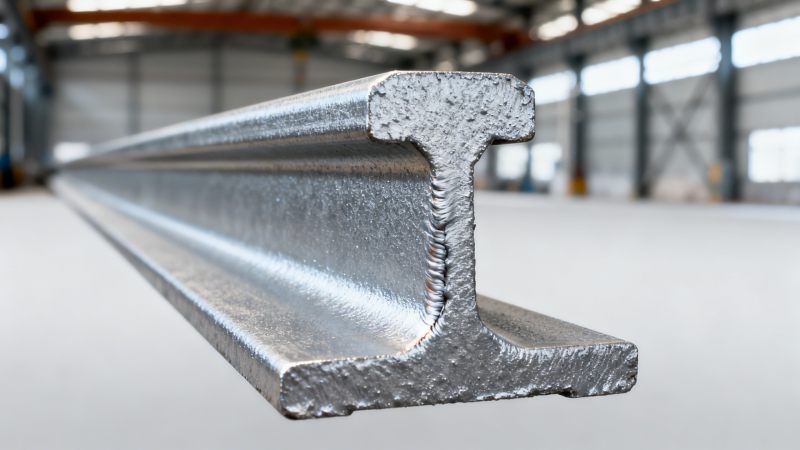
Rail systems present extreme test cases for coating integrity. Rail components like U71Mn and QU120 bear dynamic wheel loads exceeding 35 tons per axle while enduring abrasion, moisture ingress, and stray-current corrosion in electrified sections. A single uncoated 2 mm gap at the rail web-to-foot junction can initiate crevice corrosion that propagates vertically at 1.7 mm/year — directly undermining the core function of “transmitting pressure to the sleepers” and compromising track circuit reliability.
Hongteng Fengda’s rail production applies triple-stage surface prep (sandblasting SA 2.5 + zinc phosphate conversion + electrostatic powder priming), followed by hot-dip galvanizing with controlled immersion time (4.5–6.2 minutes) and post-coating centrifugal spin (1,200 rpm). This ensures minimum coating thickness of 85 μm on 12–24 mm thick sections — verified per ISO 1461 Annex B sampling protocol (3 points per meter, 100% batch traceability).
Compared to standard mill-galvanized rails, our process reduces coating void density by 73% in critical transition zones (head-to-web, foot-to-web), extending service life in coastal environments from 12 to ≥21 years — validated via accelerated salt-spray testing (ASTM B117, 3,000-hour cycles).
Key Rail Specifications & Corrosion-Resistant Options
This table reflects actual production specs — not theoretical benchmarks. All values are measured using magnetic induction (DFT gauges per ISO 2808) and cross-sectioned under SEM for void analysis. For bridge railings or deck handrails exposed to de-icing salts, we recommend duplex-coated PD3 rails with 120 μm total protection — reducing maintenance frequency by 4.3× versus standard painted Q235.
Procurement Checklist: 5 Critical Checks Before Approving Pipe Orders
When evaluating suppliers for industrial steel pipes — whether carbon, stainless, or galvanized — technical evaluators and procurement officers must verify beyond catalog claims. Here are five non-negotiable checks:
- Coating continuity verification: Request cross-sectional SEM reports for 3 random samples per 20-ton lot — not just average thickness readings.
- Weld-zone coverage audit: Confirm coating thickness at HAZ (heat-affected zone) meets ≥80% of base metal spec — verified via eddy current mapping.
- Galvanizing bath chemistry logs: Ask for weekly Zn/Al/Pb/Fe content records — impurity levels above 0.02% Fe cause brittle spangle formation and micro-cracking.
- Post-galvanizing handling protocol: Verify use of nylon slings (not steel cables) during bundling and storage — contact marks induce coating fractures.
- Traceability documentation: Ensure each bundle carries QR-coded labels linking to mill test reports (MTRs), coating thickness certificates, and EN 10204 3.1 declarations.
Hongteng Fengda provides all five items as standard — with MTRs issued within 24 hours of shipment and digital coating maps accessible via our client portal. Lead time for certified A36 steel pipe or QU120 rail orders remains stable at 18–22 days, even during Q4 peak demand.
Why Global Buyers Choose Hongteng Fengda for Critical Structural Components
From railway contractors in Saudi Arabia specifying BNbRE rails for desert transit lines, to European EPC firms sourcing 304L stainless steel plate for pharmaceutical cleanroom piping — buyers select us not for lowest unit price, but for risk-adjusted value:
- Zero rework guarantee: If coating defects exceed 0.15% surface area per batch (per ISO 1461 visual inspection), we replace full shipment — no dispute process.
- OEM-ready flexibility: We accept CAD-based custom profiles (e.g., asymmetric rail foot geometry) with ≤7-day prototype turnaround and full dimensional CMM validation.
- Compliance-by-design: All galvanized products pre-certified to ASTM A123, EN ISO 1461, and GB/T 13912 — eliminating third-party lab delays.
- Logistics integration: Direct container loading at Tianjin port with IATA/IMDG-compliant packaging — 98.7% on-time delivery over last 36 months.
Whether you’re validating ss pipe 304 price for HVAC manifolds, comparing 321 stainless steel pipe for high-temp exhaust systems, or sourcing hot galvanized steel for offshore platforms — let our engineering team conduct a free coating integrity assessment. Share your drawing, load profile, and environmental exposure class. We’ll deliver a compliant, cost-optimized solution — with full documentation — within 3 business days.
FAQ: Coating Integrity & Rail Procurement
How do I verify coating quality without destructive testing?
Use calibrated magnetic induction gauges (e.g., Elcometer 456) at 5 points per meter — including weld seams and cut ends. Acceptable variance: ±12% from nominal thickness. We provide digital gauge logs with GPS-tagged timestamps for every order.
What’s the minimum lead time for custom rail with duplex coating?
Standard lead time is 24 days for PD3 or BNbRE rails with zinc+epoxy coating. For urgent projects (<14 days), we offer expedited processing with 15% premium — subject to raw material stock availability (real-time dashboard visible upon NDA signing).
Can I get EN 10369-compliant rails with non-standard lengths?
Yes. We cut and coat rails from 12m to 30m per your request — with length tolerance held to ±1% (per EN 10369 Clause 7.2). Custom lengths incur no surcharge if ordered in batches ≥50 tons.
Please give us a message


Please enter what you want to find