Determining whether a steel beam for bridge is overdesigned is essential for balancing safety, cost, and performance in modern projects. For engineers, buyers, and project managers comparing structural steel beams for construction, understanding load demands, material efficiency, and steel beam weight calculator results can reveal whether a design exceeds actual requirements and increases unnecessary procurement and fabrication costs.
In bridge fabrication and procurement, overdesign does not mean a beam is unsafe. It usually means the selected section, grade, or reinforcement level is significantly above what the service conditions require. That gap can increase steel tonnage, welding hours, transport weight, and installation complexity by 10% to 30% in many practical purchasing reviews.
For technical evaluators, the issue is structural efficiency. For procurement teams, it is cost control. For project owners and financial approvers, it affects total project value, not just material pricing. A heavier beam may appear conservative, but if it drives avoidable fabrication and logistics costs, it may reduce competitiveness and delay schedules.
As a structural steel manufacturer and exporter from China, Hongteng Fengda supports buyers who need standard steel beams, custom structural components, and OEM supply aligned with ASTM, EN, JIS, and GB requirements. In this article, we will look at how to judge whether a bridge steel beam is overdesigned, what indicators matter most, and how to make better engineering and sourcing decisions.
What Overdesign Means in a Bridge Steel Beam Context
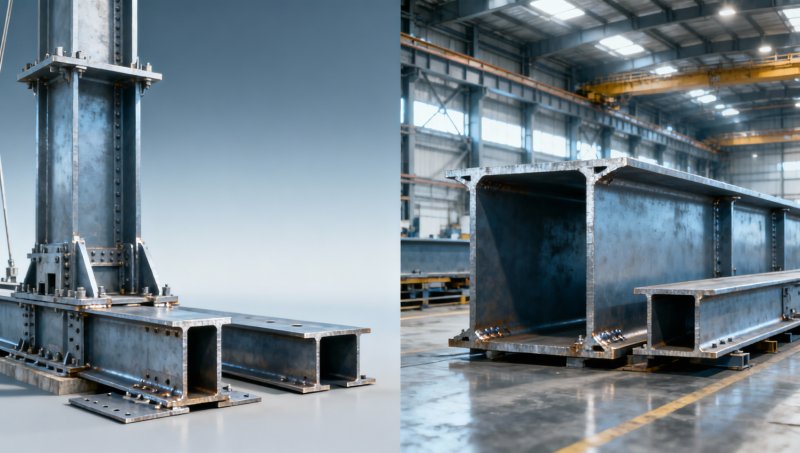
A bridge beam is overdesigned when its actual capacity is substantially higher than the required demand after considering code-based safety factors, expected load combinations, fatigue requirements, and durability conditions. In simple terms, the beam does much more than the job requires, and the extra capacity does not create proportional value.
This does not mean every reserve margin is wasteful. Bridge structures need reasonable design allowance for live loads, dynamic effects, impact, wind, temperature movement, corrosion environment, and future maintenance conditions. The problem begins when the reserve is far beyond standard engineering practice, for example when a section modulus or moment capacity is 40% to 60% above realistic demand without a clear reason.
In procurement reviews, overdesign often appears in three forms: selecting a beam depth larger than required, choosing a higher steel grade than necessary, or adding stiffeners, flange thickness, and web thickness that exceed code-driven needs. Each decision may seem minor, but together they can noticeably raise beam weight per meter and total bridge tonnage.
For operators and site teams, excessive section size can also create installation issues. A beam that is 12% heavier than needed may require different lifting equipment, more crane time, or revised handling procedures. In remote or congested sites, that affects project sequencing and safety planning as much as material cost.
Common reasons overdesign happens
- Early-stage load assumptions are conservative, but the beam size is never optimized after design refinement.
- Designers standardize sections for fabrication simplicity, even when smaller members would satisfy actual spans and loading.
- Project teams select a higher grade steel to “be safe,” although deflection, fatigue, or connection limits still govern the design.
- Procurement substitutes available stock sections without checking the weight penalty over the full bridge length.
The table below shows practical indicators that help distinguish healthy design margin from likely overdesign during engineering review and purchasing evaluation.
A single indicator is not enough to confirm overdesign. However, if several signals appear together, especially low utilization, high self-weight, and unnecessary premium material, the beam deserves rechecking before fabrication release or purchase approval.
How to Evaluate Load Demand, Utilization, and Weight Efficiency
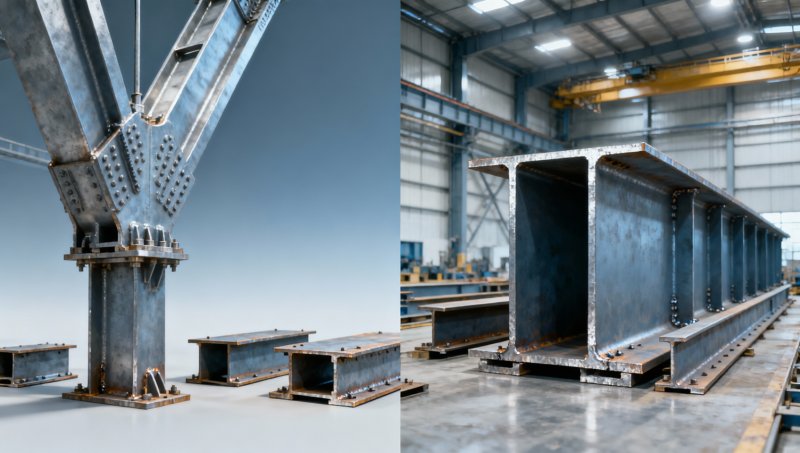
The most reliable way to judge overdesign is to compare required performance with provided capacity. Start with the governing design actions: dead load, live load, impact factor, lateral loads, temperature effects, and fatigue where relevant. A beam that looks heavy may still be justified if repeated vehicle loading or aggressive environmental exposure controls the design.
Next, review the utilization ratio for bending, shear, deflection, buckling, and fatigue. In many efficient bridge beam designs, the critical check often falls between 75% and 95% of allowable or design resistance. If the controlling ratio is only 50% to 60%, and there is no major uncertainty such as staged construction or future expansion, there may be room to optimize.
Steel beam weight calculators are useful at this stage, but they should not be used in isolation. Weight per meter is a screening tool, not a final design verdict. A lower weight is positive only if the beam still meets serviceability, stability, and welding requirements. Procurement teams should compare theoretical calculator results with actual shop drawings, because stiffeners, splice plates, and connection details can add 5% to 15% more steel than the base section alone.
A practical review method is to benchmark the selected beam against at least 2 or 3 alternative sections. If two lighter options meet the same span, load, and standard with acceptable fabrication limits, the original beam may indeed be oversized. This is especially important in export projects where freight cost is closely linked to total tonnage and packing efficiency.
A four-step review method
- Confirm design inputs, including span length, support conditions, distributed and concentrated loads, impact coefficient, and corrosion allowance.
- Check which limit state governs: strength, deflection, fatigue, lateral-torsional buckling, or connection behavior.
- Compare at least 3 section options by weight, fabrication complexity, and code compliance.
- Calculate the cost effect of each option across material, welding, coating, transport, and installation.
Why stiffness can hide overdesign
Sometimes engineers increase steel grade from Q235 or S275-type levels to stronger alternatives expecting a lighter beam, yet the final section does not change much because deflection governs the design. In that case, paying for higher strength steel brings little benefit. The same issue appears when flange thickness is increased for capacity, while web depth is what mainly affects stiffness.
For bridge buyers, the lesson is simple: ask which check governs the final section. If the answer is stiffness, fatigue, or connection detailing rather than pure strength, then material upgrades alone may not be cost-effective. This question often reveals whether a heavier design is necessary or simply carried over from a conservative concept phase.
The table below helps teams connect engineering checks with possible overdesign patterns during specification review.
This comparison shows that the best optimization path is not always “use less steel.” In many projects, smarter section geometry, better detailing, and accurate load definitions deliver more value than simply increasing or decreasing nominal strength.
Cost, Fabrication, and Supply Chain Signals That a Beam Is Too Heavy
An overdesigned bridge beam usually creates cost increases beyond raw steel consumption. Heavier sections require more cutting time, larger weld volumes, stronger lifting arrangements, and sometimes special transport permits. Even a 15% increase in section weight can lead to a larger total cost increase once shop labor, blasting, coating, and logistics are included.
For procurement and commercial evaluators, one warning sign is when the offered beam grade or section size does not align with the project’s actual service environment. For example, inland bridge components with standard corrosion protection may not need a premium weather-resistant or higher-strength option if the governing design checks do not justify it. Paying more for specification margin that never becomes functional value is a typical form of hidden overdesign.
Another useful signal is fabrication complexity per ton. If two beam options differ by only 8% in total steel weight, but one requires 20% more welding length or multiple extra stiffeners, the heavier or more detailed option may become less economical in the workshop. This matters to project managers working on compressed schedules of 4 to 8 weeks for shop production.
At this stage, buyers should also assess upstream steel supply flexibility. Some bridge beam designs can benefit from material combinations that improve load-bearing capacity while managing weight. In selected industrial applications demanding high load-bearing capacity and weight reduction, coil-based upstream materials can be part of the manufacturing strategy for formed or fabricated components. For projects reviewing material alternatives, Hrc Coil is available in grades such as Q195, Q215, Q235, Q345, SS490, SM400, and SM490, with thickness from 0.12-12mm, width from 100-2000mm, and tolerance of thickness ±0.02mm and width ±2mm, compliant with ASTM, AISI, BS, DIN, EN, JIS, and GB/T.
Practical procurement checkpoints
- Compare steel tonnage, not just unit price per ton. A cheaper grade can still cost more if total weight rises too much.
- Ask for the fabrication basis: rolled section, built-up beam, or welded plate girder. Each route affects labor hours differently.
- Check whether section standardization reduces scrap loss or instead forces oversizing across several spans.
- Include freight and lifting cost in the review, especially when exporting to North America, Europe, the Middle East, or Southeast Asia.
The next table summarizes how overdesign typically appears from a sourcing and manufacturing perspective.
This kind of review is especially valuable in international sourcing. A design that is technically acceptable but materially inefficient can weaken bidding competitiveness and raise total landed cost, even before site erection begins.
How Engineers and Buyers Can Optimize Without Reducing Safety
Optimization should never be confused with unsafe reduction. The goal is to keep full compliance while removing unnecessary mass or complexity. In bridge steel work, the best approach is collaborative: design team, fabricator, procurement team, and quality control personnel should review the same beam from different angles before final approval.
Start by separating mandatory requirements from inherited assumptions. Some beams remain oversized because the original concept was based on preliminary loading, uncertain support conditions, or broad future-use scenarios. Once the final span, traffic category, and deck arrangement are confirmed, a second-pass optimization review can often reduce steel consumption or simplify fabrication details.
A reliable supplier can support this process by offering standard and custom structural steel solutions with documented dimensional control and consistent production. Hongteng Fengda manufactures angle steel, channel steel, steel beams, cold formed steel profiles, and custom structural steel components under strict quality control, helping buyers align section selection with ASTM, EN, JIS, and GB project requirements.
For projects that involve formed secondary parts or lightweighting strategies in adjacent structural elements, upstream material options also matter. Depending on design intent, Hrc Coil can support applications requiring high strength and favourable comprehensive mechanical properties, including structural lightweighting and replacement of traditional medium- and low-strength steels in suitable fabricated parts.
Optimization actions that usually add value
- Recalculate with final load combinations instead of concept-stage assumptions.
- Check whether beam depth, flange area, and web thickness can be balanced more efficiently.
- Review whether fatigue detail improvement can replace bulk material increase.
- Standardize only where it does not create excessive dead load across multiple spans.
- Coordinate section choice with available mill sizes and workshop capability to limit waste.
Quality and risk control during optimization
Any reduction in section size should be checked against fabrication tolerance, weld access, coating edge coverage, and inspection feasibility. A theoretically lighter beam is not automatically better if it creates difficult welding positions or tighter dimensional sensitivity. Typical dimensional reviews should include thickness tolerance, straightness, camber, and fit-up consistency before approval.
Quality control teams should document at least 3 categories of review: material certificates, dimensional inspection, and weld or surface quality verification. This keeps optimization evidence-based and prevents commercial pressure from driving unsafe simplification. The right target is efficient performance, not minimum tonnage at any cost.
FAQ: Questions Commonly Asked During Technical and Commercial Review
Below are common questions from engineers, procurement officers, distributors, and project decision-makers when assessing whether a bridge beam may be oversized.
How much reserve capacity is too much in a bridge beam?
There is no single percentage that applies to every project. However, if the governing utilization repeatedly falls below about 0.60 after all final loads and code factors are included, the design should be reviewed. Some exceptions are justified for severe fatigue environments, future widening plans, or unusual construction stages.
Can a higher steel grade always reduce beam weight?
No. If deflection, lateral stability, or connection geometry governs the design, a higher yield strength may not reduce the section enough to offset material cost. That is why buyers should ask whether strength, stiffness, or fatigue is the controlling factor before approving an upgrade.
What should procurement teams request from suppliers?
Request grade, standard, dimensional tolerance, weight per meter, fabrication basis, and estimated lead time. For custom bridge components, ask for a breakdown of base material weight versus added plates and stiffeners. This makes it easier to compare two offers that appear similar but differ in total manufacturing complexity.
How long does an optimization review usually take?
For a straightforward beam comparison, a technical-commercial review can often be completed in 2 to 5 working days if drawings, load assumptions, and section options are available. More complex built-up girders or export packages may need 1 to 2 weeks for full cross-functional confirmation.
When is a heavier beam acceptable?
A heavier beam can be the right choice when it improves fatigue life, simplifies maintenance, reduces the number of field splices, or supports special transport and erection constraints. The key question is whether the added weight delivers measurable project value rather than only theoretical conservatism.
Judging whether a steel beam for bridge is overdesigned requires more than checking section size. The right review combines load demand, utilization ratio, beam weight, fabrication impact, and supply chain practicality. When engineering logic and procurement discipline work together, teams can reduce unnecessary tonnage without compromising safety, compliance, or long-term performance.
Hongteng Fengda supports global buyers with structural steel beams, angle steel, channel steel, cold formed profiles, and custom structural steel components backed by consistent manufacturing and quality control. If you need help comparing beam options, reviewing material efficiency, or sourcing steel solutions aligned with ASTM, EN, JIS, or GB standards, contact us now to get a tailored solution and discuss your project requirements in detail.
Please give us a message


Please enter what you want to find