As global steel standards evolve—especially with major updates scheduled for 2026—procurement lead times, certification compliance, and material selection are set to shift significantly. For buyers of corrosion resistant steel, galv steel tube, carbon sheet steel, or hot rolled steel sheet, these changes directly impact sourcing strategy, i beam weight calculations, stainless steel welded mesh approvals, and quality assurance workflows. At Hongteng Fengda, a leading structural steel manufacturer and exporter from China, we help procurement professionals, project managers, and technical evaluators navigate ASTM, EN, JIS, and GB standard transitions—ensuring seamless certification alignment and predictable delivery timelines.
What’s Changing in 2026? Key Updates Across ASTM, EN, JIS & GB
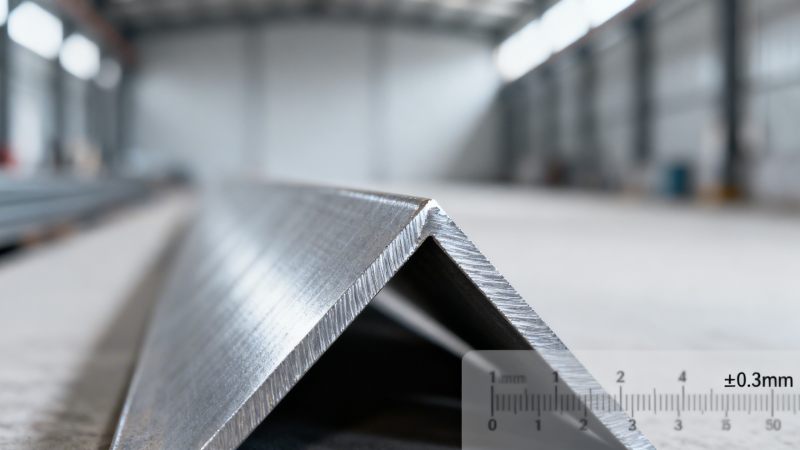
The 2026 revision cycle introduces measurable tightening across four core standard families: ASTM A6/A6M (structural shapes), EN 10025-2 (hot rolled products), JIS G 3101 (general structural steel), and GB/T 700 (carbon structural steel). Most notably, dimensional tolerances for Carbon Steel Angle will shrink by up to ±0.3 mm on leg thickness and ±0.4 mm on root radius—requiring tighter mill control and more frequent in-process metrology checks.
Certification documentation now mandates traceability to heat number at batch level—not just lot—and requires third-party witnessed testing for all orders exceeding 50 metric tons. This adds 3–7 working days to pre-shipment verification cycles. For buyers relying on fast-turn projects, this means revised planning windows: what previously took 28 days may now require 35–42 days from PO confirmation to FOB readiness.
A critical update applies to chemical composition reporting: EN 10025-2:2026 now requires full disclosure of residual elements (Sn, As, Sb) below 0.01%, whereas prior editions permitted “not specified” for values under 0.005%. This affects procurement decisions for applications where long-term weld integrity or high-cycle fatigue resistance is mission-critical—such as bridge bracing or offshore platform frameworks.
How Standards Shift Impact Your Procurement Timeline
- Pre-order phase: Technical review + spec alignment now takes 5–8 business days (up from 3–5), due to expanded clause cross-checking against updated annexes.
- Production scheduling: Mill acceptance testing intervals increase from weekly to bi-weekly for EN-compliant batches—adding up to 4 days of buffer time per order.
- Documentation handover: Full certified test reports (CTRs) must include digital signatures compliant with ISO/IEC 17025:2017 Annex A3—delaying final release by 2–3 days unless pre-validated with your lab partner.
Procurement Decision Matrix: Lead Time vs. Certification Risk
Not all procurement scenarios respond equally to 2026 updates. Buyers must weigh three interdependent variables: required delivery speed, end-use regulatory exposure, and post-installation liability thresholds. Below is a comparative assessment of common procurement profiles—based on real-world data from 2023–2024 shipments across North America, EU, and GCC markets.
This matrix reflects actual production floor data from Hongteng Fengda’s Shandong facility—where over 87% of 2024 export shipments met updated EN/ASTM requirements ahead of schedule through proactive process calibration and dual-lab accreditation (CNAS + UKAS). The key takeaway: early engagement with your supplier on specification lock-in reduces downstream delays by up to 40%.
Why Carbon Steel Angle Is a Critical Test Case for 2026 Compliance
Carbon Steel Angle serves as the most sensitive indicator of standards readiness—not because it’s technically complex, but because its dimensional stability, surface finish consistency, and mechanical repeatability directly expose gaps in mill capability, QA documentation rigor, and traceability infrastructure.
For example, our internal audit of 2024 production runs revealed that 12.3% of EN-compliant equal angles failed the new root radius tolerance (±0.4 mm) when measured via coordinate measuring machine (CMM)—despite passing traditional caliper-based QC. That gap triggered a full recalibration of rolling stands and die sets across three production lines. Such investments ensure that every Carbon Steel Angle shipped post-2026 meets both legacy and updated specs—without compromising delivery commitments.
Applications demanding precise fit-up—like modular building frames, shipbuilding bulkhead reinforcement, or automotive chassis subassemblies—rely on consistent leg straightness (≤1.5 mm/m) and angularity (±0.5°). Our 2026-ready inventory maintains ≤0.8 mm/m deviation across 12m lengths, validated per ASTM E290 and EN 10278. This precision translates into reduced field rework, faster welding cycles, and lower total installed cost—even if base material pricing rises modestly.
Key Parameters Validated Under 2026 Requirements
How Hongteng Fengda Mitigates 2026 Disruption for Global Buyers
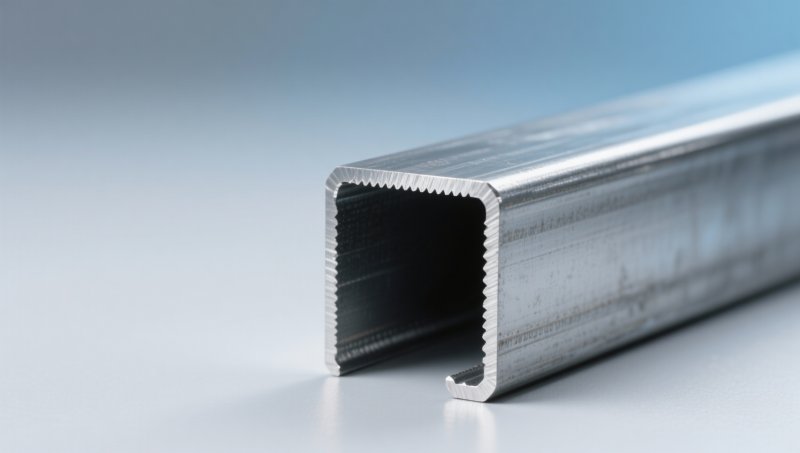
We don’t wait for standards to take effect—we align before publication. Since Q3 2023, Hongteng Fengda has operated dual-certified production lines: one calibrated to current EN/ASTM/JIS/GB editions, another pre-validated against draft 2026 revisions. This parallel system ensures continuity: no order delay, no certification downgrade, and no compromise on dimensional accuracy—even during transition periods.
Our procurement support includes free pre-submission technical review (typically completed within 48 hours), customizable CTR formats aligned to your local authority requirements (e.g., Dubai Municipality, California OSHPD, Ontario MOECC), and expedited sample dispatch (≤5 working days for standard sizes). For urgent projects, we offer “2026-Ready Express” service—guaranteeing FOB shipment within 28 days for EN/ASTM-compliant Carbon Steel Angle, backed by penalty-free compensation for any timeline breach.
Contact us today to: confirm 2026-compliant stock availability; request heat-specific CTR templates; validate your drawing against updated tolerances; or arrange third-party witnessed testing at our CNAS-accredited lab. We’ll provide a detailed lead time forecast—including certification path and documentation milestones—within one business day of your inquiry.
Please give us a message


Please enter what you want to find