For bridge owners, contractors, and procurement teams, steel H girders matter less as a product name and more as a risk-control decision. In heavy-load bridge structures, the right girder design improves load distribution, stiffness, fatigue resistance, and long-term serviceability.
That is why the core question is not whether steel H girders are strong, but whether they are the right structural choice for the span, traffic demand, fabrication method, and maintenance plan. This article explains how they perform, what decision-makers should evaluate, and where product quality affects project outcomes.
For buyers looking beyond basic supply, Hongteng Fengda provides structural steel solutions built for demanding infrastructure work, including international-standard materials and customized fabrication support. In related project environments, products such as SS440 Patterned steel plate may also be selected for access decks, equipment zones, or maintenance platforms where anti-slip performance and durability matter.
Why steel H girders are used in heavy-load bridges
Steel H girders are valued because they combine high bending capacity with efficient material use. Their wide flanges and deep web section help bridge engineers handle heavy traffic loads, repeated axle pressure, and dynamic forces without unnecessary weight.
For decision-makers, that balance matters. A heavier section is not automatically better if it drives up cost, complicates erection, or adds dead load that the foundation must carry. H girders are often selected because they support structural efficiency, not just raw strength.
In bridge systems, the girder is part of a load path, not a standalone component. Its performance depends on how well it works with the deck, bearings, supports, joints, and cross frames under real operating conditions.
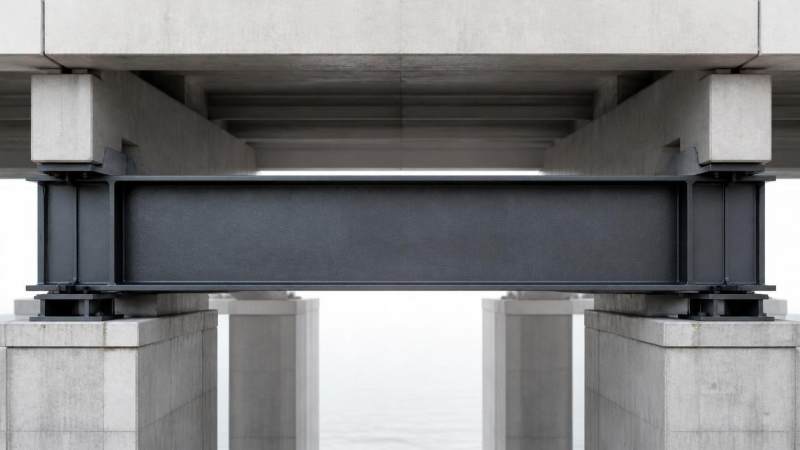
What performance means in real bridge service
When people ask how steel H girders perform, they usually mean more than ultimate strength. They want to know whether the section stays stable under repeated loads, controls deflection, resists fatigue, and keeps the bridge comfortable and safe over time.
Under heavy-load conditions, stiffness is just as important as strength. A girder that meets stress limits but deflects too much can create serviceability issues, uneven deck behavior, or faster deterioration at connection points and expansion details.
Fatigue is another major concern. Bridges experience millions of load cycles, so weld quality, geometry, residual stress, and detail design all influence whether the girder will maintain performance over decades.
For this reason, project teams should evaluate steel H girders by load rating, span behavior, fabrication quality, and expected maintenance burden, not by section size alone.
Key factors that shape performance
Section dimensions are the starting point. Flange width, web depth, thickness, and weight per meter all influence bending resistance, shear capacity, and the section’s ability to distribute stress efficiently across the structure.
Material grade matters just as much. Grades such as Q235B, A36, S235, SS400, and related standards are chosen based on project specification, regional code, and design demand. The correct grade supports both strength and compliance.
Manufacturing precision can decide whether theoretical capacity becomes real-world reliability. Tolerance control, straightness, surface quality, and dimensional consistency reduce installation problems and help ensure the bridge behaves as designed.
Inspection and certification are essential for buyers who need accountable supply. Standards like ASTM, EN, JIS, GB, ISO, SGS, and BV are often used to verify that delivered steel matches the project’s engineering and procurement requirements.
Where H girders create business value
For enterprise buyers, the value of steel H girders is measured in fewer change orders, faster erection, lower lifecycle risk, and better confidence in delivery schedules. A technically correct section can prevent cost overruns later in the project.
Stable supply also matters. Bridge schedules are sensitive to late material arrival, especially when fabrication, transport, and site installation are tightly linked. Suppliers with export experience and prompt delivery capacity help reduce this exposure.
Long-term value comes from consistency. When a manufacturer can provide reliable production, customized sizes, and professional support, the purchaser gains more than steel. They gain predictability across engineering, procurement, and construction.
That is why many buyers now compare suppliers on documentation quality, batch consistency, and ability to deliver to international standards, not only on unit price.
How to judge whether a steel H girder is the right choice
Start with the bridge condition, not the catalog. Review span length, traffic category, support layout, environmental exposure, and maintenance access. These factors determine whether the girder section is efficient or excessive.
Next, confirm the design load case. Heavy freight bridges, urban overpasses, and industrial access bridges do not have the same demands. A girder that works well in one setting may be over- or under-specified in another.
Then examine fabrication and traceability. If the project depends on accurate welding, hole positioning, or coordinated assembly, the supplier’s process control becomes part of the structural risk profile.
Finally, compare total project value. A lower steel price can disappear quickly if delivery slips, rework rises, or compliance review takes longer than planned. The best choice is usually the one that reduces hidden cost.
Related applications beyond the main bridge girder
Bridge projects often include access areas, plant platforms, equipment zones, and maintenance walkways. In those areas, anti-skid surfaces and practical wear resistance can be just as important as structural capacity.
That is where complementary steel products become useful. For example, patterned plates can support safer footing in service zones, while standard structural sections carry the main load path. This is especially relevant in transportation and shipbuilding-related infrastructure.
Hongteng Fengda works with buyers who need both structural and auxiliary steel components, helping coordinate specifications so the whole project performs as one system rather than as disconnected parts.
What decision-makers should ask suppliers
Ask what standards the material can meet, what tolerances are controlled, and how quality is checked before shipment. Those answers reveal whether the supplier can support bridge-grade work or only general steel supply.
Ask about available sizes, custom fabrication, and export experience. For cross-border projects, shipping readiness and documentation discipline often decide whether a project keeps moving or stalls in procurement.
Ask for proof of consistency, not just capability. A supplier that can repeat quality across batches is far more valuable than one that can produce a single good sample.
For heavy-load bridge structures, that level of supplier discipline is what turns steel H girders from a commodity into a dependable infrastructure component.
In heavy-load bridges, steel H girders perform best when section design, material grade, fabrication quality, and supply reliability all align with the project load case. Decision-makers who evaluate them this way reduce structural risk and improve lifecycle value.
For buyers sourcing internationally, the strongest choice is usually the supplier that can deliver compliant steel, stable lead times, and clear technical support. That combination helps bridge projects stay on budget, stay on schedule, and stay dependable after opening.
Please give us a message


Please enter what you want to find