How stainless steel welded mesh exporter packaging affects customs clearance in EU markets
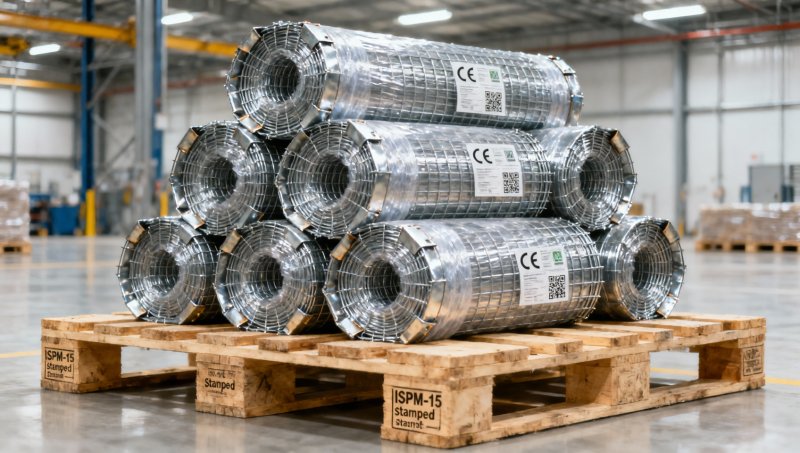
For Stainless Steel Welded Mesh exporters targeting EU markets, proper packaging isn’t just about protection—it’s a critical customs clearance factor. Poorly labeled, non-compliant, or undocumented packaging can trigger delays, inspections, or even rejection at EU borders. As a China-based Structural Steel Manufacturer & Exporter, Hongteng Fengda ensures our stainless steel welded mesh shipments meet EN standards, include EU-compliant labeling (CE marking, traceability info), and use ISPM-15-certified wooden pallets—helping distributors avoid costly hold-ups. Discover how smart packaging choices streamline your EU import process.
It starts long before the container leaves Shenzhen port. Customs officers in Rotterdam, Hamburg, or Valencia don’t inspect every shipment—but when they do, packaging is often the first thing they see. Not the tensile strength of your mesh, not the chromium content in your 304 grade, but the way it’s bundled, marked, stacked, and documented. And increasingly, that first impression determines whether your cargo moves within 24 hours—or sits idle for days while paperwork is re-submitted, certificates verified, or pallets fumigated.
EU customs authorities operate under Regulation (EU) No 952/2013—the Union Customs Code—and its implementing provisions. These rules treat packaging not as an afterthought, but as part of the product’s regulatory identity. Wooden packaging, for instance, must carry the ISPM-15 stamp—heat-treated or methyl bromide-fumigated, with clear markings showing country of origin, treatment method, and producer code. Missing or illegible stamps? That pallet gets flagged. Worse: if multiple consignments from the same exporter show repeated non-compliance, risk scoring rises across future declarations—even for unrelated products.
Then there’s labeling. CE marking on stainless steel welded mesh isn’t optional—it signals conformity with EN 10217-7 (for welded stainless steel tubes) or EN 10223-4 (for welded mesh used in construction). But here’s what many exporters overlook: the CE mark must be *permanently affixed* to the product *or* its immediate packaging—not just on a loose sticker inside the container. And it must be accompanied by a Declaration of Conformity (DoC), signed by the manufacturer or authorized EU representative, listing the applicable harmonized standards, test reports (e.g., from SGS or Bureau Veritas), and traceable batch numbers.
Hongteng Fengda embeds this compliance into workflow—not as a final check, but as a design parameter. When we pack stainless steel welded mesh for EU-bound shipments, each bundle carries a tamper-evident label with QR-coded traceability: material grade (e.g., AISI 304 or 316L), heat number, mill test report reference, and production date. That same QR code links directly to our digital DoC portal—accessible to importers and customs agents alike. No chasing PDFs. No translation delays. Just verifiable, real-time data.
 Packaging also shapes how efficiently your goods integrate into downstream supply chains. Distributors in Germany or Poland don’t just need mesh—they need predictable, unpackable units. That means consistent bundle weights (typically 500–800 kg per unit, aligning with standard forklift capacities), uniform stacking patterns (to prevent shifting during rail transport), and corrosion-resistant wrapping (especially for coastal ports where salt-laden air accelerates surface oxidation). We use multi-layer PE film + edge protectors + steel strapping—not because it looks neat, but because it eliminates field complaints about bent wires or rust spots upon unloading.
And let’s talk about documentation synergy. A single misaligned detail between your commercial invoice, packing list, and certificate of origin can derail everything. If your invoice lists “stainless steel welded mesh, 1.2mm wire, 50x50mm aperture” but your packing list says “SSWM-50x50-1.2”, customs may question consistency—or worse, suspect undervaluation. Hongteng Fengda cross-references all documents against the same internal product ID system. Our export team works alongside quality control and logistics—not in silos—to ensure every digit, decimal, and descriptor matches across files. That discipline pays off when your consignment clears via the EU’s Entry Summary Declaration (ENS) without manual intervention.
What surprises many distributors is how packaging choices ripple beyond customs—into warehouse operations and customer satisfaction. A poorly secured mesh roll arriving with deformed apertures means rework. A bundle wrapped in non-recyclable plastic triggers sustainability audits from retail partners like Leroy Merlin or Bauhaus. Even something as simple as labeling orientation matters: if CE marks face inward on nested bundles, inspectors can’t verify them without unpacking—adding hours to processing time.
This attention extends across our broader structural steel portfolio. For example, our C Sections Steel—widely used in purlins and wall beams of steel structure buildings—ships with galvanized surfaces protected by VCI paper and edge guards, palletized to EN 13121-2 load-bearing specs. Each unit bears laser-etched batch IDs and EN 10219-1 compliance tags. Why? Because the same distributor handling stainless steel welded mesh may also source C-sections for roof trusses in the same project. Consistency in packaging logic reduces training overhead, minimizes errors, and builds trust across product lines.
There’s also a quiet shift underway—one few exporters discuss openly. EU member states are tightening enforcement of the EU Timber Regulation (EUTR) and upcoming Corporate Sustainability Reporting Directive (CSRD) requirements. While stainless steel isn’t timber, the precedent is clear: regulators now expect full chain-of-custody visibility—not just for raw materials, but for *how* goods move through global logistics. Packaging becomes the physical anchor point for that visibility. Every certified pallet, every QR-coded label, every auditable DoC isn’t just about passing customs—it’s about signaling operational maturity to buyers who increasingly vet suppliers on ESG criteria.
So what should you watch for as a distributor evaluating stainless steel welded mesh exporters? First, ask how packaging decisions are made—not just *what* they use, but *who decides*. Is it logistics staff optimizing for freight cost? Or engineers embedding compliance into design? Second, request sample documentation *before* placing orders: does the DoC cite exact clauses of EN standards? Is the ISPM-15 stamp legible and complete? Third, observe how they handle exceptions—say, a last-minute order requiring non-standard bundle sizes. Do they adapt documentation seamlessly, or treat it as an afterthought?
At Hongteng Fengda, packaging isn’t outsourced to a third-party consolidator. It’s engineered in-house—by metallurgists who understand chloride resistance, by QA leads trained in EU notified body protocols, and by logistics managers who’ve walked Hamburg’s Container Terminal B to study real-world unloading constraints. That integration lets us anticipate friction points others only discover post-clearance.
You’re not just importing mesh—you’re importing reliability, predictability, and partnership continuity. In markets where lead times shrink and compliance thresholds rise, the difference between “delivered” and “delayed” often lies not in the steel itself, but in how thoughtfully it’s wrapped, marked, stacked, and declared. That’s why, for over a decade, distributors across Belgium, Sweden, and Italy have chosen Hongteng Fengda—not just for what we make, but for how we prepare it to cross borders without friction.
Because in today’s EU steel trade, packaging isn’t packaging. It’s permission to proceed.
Packaging also shapes how efficiently your goods integrate into downstream supply chains. Distributors in Germany or Poland don’t just need mesh—they need predictable, unpackable units. That means consistent bundle weights (typically 500–800 kg per unit, aligning with standard forklift capacities), uniform stacking patterns (to prevent shifting during rail transport), and corrosion-resistant wrapping (especially for coastal ports where salt-laden air accelerates surface oxidation). We use multi-layer PE film + edge protectors + steel strapping—not because it looks neat, but because it eliminates field complaints about bent wires or rust spots upon unloading.
And let’s talk about documentation synergy. A single misaligned detail between your commercial invoice, packing list, and certificate of origin can derail everything. If your invoice lists “stainless steel welded mesh, 1.2mm wire, 50x50mm aperture” but your packing list says “SSWM-50x50-1.2”, customs may question consistency—or worse, suspect undervaluation. Hongteng Fengda cross-references all documents against the same internal product ID system. Our export team works alongside quality control and logistics—not in silos—to ensure every digit, decimal, and descriptor matches across files. That discipline pays off when your consignment clears via the EU’s Entry Summary Declaration (ENS) without manual intervention.
What surprises many distributors is how packaging choices ripple beyond customs—into warehouse operations and customer satisfaction. A poorly secured mesh roll arriving with deformed apertures means rework. A bundle wrapped in non-recyclable plastic triggers sustainability audits from retail partners like Leroy Merlin or Bauhaus. Even something as simple as labeling orientation matters: if CE marks face inward on nested bundles, inspectors can’t verify them without unpacking—adding hours to processing time.
This attention extends across our broader structural steel portfolio. For example, our C Sections Steel—widely used in purlins and wall beams of steel structure buildings—ships with galvanized surfaces protected by VCI paper and edge guards, palletized to EN 13121-2 load-bearing specs. Each unit bears laser-etched batch IDs and EN 10219-1 compliance tags. Why? Because the same distributor handling stainless steel welded mesh may also source C-sections for roof trusses in the same project. Consistency in packaging logic reduces training overhead, minimizes errors, and builds trust across product lines.
There’s also a quiet shift underway—one few exporters discuss openly. EU member states are tightening enforcement of the EU Timber Regulation (EUTR) and upcoming Corporate Sustainability Reporting Directive (CSRD) requirements. While stainless steel isn’t timber, the precedent is clear: regulators now expect full chain-of-custody visibility—not just for raw materials, but for *how* goods move through global logistics. Packaging becomes the physical anchor point for that visibility. Every certified pallet, every QR-coded label, every auditable DoC isn’t just about passing customs—it’s about signaling operational maturity to buyers who increasingly vet suppliers on ESG criteria.
So what should you watch for as a distributor evaluating stainless steel welded mesh exporters? First, ask how packaging decisions are made—not just *what* they use, but *who decides*. Is it logistics staff optimizing for freight cost? Or engineers embedding compliance into design? Second, request sample documentation *before* placing orders: does the DoC cite exact clauses of EN standards? Is the ISPM-15 stamp legible and complete? Third, observe how they handle exceptions—say, a last-minute order requiring non-standard bundle sizes. Do they adapt documentation seamlessly, or treat it as an afterthought?
At Hongteng Fengda, packaging isn’t outsourced to a third-party consolidator. It’s engineered in-house—by metallurgists who understand chloride resistance, by QA leads trained in EU notified body protocols, and by logistics managers who’ve walked Hamburg’s Container Terminal B to study real-world unloading constraints. That integration lets us anticipate friction points others only discover post-clearance.
You’re not just importing mesh—you’re importing reliability, predictability, and partnership continuity. In markets where lead times shrink and compliance thresholds rise, the difference between “delivered” and “delayed” often lies not in the steel itself, but in how thoughtfully it’s wrapped, marked, stacked, and declared. That’s why, for over a decade, distributors across Belgium, Sweden, and Italy have chosen Hongteng Fengda—not just for what we make, but for how we prepare it to cross borders without friction.
Because in today’s EU steel trade, packaging isn’t packaging. It’s permission to proceed.
Previous page: Already the first one
Next page: Already the last one
Please give us a message


Please enter what you want to find