Rebar for construction plays a critical role in the long term safety, stability, and performance of modern structures. For business decision makers, selecting reliable rebar is not only about meeting project specifications but also about reducing structural risks, maintenance costs, and compliance concerns over time. Understanding how material quality, standards, and supplier capability influence project outcomes is essential for building durable and cost-effective structures.
Why does rebar for construction determine long term structural safety?
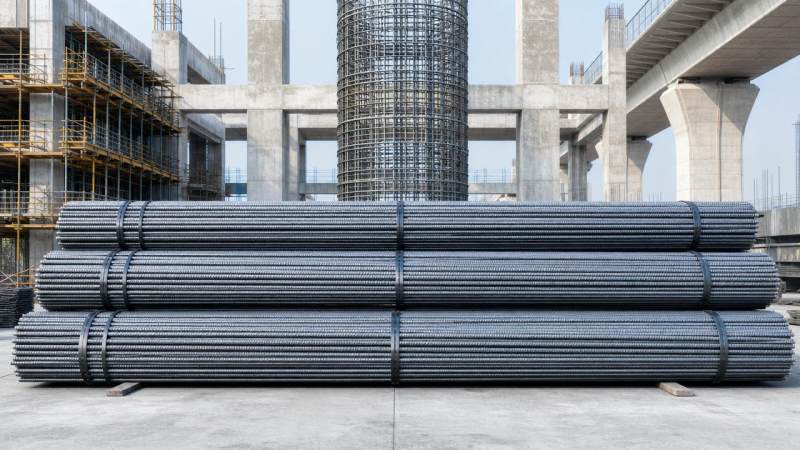
Concrete performs well under compression, but it is weak in tension. Rebar for construction provides the tensile strength that concrete lacks, allowing slabs, columns, beams, foundations, and retaining structures to resist cracking, deformation, and progressive failure over time.
For enterprise buyers, this is not a minor material decision. Rebar quality directly affects service life, repair frequency, insurance exposure, and whether a project can maintain structural reliability under changing loads, temperature cycles, moisture, and corrosive environments.
In large commercial and industrial projects, poor reinforcement selection may remain hidden during installation but create serious long term risks later. These include corrosion-induced spalling, reduced load-bearing capacity, accelerated cracking, and costly remediation that disrupts operations and damages project returns.
- It controls crack width and helps preserve the structural integrity of concrete members.
- It improves resistance to dynamic loads, vibration, and repeated service stress.
- It supports compliance with design codes and project safety requirements.
- It reduces future repair costs caused by premature reinforcement deterioration.
Which rebar quality factors matter most in real projects?
When procurement teams compare suppliers, price is often visible first, but long term safety depends on technical consistency. Rebar for construction should be evaluated through chemistry, mechanical properties, dimensional accuracy, surface condition, and traceable compliance with required standards.
The table below highlights the most important evaluation points for buyers who need to balance safety, cost control, and project reliability.
A low-cost option with unstable chemistry or inconsistent dimensions may pass a basic purchase check but create installation problems and reduce structural reliability. For decision makers, the safer choice is a supplier that can document stable production and repeatable quality from batch to batch.
How corrosion resistance affects lifecycle cost
Corrosion is one of the main reasons reinforced concrete structures deteriorate. Once moisture, chloride, or carbonation reaches the steel, expansion from rust can crack the concrete cover, reduce bond, and weaken the structural section. This is especially relevant in coastal projects, bridges, industrial plants, parking decks, and humid foundations.
Selecting rebar for construction only by initial unit price can therefore be misleading. In aggressive environments, higher-grade reinforcement, stricter cover control, or protective systems may lower total ownership cost by reducing future maintenance and downtime.
How should buyers compare rebar for construction suppliers?
For corporate procurement, supplier selection is often as important as material grade. A dependable manufacturer reduces risks related to inconsistent quality, late shipment, unclear documentation, and mismatch between design requirements and delivered steel products.
The comparison table below can help buyers evaluate suppliers beyond quotation price alone.
Hongteng Fengda supports global buyers as a structural steel manufacturer and exporter from China with stable production capacity, strict quality control, and experience serving North America, Europe, the Middle East, and Southeast Asia. For buyers managing multiple steel categories, working with a supplier that understands both standard products and customized structural solutions can simplify procurement and reduce coordination pressure.
What procurement teams should ask before placing an order
- Which standard and grade does the project require, and can the supplier provide matching documentation?
- Are mechanical properties consistent across batches, not only in sample pieces?
- What are the lead time, packaging method, and export preparation details for the destination market?
- Can the supplier support related structural steel needs to streamline sourcing and logistics?
What standards and compliance points should decision makers watch?
Rebar for construction must match the design code, geographic market, and service environment of the project. A common procurement mistake is assuming that one reinforcement grade is universally acceptable. In reality, compliance depends on the engineering specification, local regulation, and the project’s loading and durability requirements.
The following table summarizes typical compliance checkpoints for international buyers.
For international procurement, compliance is also a logistics issue. If documents, labels, or test records are incomplete, project teams may face customs delays, inspection disputes, or site acceptance problems. A supplier with export experience helps reduce those avoidable risks.
How do related steel products support safer project execution?
Although rebar for construction is central to reinforced concrete performance, long term safety also depends on surrounding structural and access components. Buyers often benefit from sourcing complementary steel products from one capable supplier to improve compatibility, planning, and delivery control.
For example, in industrial platforms, equipment areas, transport facilities, and building access zones, anti-slip patterned plates can reduce operational hazards while supporting durable steel-based construction. A practical option is 235JR Patterned steel plate, which is commonly used in transportation, construction, decoration, floor areas around equipment, machinery, and shipbuilding.
This type of patterned steel plate is available in grades such as Q235B, A36, 235JR, S235, SS400, and related specifications, with thickness typically ranging from 2mm to 8mm, widths from 600mm to 1800mm, and lengths from 2m to 12m or customized requirements. Its anti-skid performance, bending resistance, and material efficiency make it relevant where worker movement and surface grip influence overall safety.
For business buyers, this matters because project safety is rarely created by one material alone. A supplier that can coordinate reinforcement-related needs together with structural sections, beams, channels, angle steel, cold formed profiles, and selected plate products helps reduce sourcing fragmentation and communication errors.
What are the most common mistakes when buying rebar for construction?
Mistake 1: Choosing only by lowest quotation
The lowest initial price may hide higher lifecycle cost. If reinforcement quality varies, the project may face waste, installation delays, inspection problems, or earlier maintenance. Total value should include reliability, compliance, logistics, and supplier responsiveness.
Mistake 2: Ignoring environmental exposure
Rebar for construction in marine, humid, or chemical exposure conditions should be reviewed with durability in mind. The same reinforcement approach used in a dry warehouse may not be appropriate for a coastal structure or a corrosive industrial site.
Mistake 3: Treating certificates as a formality
Documentation is not just paperwork. It is a risk-control tool. Without clear batch records and material certificates, buyers may struggle to verify quality or resolve disputes if site problems appear later.
Mistake 4: Overlooking delivery coordination
Even high-quality rebar can create project disruption if delivery timing is poor. Staggered site schedules, storage limits, and fabrication sequencing require accurate lead time planning. An experienced exporter can support better coordination across production, packing, and shipment.
FAQ: what do decision makers usually ask about rebar for construction?
How do I know whether rebar quality is suitable for my project?
Start with the engineering design, local code, and exposure environment. Then confirm grade, mechanical properties, dimensional tolerance, and traceability documents. If welding or bending is involved, also review chemical composition and fabrication suitability.
Is standard compliance enough to ensure long term safety?
Compliance is essential, but not sufficient on its own. Long term performance also depends on concrete cover, site handling, placement accuracy, environmental exposure, and whether the supplied material is consistent across all batches. Supplier reliability remains a key factor.
What should global buyers prepare before requesting a quotation?
Provide the required standard, grade, dimensions, quantity, destination port, document requirements, and expected delivery schedule. If the project involves multiple steel products, list those too. This helps the supplier offer a more accurate and efficient proposal.
Can one supplier support more than just rebar-related needs?
Yes, and that often improves procurement efficiency. Hongteng Fengda supplies angle steel, channel steel, steel beams, cold formed steel profiles, and customized structural steel components, which can help buyers consolidate sourcing, simplify communication, and maintain more stable delivery planning.
Why choose us for structural steel and project sourcing support?
For business decision makers, the goal is not simply to buy steel. It is to reduce project risk, control total cost, meet compliance requirements, and keep schedules on track. Hongteng Fengda supports that goal with modern manufacturing facilities, strict quality control, and export experience across major international markets.
We provide structural steel products and customized solutions aligned with ASTM, EN, JIS, and GB requirements, helping buyers confirm specifications clearly before production. This is especially valuable when projects involve mixed steel categories, custom processing, or demanding delivery windows.
- Parameter confirmation for grades, dimensions, and applicable standards
- Product selection support for structural steel, reinforcement-related sourcing, and matching components
- Lead time discussion based on quantity, production planning, and destination market
- Customized solution review for OEM or project-specific steel requirements
- Documentation and certification communication for international procurement needs
- Sample support and quotation discussion for practical supplier evaluation
If you are evaluating rebar for construction and related structural steel products for an upcoming project, contact Hongteng Fengda to discuss technical specifications, sourcing combinations, delivery expectations, and compliance requirements in a practical and project-focused way.
Please give us a message


Please enter what you want to find