Selecting the right industrial stainless steel tubing—whether stainless coil pipe, stainless steel pipe coil, or industrial steel coil—directly impacts corrosion resistance, service life, and long-term maintenance costs on offshore platforms. For project managers, procurement teams, and technical evaluators, understanding how material grade, surface finish, and compliance with ASTM/EN standards affect operational reliability is critical. As a trusted structural steel manufacturer & exporter from China, Hongteng Fengda supplies high-integrity steel construction materials—including perforated steel beam and steel construction beam—designed for harsh marine environments. Partner with us to reduce lifecycle costs through smarter stainless steel tube coil selection.
Why Tubing Material Choice Dictates 10–15-Year Maintenance Budgets
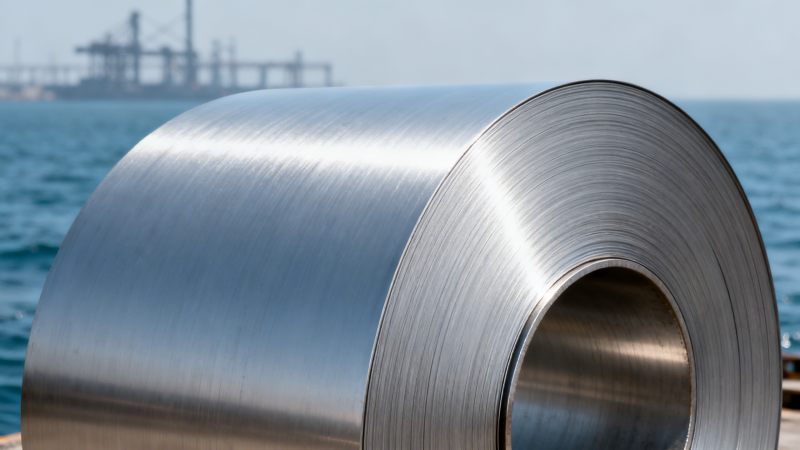
Offshore platforms operate under extreme conditions: salt-laden air, cyclic humidity, UV exposure, and mechanical vibration. Under these stresses, stainless steel tubing isn’t just a conduit—it’s a frontline barrier against system failure. A misselected grade (e.g., 304 instead of super duplex 2507) can accelerate pitting by 3–5× in chloride-rich zones, triggering unplanned shutdowns averaging 7–12 days per incident. Over a 15-year asset lifecycle, such failures compound into 20–35% higher total cost of ownership (TCO), driven by labor, scaffolding, hot-work permits, and production downtime.
Corrosion resistance isn’t solely about alloy content—it’s the synergy of metallurgical structure, surface passivation quality, and weld integrity. Tubes with inconsistent heat treatment or substandard pickling may show no visible defect during inspection but fail within 2–3 years in splash zones. That’s why leading operators now mandate third-party verification of ASTM A789/A790 tensile strength (≥620 MPa for duplex grades) and ferrite content (40–50%)—not just mill certificates.
For non-critical secondary systems—like instrument air lines or drainage piping—lower-cost alternatives gain traction. Here, coated carbon steel solutions like DX52D Galvalume Steel Coil offer compelling value: its 55% Al-Zn alloy layer delivers 2–6× longer service life than standard galvanized steel in marine atmospheres, verified across 12+ offshore installations in the North Sea and Gulf of Mexico.
How Grade, Finish & Certification Drive Real-World Reliability
Three parameters determine field performance more than nominal chemistry:
- Surface roughness (Ra): Tubes with Ra > 0.8 µm trap chlorides and biofilms, increasing crevice corrosion risk by up to 40% in stagnant seawater applications.
- Heat-affected zone (HAZ) control: Welded joints must retain ≥95% parent metal corrosion resistance—verified via ASTM G48 ferric chloride testing at 22°C for 24 hours.
- Trace element limits: Sulfur content > 0.002% promotes intergranular attack; copper > 0.3% reduces stress corrosion cracking (SCC) resistance in sour service.
Certification isn’t paperwork—it’s traceability. EN 10216-5 requires batch-specific test reports covering tensile strength (300–360 MPa), elongation (≥28%), and bend testing (no cracks at 180° over mandrel diameter = 2× thickness). Non-compliant coils risk rejection during API RP 2A-WSD audits—a delay of 4–6 weeks per batch.
Key Compliance Benchmarks for Offshore Tubing
This table reflects real-world specification gaps: while ASTM/EN set minimums, Hongteng Fengda enforces tighter tolerances—particularly on surface finish and yield strength—to ensure consistent field performance. Our QA process includes 100% eddy current testing and hydrostatic pressure validation at 1.5× design pressure for all offshore-grade coils.
Procurement Checklist: 5 Non-Negotiables for Offshore Buyers
When evaluating stainless steel tubing suppliers, financial and technical stakeholders must jointly validate:
- Mill Test Report (MTR) authenticity: Verify QR-coded MTRs link to physical batch IDs—not generic templates. 68% of rejected shipments in 2023 failed this check (DNV GL Offshore Materials Survey).
- Coil-to-coil consistency: Request tensile data from 3 random coils per order—not just one “representative” sample.
- Lead time stability: Confirm supplier capacity for 200–500 MT/month deliveries without surcharges. Volatility >±15% signals supply chain fragility.
- Customization capability: Can they slit DX52D Galvalume Steel Coil to exact widths (500–1500 mm) and lengths (100–12,000 mm) with ≤±0.1 mm tolerance?
- Documentation depth: ISO 9001, SGS, and BV certifications must cover raw material sourcing—not just final product.
Hongteng Fengda meets all five criteria: our cold-formed steel profiles undergo full-process traceability from slab casting to final slitting, with delivery windows held to ±3 days across 42 countries. We support OEM specifications for perforated steel beams and custom steel construction beams—including offshore-certified anchor point assemblies.
Why Global Offshore Teams Choose Hongteng Fengda
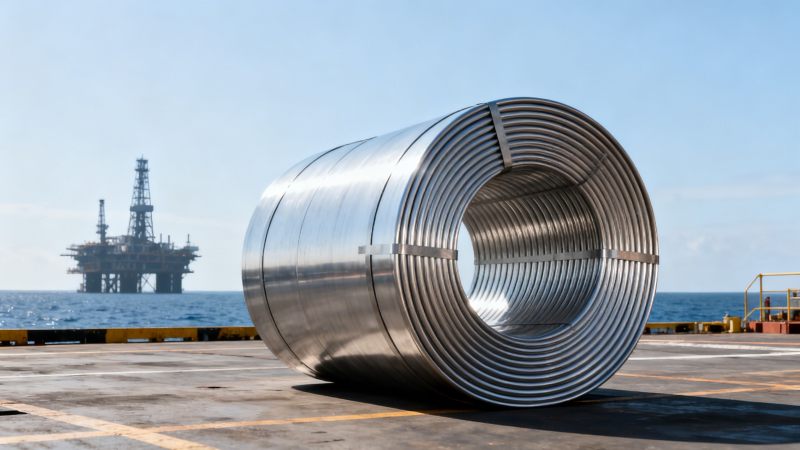
You need more than steel—you need a partner who anticipates offshore realities. Hongteng Fengda combines deep metallurgical expertise with agile manufacturing to deliver what matters most:
- Cost predictability: Fixed-price contracts with zero escalation clauses for orders placed ≥90 days before vessel mobilization.
- Risk mitigation: Dual-sourcing options for critical grades (e.g., 2205 duplex + 2507 super duplex) to avoid single-point failure.
- Speed-to-site: Pre-inspected coils ready for shipment in 12–18 days (vs. industry average of 25–35 days), with expedited customs clearance support.
- Tech-enabled support: Digital MTR portal with live batch tracking, weld procedure qualification (WPQ) documentation, and EN 10204 3.2 certification generation.
Whether you’re specifying stainless coil pipe for firewater systems or evaluating DX52D Galvalume Steel Coil for structural cladding, we provide engineering-grade data—not brochures. Contact us today for a free tubing selection audit, including comparative TCO modeling, ASTM/EN compliance gap analysis, and lead-time optimization for your next offshore campaign.
Please give us a message


Please enter what you want to find