For after-sales maintenance work, unexpected rust damage can turn routine service into costly repairs, downtime, and customer complaints. Choosing corrosion resistant steel plate helps reduce these risks by improving durability in harsh environments, from outdoor structures to industrial equipment. This article explains how the right steel plate supports longer service life, lowers maintenance frequency, and gives service operations greater confidence when managing repairs, inspections, and long-term performance.
How corrosion resistant steel plate changes repair risk in real service conditions
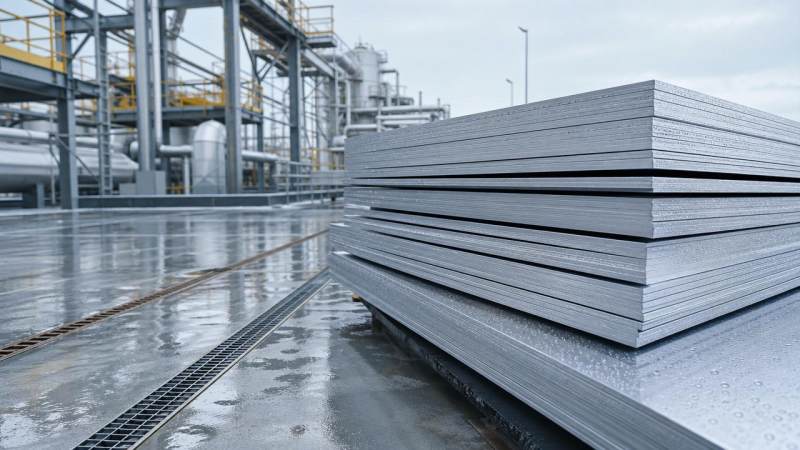
Repair risk often begins before visible rust appears. Moisture, salt, chemicals, and temperature cycling gradually weaken exposed steel surfaces.
When standard plate is used in aggressive conditions, corrosion can spread under coatings, around welds, and inside hidden joints.
Corrosion resistant steel plate lowers this risk by slowing material loss and protecting structural capacity over a longer period.
The benefit is not only fewer replacements. It also means more predictable inspections, fewer emergency repairs, and better lifecycle cost control.
In steel structures, the right material choice supports stable performance across outdoor, industrial, marine, and processing environments.
Scene judgment: where corrosion damage usually becomes expensive
Different applications need different protection levels. A dry indoor frame does not face the same risk as an exposed coastal platform.
Corrosion resistant steel plate becomes especially valuable where replacement access is difficult, downtime is costly, or safety margins must remain stable.
The first judgment point is exposure. Rain, humidity, washdown water, chemical splash, and airborne salts all increase repair probability.
The second judgment point is load responsibility. Plates supporting equipment, walkways, tanks, or frames cannot tolerate deep pitting.
The third judgment point is maintenance access. Hidden plates, enclosed supports, and elevated structures are expensive to inspect frequently.
By matching corrosion resistant steel plate to these conditions, repair planning becomes less reactive and more measurable.
Outdoor structures: reducing weather-related repair frequency
Outdoor platforms, stair systems, frames, and equipment bases face rain, oxygen, ultraviolet exposure, and temperature changes every day.
Standard carbon steel can perform well with coating, but scratches and edge damage create corrosion entry points.
Corrosion resistant steel plate helps limit damage growth after minor coating failure, especially around bolt holes and cut edges.
For outdoor steel assemblies, drainage design also matters. Standing water increases corrosion risk even when material quality is strong.
A practical decision combines suitable plate grade, clean fabrication, sealed connections, and planned inspection intervals.
Industrial equipment: protecting plates against chemicals and process moisture
Industrial sites often expose steel plates to oils, acidic vapors, alkali residue, coolant, steam, and cleaning agents.
In these areas, corrosion is not always uniform. Localized pitting can appear near weld seams, drains, and contact surfaces.
Corrosion resistant steel plate provides stronger reliability when process fluids or cleaning chemicals regularly contact structural surfaces.
For screens, guards, filters, and protective partitions, stainless mesh may support airflow while resisting aggressive media.
One suitable option is 316 Stainless Steel Welded Mesh, made from stainless steel wire for resistance to rust, corrosion, acid, alkali, heat, and chemicals.
Available models include SS 201, 304, 304L, 316, 316L, and 430, supporting filters, sieves, chemical industry, mining, architecture, and residences.
Its technical range covers 0.0008″-0.12″ wire diameter, 2-635 mesh, 25-84.6 open area, max 240″ roll width, and max 2000′ roll length.
Coastal and humid locations: controlling salt-driven corrosion risk
Coastal air contains chloride salts that accelerate rust, especially on exposed steel plate and fastened structural details.
High humidity also keeps surfaces wet longer, reducing the drying time that normally slows corrosion activity.
Corrosion resistant steel plate is important for coastal stairs, brackets, equipment pads, bridge components, and support frames.
The main judgment is chloride exposure. Higher salt concentration usually requires stronger corrosion resistance and better joint detailing.
Bolts, welds, and contact between different metals should be reviewed carefully. Galvanic effects can create unexpected repair points.
In humid regions, corrosion resistant steel plate should be paired with drainage gaps, ventilation, and compatible surface finishing.
Construction projects: keeping structural steel dependable after handover
Construction steel must perform beyond installation. After handover, corrosion problems can damage reputation and increase service costs.
Corrosion resistant steel plate supports long-term value where steel beams, channels, angle steel, and cold formed profiles connect with plate components.
For exposed structures, plate thickness should reflect both mechanical load and corrosion allowance over the intended service life.
For enclosed structures, hidden condensation must still be considered. Indoor does not always mean low corrosion risk.
Hongteng Fengda supplies structural steel products and customized components for construction, industrial, and manufacturing projects worldwide.
Production can follow ASTM, EN, JIS, and GB requirements, helping projects align material selection with engineering standards.
Different scenarios require different corrosion resistant steel plate decisions
A single material rule rarely fits every project. The correct corrosion resistant steel plate depends on exposure, load, fabrication, and maintenance access.
This comparison shows why corrosion resistant steel plate should be selected by operating environment, not only by initial price.
Scene-based adaptation suggestions for lower repair exposure
Material choice should be linked with fabrication details. Even excellent plate can fail early if joints trap water.
- Use corrosion resistant steel plate where moisture, salt, acid, alkali, or cleaning chemicals are expected.
- Specify plate thickness with both load capacity and expected corrosion allowance in mind.
- Avoid crevice details that hold water between plates, brackets, washers, and support members.
- Use compatible welding consumables, bolts, and surface treatments to reduce galvanic corrosion.
- Plan inspection points before installation, especially for elevated or enclosed steel components.
For global sourcing, stable quality and clear specifications reduce uncertainty. Material certificates and standard compliance should be reviewed early.
Hongteng Fengda supports customized structural steel components, including angle steel, channel steel, beams, and cold formed profiles.
Reliable production capacity and dependable lead times also reduce repair-related risk during project execution and replacement planning.
Common misjudgments that increase corrosion repair costs
One common mistake is assuming that paint alone can replace corrosion resistant steel plate in harsh service environments.
Coatings are important, but they can be scratched during transport, installation, daily operation, or future maintenance work.
Another mistake is ignoring weld zones. Heat-affected areas can become weak points if fabrication and finishing are not controlled.
A third mistake is selecting only by purchase price. Lower initial cost may lead to repeated shutdowns and replacement labor.
Hidden contact surfaces are also often overlooked. Plate-to-plate interfaces may trap moisture and corrode faster than visible areas.
Finally, maintenance records should track corrosion location, depth, and cause. This data improves future corrosion resistant steel plate decisions.
How to evaluate corrosion resistant steel plate before ordering
A practical evaluation begins with environment mapping. Identify moisture level, chemical contact, salt exposure, temperature, and cleaning frequency.
Next, define mechanical requirements. Plate grade, thickness, strength, and dimensional tolerance must match the structure or equipment design.
Then review fabrication. Cutting, drilling, welding, bending, and surface finishing can influence corrosion performance after installation.
For replacement work, compare failed parts with the new corrosion resistant steel plate specification. The root cause should guide the upgrade.
For new projects, review drawings together with material standards. This helps prevent mismatches between design intent and site conditions.
Documentation is also essential. Test reports, certificates, packing details, and shipping schedules help control sourcing and installation risk.
Action guidance: turn corrosion control into a measurable repair plan
Corrosion resistant steel plate lowers repair risk when it is selected for the actual scene, not for a generic specification.
Start by ranking each steel component by exposure, load importance, inspection difficulty, and downtime impact.
Then choose plate material, surface treatment, and fabrication details that match the highest-risk service conditions.
For structural steel projects requiring standard or customized solutions, Hongteng Fengda can support specification review and stable supply.
With the right corrosion resistant steel plate, repair planning becomes more predictable, service life improves, and long-term project value increases.
Please give us a message


Please enter what you want to find