As regional demand shifts with infrastructure growth, energy investment, and tighter delivery expectations, choosing the right carbon steel pipe supplier in Middle East has become more strategic than ever. For distributors, agents, and wholesale buyers, understanding how supply channels, pricing pressure, quality standards, and export reliability are evolving is essential to securing stable business and stronger margins.
Across the Gulf, North Africa, and the Levant, demand patterns are no longer driven by one single sector. Oil and gas remains important, but utility networks, fabrication workshops, logistics parks, industrial plants, and public infrastructure now account for a larger share of repeat pipe orders.
For channel partners, this shift changes how inventory should be planned, how suppliers should be evaluated, and how delivery risk should be managed. A competitive carbon steel pipe supplier in Middle East is no longer judged only by price per ton, but by standard compliance, mill coordination, document accuracy, and shipment consistency over 3 to 12 months.
Why Middle East Carbon Steel Pipe Supply Is Being Reshaped
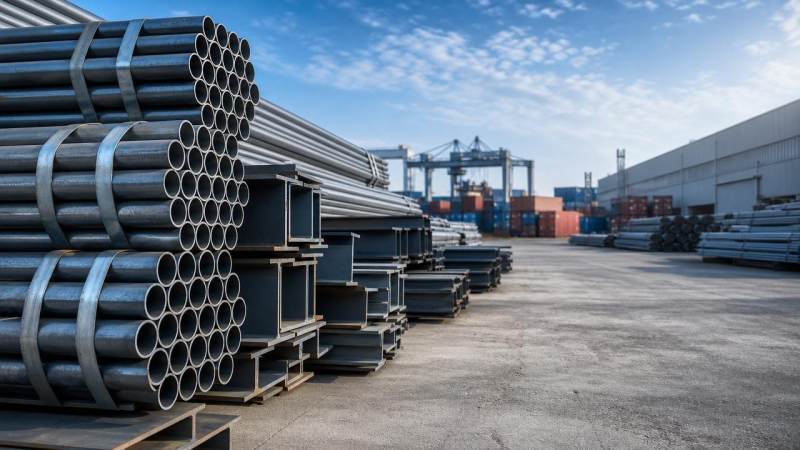
The regional supply environment has become more dynamic for 4 main reasons: infrastructure expansion, energy investment cycles, shorter procurement windows, and higher buyer expectations on technical documentation. These forces affect both spot purchasing and long-term distribution contracts.
Infrastructure and industrial demand are broadening
In many Middle East markets, projects now require mixed steel procurement rather than isolated pipe sourcing. A distributor may supply carbon steel pipe for utility lines while also supporting structural packages for factory buildings, warehouses, and industrial frames within the same project schedule.
This creates a practical advantage for buyers who work with exporters able to support multiple product categories. When sourcing teams can combine pipe, beams, channels, and custom sections through fewer vendors, they often reduce communication steps from 5 or 6 parties to 2 or 3.
Lead time pressure is increasing
Traditional lead times that once stretched to 6 to 10 weeks are now frequently challenged by projects expecting confirmation within 48 to 72 hours and shipment preparation inside 2 to 4 weeks for standard items. This is especially true for repeat sizes and common grades.
For a carbon steel pipe supplier in Middle East, responsiveness now matters almost as much as pricing. If a supplier cannot confirm rolling schedule, production slot, and shipping date quickly, distributors risk losing downstream orders even when the initial quotation is attractive.
Common supply-side changes buyers are seeing
- More project-driven orders instead of purely stock-driven orders
- Higher demand for ASTM, EN, JIS, and GB cross-reference understanding
- Closer review of tolerance, coating status, and testing documents
- Greater sensitivity to container loading efficiency and freight timing
The table below outlines how distributor priorities are changing when selecting a carbon steel pipe supplier in Middle East.
The key takeaway is simple: the most suitable supplier is not always the cheapest source on paper. The better choice is the one that protects margin after freight, claims risk, replacement delays, and project coordination costs are factored in.
What Distributors Should Check Before Choosing a Supplier
For distributors and agents, supplier evaluation should follow a structured process. In practice, 4 areas matter most: specification control, production stability, export execution, and after-sales communication. Missing even 1 of these can affect profitability on repeat orders.
1. Verify specification coverage and standard matching
Many regional buyers ask for pipes under one standard while comparing offers built around equivalent or near-equivalent grades. That is why a reliable carbon steel pipe supplier in Middle East should clearly explain grade matching, wall thickness range, dimensional tolerances, and intended application suitability.
Distributors should confirm at least 6 technical points before placing an order: outer diameter, wall thickness, length range, steel grade, tolerance, and testing or inspection requirement. These details help prevent downstream disputes and stock mismatch.
2. Assess production and consolidation capability
Some suppliers quote aggressively but rely on unstable subcontracting chains. That can create variation in finish, marking, or test certificates across one shipment. For wholesale buyers, consistency matters more than a short-term discount of 1% to 3%.
Chinese structural steel exporters with modern facilities can often support broader project bundling. For example, when a project includes not only pipe but also frame materials, a buyer may source steel sections from the same export partner to simplify logistics and document handling.
Mid-project cross-selling opportunity for distributors
In industrial structure projects, pipe demand is often linked with structural steel demand. A practical example is Structural I Beam, which is widely used for industrial structure applications and can complement pipe supply in fabrication and building packages.
This product is available in non-alloy grades such as Q195-Q235, Q345, SS355JR, SS400, A36, ST37-2, S235J0, S235J2, and St52. Typical dimensions include thickness from 4.5mm to 15.8mm, length from 6m to 12m per piece, flange width from 100mm to 400mm, and tolerance control at ±1%.
For distributors serving factory construction or heavy workshop projects, combining carbon steel pipe with hot rolled structural sections can improve order value per client. The same export source may also support bending, welding, punching, cutting, and customized fabrication preparation.
The following table shows a practical supplier screening framework for channel buyers in the region.
This framework helps buyers compare suppliers on operational reality, not just quotation sheets. In many cases, a supplier with stronger production control and export discipline delivers better yearly margin than one offering a slightly lower opening price.
3. Review communication speed and problem handling
A practical benchmark is response within 24 hours for standard inquiries and 48 to 72 hours for technical clarification. Slow replies often signal weak internal coordination between sales, factory, and logistics teams. That becomes costly when project deadlines tighten.
Distributors should also ask how the supplier handles 3 common issues: quantity adjustments before loading, document corrections after booking, and quality claims after arrival. A clear process is more valuable than vague promises.
Pricing Pressure, Inventory Risk, and Margin Protection
Price competition remains intense across the region, but margin pressure now comes from more than mill rates. Freight volatility, exchange fluctuation, rework risk, and delayed payment cycles can reduce actual profit even when sales volume looks strong.
Why lowest price can become the highest cost
If a low-priced shipment arrives with inconsistent wall thickness, incomplete markings, or missing test certificates, the distributor may face 2 to 5 extra costs: site rejection, discount claims, urgent replacement orders, storage disruption, and customer trust loss.
That is why experienced buyers increasingly calculate total procurement cost. A difference of USD 20 to 40 per ton may be acceptable if it reduces delay exposure and improves repeat-order confidence for the next 6 months.
How to balance stock and project orders
For fast-moving sizes, stocking 30 to 60 days of turnover may be reasonable, depending on port access and customer mix. For special wall thicknesses or project-specific grades, many distributors now prefer a back-to-back sourcing model to limit dormant inventory.
A dependable carbon steel pipe supplier in Middle East should support both modes: regular replenishment for standard stock and flexible production planning for project cargo. Suppliers with stable export capacity are better positioned to support mixed-volume orders without excessive lead time inflation.
A practical 5-point margin protection checklist
- Lock grade, size, and tolerance before PI issuance
- Confirm packing method and marking details before production
- Check shipment split by container or bundle count
- Align payment terms with delivery milestones
- Review claim handling procedure before first bulk order
These controls are simple, but they can materially reduce avoidable losses. For distributors managing multiple accounts, disciplined pre-shipment confirmation often saves more money than repeated negotiation on unit price.
What a Reliable Export Partner Should Offer Middle East Buyers
A strong export partner should combine manufacturing discipline with flexible service. For many buyers, especially those handling wholesale or agency distribution, the best supplier is one that can support standard products, custom requests, and coordinated shipping with consistent execution.
Multi-standard production and customization
Suppliers serving the Middle East need to work comfortably with ASTM, EN, JIS, and GB references because project documents often vary by contractor or consultant background. This capability helps distributors quote faster and reduce back-and-forth during technical review.
Hongteng Fengda, as a structural steel manufacturer and exporter from China, supports global buyers with stable production capacity, quality control, and customized steel solutions. For channel partners, this matters when projects require both standard specifications and OEM-oriented steel components.
Operational reliability across product categories
Many distributors prefer suppliers who can support more than one product family. When angle steel, channel steel, steel beams, cold formed profiles, and pipe-related project materials can be sourced through one coordinated exporter, purchasing becomes easier to manage and easier to scale.
This is especially useful for industrial, construction, and manufacturing buyers who need repeat deliveries over several phases. With dependable lead times and document control, distributors gain a more stable base for serving contractors, stockists, and fabrication customers.
Questions to ask before starting cooperation
- What grades and standards can be supplied regularly?
- What is the usual lead time for common sizes and mixed orders?
- Can the supplier support OEM or custom-cut requirements?
- How are inspection records and shipment documents managed?
- What products beyond pipe can be bundled for project supply?
The Middle East supply landscape is becoming more selective, not less. Buyers who rely only on price comparison are likely to face more friction, while those who build relationships with capable exporters can improve fill rate, reduce sourcing risk, and respond faster to customer demand.
For distributors, agents, and wholesale buyers looking for a reliable carbon steel pipe supplier in Middle East, the most effective strategy is to evaluate supply stability, standards compliance, communication speed, and multi-product support together. If you are planning new stock purchases or project-based steel sourcing, contact Hongteng Fengda to get tailored product details, coordinated supply options, and a practical quotation for your market needs.
Please give us a message


Please enter what you want to find