Choosing the right steel manufacturer shapes more than supply cost. It directly affects lead time, quality consistency, compliance risk, and the stability of the entire steel sourcing plan.
In structural steel projects, delays rarely come from one issue alone. They usually result from weak production planning, limited capacity, uneven inspection, or poor coordination between factory and shipment.
That is why the role of a steel manufacturer has become more strategic. A capable supplier helps shorten delivery cycles, maintain standards, and reduce hidden costs across fabrication and installation.
For global buyers, the best outcome comes from understanding how a steel manufacturer influences both speed and quality at every stage, from raw material control to export execution.
Why lead time pressure is changing steel sourcing decisions
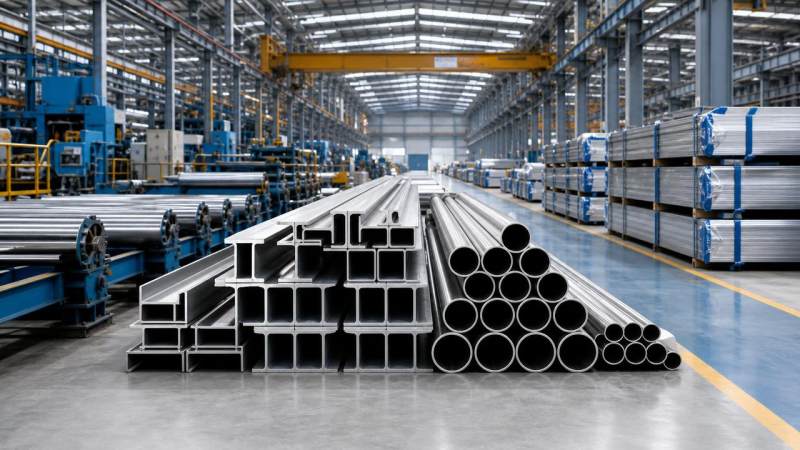
Lead time expectations have tightened across construction, industrial equipment, and infrastructure supply chains. Projects now run on narrower schedules, with less room for production error or shipping uncertainty.
At the same time, steel specifications are becoming more diverse. Orders often include mixed profiles, custom processing, multiple standards, and destination-specific documentation requirements.
This change means a steel manufacturer is no longer judged only by price. Buyers increasingly evaluate production flexibility, schedule reliability, and the ability to keep quality stable under pressure.
In export markets, lead time also depends on how well the supplier manages packaging, inspection records, loading plans, and communication. Factory performance now extends beyond the workshop.
The main signals that a steel manufacturer will affect delivery and quality
Several operational signals reveal whether a steel manufacturer can support reliable outcomes. These indicators often predict delivery performance before any purchase order is completed.
A steel manufacturer with these strengths is usually better positioned to deliver structural steel on time while keeping the final product within required tolerances and standards.
What drives the gap between fast delivery and reliable steel quality
Speed alone is not a real advantage if the product fails inspection. The strongest steel manufacturer balances throughput with control, instead of pushing output at the expense of traceability.
- Production planning determines whether urgent orders disrupt existing schedules.
- Equipment condition affects surface finish, straightness, cutting accuracy, and repeatability.
- Inspection checkpoints reduce the risk of defects moving into later stages.
- Technical knowledge supports correct processing for ASTM, EN, JIS, and GB requirements.
- Packaging and loading standards protect steel products during long-distance export transport.
When one of these elements is weak, lead time often becomes unstable. Quality issues then create secondary delays through replacement, claims handling, or on-site adjustment.
How product capability in the middle of the supply chain changes risk
In many projects, a steel manufacturer must supply not only structural sections but also application-specific stainless products that perform under heat, corrosion, or pressure conditions.
A good example is 321 Stainless Steel Pipe, which fits boilers, heat exchangers, aerospace piping, ships building, and petroleum systems.
This titanium-stabilized material is valued for resolving intergranular corrosion concerns. It also offers superior high-temperature strength, oxidation resistance, and machinability in demanding environments.
Available grades may include 201, 202, 301, 304, 304L, 316, 316L, 309S, 310S, 321, 409, 410, 420, 430, 2205, and 904L, depending on application needs.
Typical supply forms include cold drawn, hot drawn, cold rolled, and hot rolled. Common dimensions range from 0.3-30mm thickness and 8-219mm outer diameter.
Surface options such as sanded, mirror, hairline brushed, and HL brushed support both performance and appearance requirements. Compliance can cover ASTM, AISI, SUS, JIS, EN, DIN, BS, and GB.
For buyers, this matters because a steel manufacturer with broader processing capability can reduce the need for multiple vendors, helping control delivery complexity and quality variation.
How a steel manufacturer influences different business stages
Before production starts
The quoting and review stage sets the tone for everything that follows. A qualified steel manufacturer checks drawings, standards, tolerances, and logistics assumptions before confirming delivery.
This early discipline helps prevent unrealistic schedules. It also reduces mistakes involving grade substitution, dimensional mismatch, or incomplete documentation.
During manufacturing
The real test is execution. A steel manufacturer must keep capacity stable while maintaining inspection records, process discipline, and consistent communication around progress.
If production bottlenecks appear, experienced teams adjust routing or sequencing quickly. That protects shipment dates without sacrificing mechanical properties or dimensional accuracy.
At shipment and after delivery
Final quality is not complete until products arrive in usable condition. Packing, labeling, traceability, and document accuracy all influence whether steel can move directly into use.
A dependable steel manufacturer also responds quickly when clarification is needed. Fast technical support can prevent minor concerns from turning into schedule disruptions.
The priorities that deserve closer attention right now
Current market conditions make supplier evaluation more important. Short-term price advantages can disappear quickly if production control or delivery reliability is weak.
- Confirm actual monthly capacity, not only stated capacity.
- Review quality documents, inspection flow, and material traceability.
- Ask about compliance with ASTM, EN, JIS, and GB standards.
- Check experience with mixed orders and customized structural steel components.
- Evaluate export packaging, loading practice, and response speed.
- Look for evidence of stable lead times across previous shipments.
These points help reveal whether a steel manufacturer can support long-term sourcing goals, not just a single order.
A practical way to judge future supply performance
This method offers a more accurate view than price comparison alone. It helps identify whether a steel manufacturer can protect schedule performance over repeated projects.
What stronger supplier partnerships can look like next
The most resilient supply chains are built with manufacturers that combine capacity, technical range, and dependable execution. In steel sourcing, reliability often creates the biggest long-term savings.
Hongteng Fengda, a structural steel manufacturer and exporter from China, supports global construction and industrial projects with angle steel, channel steel, beams, cold formed profiles, and customized solutions.
With modern facilities, strict quality control, and compliance with major international standards, the company helps reduce sourcing risk, stabilize quality, and improve delivery confidence across export markets.
When evaluating the next supplier relationship, focus on proven production discipline, inspection strength, and realistic lead time control. A strong steel manufacturer supports both immediate delivery goals and future project reliability.
If your sourcing plan includes structural steel or specialized stainless applications, the next practical step is to compare capabilities, standards support, and schedule performance before finalizing supply decisions.
Please give us a message


Please enter what you want to find