For manufacturers evaluating metal packaging equipment, output is shaped by far more than machine speed alone. From tin can production line efficiency to material compatibility with coil coated steel and Cold Rolled Steel Sheet in Coil, the right setup can reduce waste, improve consistency, and lower total production cost. Understanding these factors helps buyers, engineers, and operators make smarter decisions across modern industrial supply chains.
What really determines output in metal packaging equipment?
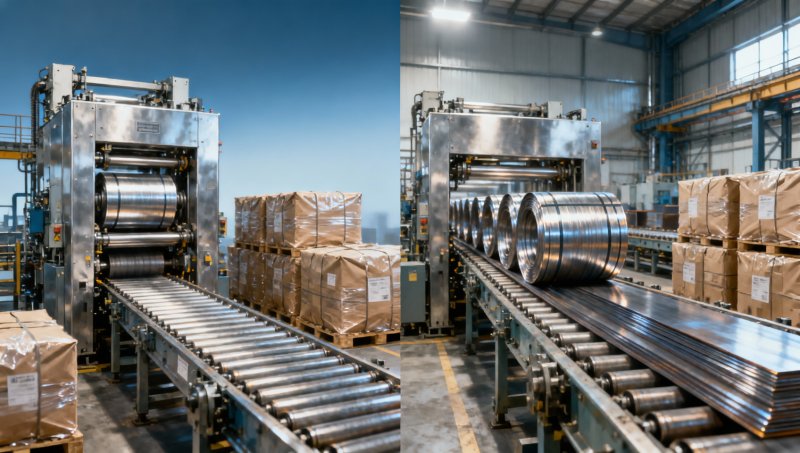
In steel-related manufacturing and packaging operations, output is not just a nameplate speed figure. A line rated for high cycles per minute may still underperform if coil handling is unstable, tooling changeover takes too long, or the feeding system cannot maintain dimensional consistency. For procurement teams and technical evaluators, the more useful view is total effective output across a shift of 8–12 hours, not peak output during a short trial.
For plants handling structural steel products, coated sheet, or fabricated metal components, packaging equipment must match product geometry, surface condition, stacking method, and downstream transport requirements. If the machine is designed for light-gauge cans but the actual workload includes heavier steel bundles or rigid formed sections, the result is frequent stoppage, poor sealing, surface damage, or inefficient labor use. In practical terms, output falls when machine design and steel product characteristics are not aligned.
Operators also see a direct link between output and line stability. A packaging line that runs at 85% availability with short interruptions every 20–30 minutes may deliver less saleable volume than a slightly slower line that holds stable performance for 3–4 continuous hours. This is why project managers and plant owners should assess uptime, defect rate, and maintenance intervals together rather than isolating a single speed metric.
For global steel buyers, stable output matters beyond the factory floor. It affects shipment planning, container loading schedules, labor allocation, and customer delivery commitments. Hongteng Fengda supports this perspective by combining stable production capacity, strict quality control, and export-oriented coordination, helping buyers reduce sourcing risk when steel products must move through manufacturing, packaging, and delivery within controlled lead times.
Key output factors buyers should verify before purchase
- Material compatibility: confirm whether the equipment handles coated steel, carbon steel parts, or cold rolled sheet without scratching, slipping, or misfeeding.
- Changeover time: for mixed production, a 15–30 minute changeover is very different from a 2-hour reset.
- Tolerance control: output quality depends on repeatability, especially when dimensional acceptance is within narrow production ranges.
- Maintenance frequency: planned service every week is manageable; unplanned stoppage every shift is costly.
How machine configuration changes output, cost, and consistency
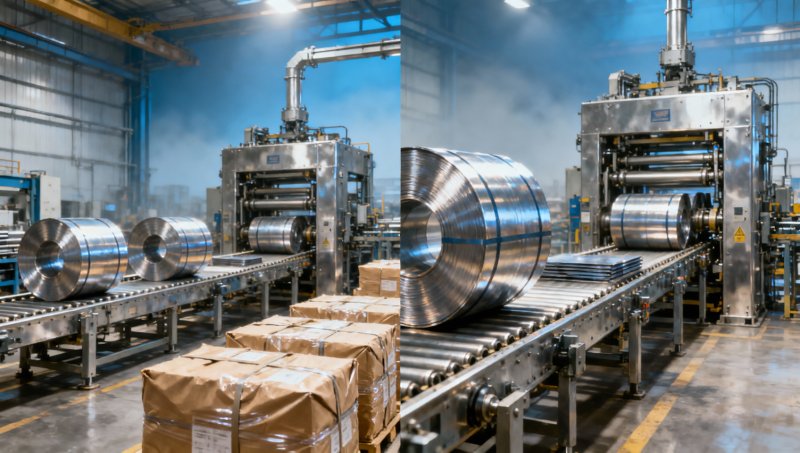
When evaluating metal packaging equipment, many companies compare only headline productivity. A better method is to compare configuration impact across four dimensions: throughput, waste, labor dependence, and quality stability. In steel product environments, packaging equipment must often process products with higher weight, sharper edges, or stricter anti-corrosion requirements than standard consumer packaging lines. That changes what “efficient” actually means.
Semi-automatic systems may suit smaller order volumes, pilot production, or distributors serving varied packaging sizes. They often require lower initial investment and can work well for small-batch or medium-batch output. Fully automatic systems, however, are usually more suitable when the plant needs repeatable packaging cycles, lower labor variation, and better synchronization with cutting, forming, stacking, or palletizing stages. The best choice depends on daily throughput targets, SKU variety, and packaging precision.
The table below summarizes how different equipment approaches affect output in metal and steel packaging operations. It is especially useful for procurement managers, finance reviewers, and plant engineers comparing production models over a 12-month investment horizon.
The comparison shows that output should be measured as qualified packaged volume, not only unit speed. In steel exports, damaged surfaces, bundle instability, or misaligned packing labels can create downstream claims, rework, and customs delays. A system that protects consistency can therefore deliver better commercial output even if its nominal cycle speed is lower.
Why this matters in structural steel supply
Hongteng Fengda serves construction, industrial, and manufacturing projects with angle steel, channel steel, steel beams, cold formed profiles, and customized structural steel components. In such applications, packaging is not only about wrapping. It supports traceability, loading efficiency, anti-damage protection, and handover quality across North America, Europe, the Middle East, and Southeast Asia. These factors influence the total output value of the production line, especially when delivery dates are fixed and quality documents must align with shipment batches.
In some projects, packaging equipment must also accommodate auxiliary steel products used in transport infrastructure or fabricated assemblies. For example, buyers sourcing track-related or railing-related sections may need handling solutions compatible with Rail products in grades such as U74, U71Mn, PD2, Q235, 55Q, and 45Mn. Typical specifications include 12m–30m lengths, 3mm–24mm thickness, rail height of 134–170mm, and tolerance around ±1%, which means packaging design must consider long-length support, surface condition, and secure bundling.
What technical checks should engineers and buyers make?
Technical evaluation should begin with the interface between the steel product and the machine. The most common causes of poor output are feeding mismatch, unstable clamping, insufficient rigidity, and packaging material incompatibility. In lines handling carbon steel, medium manganese steel, or coated sheet, even minor deviations in part alignment can increase reject rates over long runs. A technical review should therefore cover mechanical design, control logic, material protection, and maintainability.
For project teams, a practical method is to divide the assessment into 3 stages: pre-sale specification review, line testing, and post-installation verification. During the first stage, buyers should confirm product dimensions, weight ranges, edge conditions, and packaging targets. During testing, they should monitor changeover, cycle repeatability, and operator intervention frequency. After installation, they should verify whether real output matches planned throughput over at least one full production shift.
A useful technical checklist for steel packaging lines
- Confirm dimensional fit across normal product ranges, such as long sections, bundled profiles, or sheet-based packaged units.
- Check whether the machine supports surface-sensitive finishes like galvanized, painted, black, or oil-coated appearances.
- Verify maintenance access points, spare part replacement intervals, and expected service actions every month or quarter.
- Review tolerance expectations, especially where handling accuracy affects stacking, labeling, or downstream loading.
The next table can help technical teams and purchasing departments align on the most important checks before approving metal packaging equipment for steel products and export supply chains.
These checks are especially important when steel products must comply with ASTM, EN, JIS, or GB-related project requirements. While these standards apply to the steel products themselves, packaging must still preserve identification, condition, and batch integrity. If a line cannot maintain label readability, packing stability, or corrosion protection during storage and transport, commercial output is reduced even when manufacturing quality is acceptable.
A note on mixed product handling
Plants that produce multiple product families often underestimate the output penalty of mixed handling. A line packing standard sections one day and long transport-profile items the next may lose efficiency if fixture changes, support spacing, or bundle logic are not optimized. That is why customized structural steel supply and OEM coordination are often linked to better packaging outcomes. Matching upstream production and downstream packaging reduces unnecessary handling steps and shortens total project cycle time.
How should procurement teams compare total cost instead of machine price?
For procurement officers and financial approvers, the wrong purchase decision often comes from comparing machine price without comparing total output value. A lower-cost packaging system may require more labor, more changeover time, and more repairs over 6–12 months. In steel manufacturing, those hidden costs are amplified when delayed shipments affect installation schedules, port bookings, or distributor inventory commitments. Total cost should therefore be assessed through lifecycle impact, not only quotation value.
A practical approach is to compare 5 cost drivers: equipment price, installation effort, labor requirement, maintenance and spare consumption, and quality-related loss. This creates a more realistic approval model for decision-makers who must balance budget limits with operational reliability. It also helps business evaluators understand why a more suitable machine may create better margin protection over time.
Common procurement mistakes that reduce output
- Selecting by maximum speed only, without checking actual steel product dimensions and packaging objectives.
- Ignoring changeover requirements in factories with multiple SKUs or project-based production.
- Underestimating the value of surface protection for painted, galvanized, or precision-finished steel products.
- Approving a machine without clarifying spare parts support, service response expectations, or commissioning scope.
- Treating packaging as a final step instead of part of the total manufacturing and export system.
For companies buying from overseas suppliers, output analysis should also include lead time discipline. Hongteng Fengda supports global buyers with dependable production schedules, stable steel supply, and customized solutions, which helps align packaging planning with actual shipment windows. In many projects, reducing sourcing uncertainty delivers more operational value than chasing the lowest initial equipment or material quote.
This matters even more for infrastructure-oriented materials. When transport, railway, bridge, or deck applications are involved, packaging must protect shape and handling condition across long distances. Products such as rail sections used for railway rail, bridge railings, or deck handrails may also require careful support due to lengths from 12m to 30m and surface options such as black, galvanized, painted, or oil finish. If packaging does not match those realities, output losses appear later as loading inefficiency, re-bundling, or site complaints.
FAQ: practical questions before investing in metal packaging equipment
How should I define output when comparing suppliers?
Use at least 4 measures: hourly throughput, shift-level qualified output, changeover loss, and downtime frequency. A line that performs well for 30 minutes but loses stability over an 8-hour shift may not support real production goals. For steel products, also include surface protection performance and packing integrity after handling and transport.
Is a faster machine always better for steel packaging operations?
No. If the machine is too fast for the feeding rhythm, stacking arrangement, or operator response time, defects and stoppages can increase. In many factories, a balanced system with stable running for 3–4 hours at a time delivers higher usable output than an unstable high-speed configuration. The right answer depends on product mix, labor skill, and downstream logistics.
What should distributors and resellers pay special attention to?
Distributors often deal with mixed order sizes, multiple product dimensions, and tighter warehouse handling constraints. They should focus on flexibility, compact process flow, clear labeling, and moderate changeover time. If customers request multiple finishes or mixed bundles, output depends heavily on setup efficiency rather than theoretical top speed.
How important are standards and certification in this discussion?
Very important, but in a practical way. Steel products may be supplied to ASTM, EN, JIS, or GB requirements, and certain related products may follow systems such as ISO9001-2008 or ISO14001:2004 at the manufacturing level. Packaging equipment should support traceability, product separation, and condition preservation so that compliant materials remain compliant through storage, handling, and delivery.
Why choose a supply partner that understands both steel products and production realities?
Output improves when sourcing, manufacturing, packaging, and delivery are treated as one connected system. That is especially true in structural steel projects where material dimensions, protective finish, batch control, and shipment timing all affect commercial performance. Working with a partner that understands steel product behavior helps buyers make better equipment choices and avoid mismatch between production capability and packaging execution.
Hongteng Fengda supplies structural steel products and customized solutions for global construction, industrial, and manufacturing projects. With experience in angle steel, channel steel, steel beams, cold formed profiles, and OEM structural components, the company supports buyers who need consistent quality, stable lead times, and practical export coordination. This is valuable for procurement teams comparing options across North America, Europe, the Middle East, and Southeast Asia.
If you are evaluating how metal packaging equipment affects output in your steel operation, the next step should be specific and measurable. You can discuss product dimensions, packaging method, expected production volume, acceptable tolerance, target delivery cycle, and any ASTM, EN, JIS, or GB-related project requirements. You can also ask about customized structural steel solutions, OEM support, sample confirmation, and shipment planning for standard or special sections.
For a more accurate recommendation, prepare 5 items before inquiry: product type, size range, finish condition, monthly volume, and destination market. With that information, it becomes much easier to review packaging suitability, steel product matching, delivery timing, and quotation details in one discussion. This saves time for engineers, purchasers, decision-makers, and finance teams while reducing project risk from the start.
Please give us a message


Please enter what you want to find