For procurement and evaluation teams, understanding how a Q235B hot rolled carbon steel coil factory China manages capacity, raw materials, and scheduling is essential to predicting delivery performance. In the structural steel supply chain, coil production timing directly affects downstream processing, project planning, and cost control, making factory selection a key factor in securing stable Q235B lead times.
Why do China coil factories have such a strong impact on Q235B lead times?
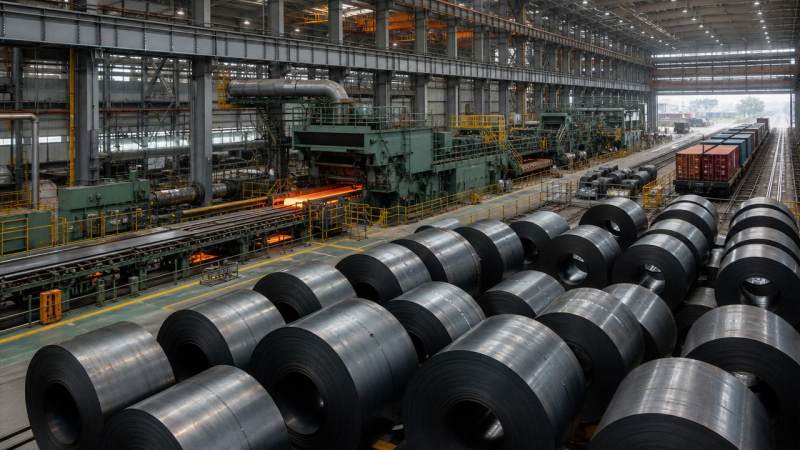
For business evaluators, lead time is not only a shipping question. It starts much earlier, at the mill scheduling stage. A Q235B hot rolled carbon steel coil factory China influences delivery through slab allocation, reheating capacity, rolling schedules, finishing lines, inspection flow, and release timing.
When these upstream processes run smoothly, downstream structural steel manufacturers can plan cutting, forming, welding, galvanizing, and export packing with fewer interruptions. When they do not, even a capable fabricator may face unavoidable delays because the base coil is not released on time.
This matters especially for structural steel exporters serving global construction and industrial buyers. Hongteng Fengda works in product categories such as angle steel, channel steel, steel beams, cold formed steel profiles, and customized structural steel parts, so the timing of coil availability directly shapes workshop loading and outbound planning.
- Production capacity determines whether regular Q235B orders can be inserted into current rolling plans or must wait for the next cycle.
- Raw material sourcing affects whether the mill can maintain chemistry and mechanical property consistency without rescheduling.
- Finishing and inspection resources decide how fast coils can move from rolling to release for downstream use.
- Export coordination affects whether the factory can align production completion with container booking and inland transport.
Lead time is a chain, not a single date
Many buyers ask for a delivery date without breaking the process into stages. That creates blind spots. In reality, Q235B lead time includes coil production, internal transfer, secondary processing, quality verification, packing, port delivery, and customs documentation.
For evaluation teams, the right question is not “What is your lead time?” but “How is your lead time built, and where are the risk points?” A supplier that can answer this clearly is usually easier to assess and manage.
What factory-level factors usually determine Q235B coil delivery speed?
The table below helps procurement teams assess the operational factors behind a Q235B hot rolled carbon steel coil factory China rather than relying only on a quoted shipment week.
This framework shows why two suppliers quoting the same price for Q235B may still perform very differently. One may control the whole sequence well, while another may depend on external rolling resources or less predictable allocations.
Why scheduling discipline matters more than nominal capacity
Large capacity looks reassuring, but business evaluators should examine usable capacity for the required specification. If a mill mainly prioritizes other grades or large domestic contracts, a standard export Q235B order may wait longer than expected despite impressive annual output figures.
A supplier with realistic planning and transparent order windows can often outperform a bigger but less responsive source. This is especially important when the coil is intended for fabricated structural products with synchronized project milestones.
How do coil lead times affect downstream structural steel production?
For a structural steel manufacturer and exporter, Q235B coil timing influences more than inventory. It drives line balancing in forming shops, labor allocation, surface treatment schedules, and shipment consolidation for overseas buyers.
Hongteng Fengda supports construction, industrial, and manufacturing projects that often require both standard steel sections and custom-made components. In such cases, coil delays can spread across several linked products, not just one purchase item.
Typical downstream effects
- Cold forming schedules may shift if coil arrivals miss the planned machine loading window.
- Fabricated assemblies can wait for matching components, increasing work-in-progress exposure.
- Galvanizing, packing, and container loading plans may need to be rebuilt at short notice.
- Project buyers may face site installation risks if structural parts arrive out of sequence.
This is why experienced exporters do not treat coil procurement as an isolated activity. They connect upstream steel availability with downstream manufacturing commitments and final export timing.
A practical product example in channel steel supply
Where project demand includes formed sections, buyers often compare coil reliability with finished profile availability. For example, a supplier offering Channel Steel Supplier solutions may need to manage Q195, Q235, Q235B, or Q345B material planning alongside dimensions such as thickness 1.5mm to 25mm, height 80mm to 160mm, and lengths from 6m to 12m.
In applications such as construction, wall beams, lightweight roofs, brackets, mechanical columns, and steel structure purlins, stable coil input helps maintain dimensional tolerance and delivery consistency. For evaluators, this shows the direct link between coil source discipline and finished section reliability.
What should procurement teams compare when selecting a Q235B source?
Price is important, but procurement decisions become stronger when lead time risk is measured in a structured way. The comparison below can help teams score a Q235B hot rolled carbon steel coil factory China from a delivery perspective.
This type of comparison is particularly useful for business evaluation staff who must justify supplier choices internally. It turns lead time from a vague claim into a measurable decision category.
Questions worth asking before approval
- Is the quoted lead time based on current production load or an estimated future slot?
- Are the requested thickness and width part of the factory’s regular Q235B range?
- What is the normal gap between rolling completion and shipment readiness?
- Can the supplier support ASTM, EN, JIS, or GB alignment when project documents require it?
- How does the supplier handle urgent changes without disrupting quality control?
How can buyers reduce Q235B lead time risk in real projects?
A good sourcing strategy does not eliminate all uncertainty, but it reduces avoidable delays. Buyers of Q235B hot rolled carbon steel coil factory China supply can lower risk by combining technical clarity, schedule discipline, and supplier communication.
Risk control actions that work
- Freeze critical specifications early, especially thickness, width, weight range, and end-use standard references.
- Separate must-hit project items from flexible replenishment items so urgent tons receive better scheduling focus.
- Request milestone updates covering production booking, rolling completion, inspection, packing, and dispatch.
- Align the expected factory completion date with freight booking lead times, especially during congested export seasons.
- Use suppliers with downstream processing knowledge when the coil will become structural profiles or custom components.
For global buyers, the advantage of working with an experienced Chinese structural steel exporter is not limited to product supply. It also includes coordination between material availability, fabrication planning, compliance expectations, and shipment execution.
Where integrated sourcing adds value
Hongteng Fengda serves customers in North America, Europe, the Middle East, and Southeast Asia with structural steel products and customized solutions. That broader export experience helps evaluation teams because the conversation can move beyond unit price into production feasibility, standard matching, and delivery planning.
When a buyer needs both common steel sections and made-to-order components, supplier integration becomes even more valuable. A coordinated approach can reduce communication gaps between coil procurement, shop production, inspection, and loading arrangements.
FAQ: what do business evaluators usually ask about Q235B lead times?
The questions below reflect common concerns from sourcing and assessment teams reviewing a Q235B hot rolled carbon steel coil factory China for project or contract supply.
How long are normal Q235B lead times?
There is no universal number because lead time depends on production load, order size, specification complexity, and export coordination. A realistic evaluation should separate mill production time from downstream processing and shipment preparation instead of relying on one headline figure.
Are standard sizes always faster than customized ones?
Usually yes. Standard Q235B specifications fit regular rolling programs more easily. Customized widths, thickness combinations, or tighter processing requirements may need special batching, which can extend the queue. Buyers should confirm whether the requested coil sits inside a routine production envelope.
What is often overlooked during supplier evaluation?
Many teams focus on ex-works price and overlook release readiness. Inspection timing, document issuance, packing, and truck-to-port coordination can all delay actual shipment. The best suppliers are able to explain these steps clearly and connect them to the final delivery promise.
Why does downstream product knowledge matter for coil sourcing?
If the coil will be turned into channels, beams, cold formed profiles, or custom structural parts, the supplier should understand how input timing affects manufacturing flow. This reduces the chance of a disconnect between coil availability and fabrication commitments.
How can buyers check whether a supplier is suitable for corrosive or certified applications?
Buyers should confirm the required steel grade, processing route, surface treatment, and project standard references early. For some downstream products, options such as hot-dip galvanized or hot-blown galvanized finishes, plus document support related to ISO, CE, SGS, BV, BIS, UL, or NEMA expectations, may influence both technical suitability and timeline planning.
Why choose a supplier that understands both coil timing and structural steel delivery?
For business evaluators, the best supplier is often not the one with the shortest promised date on paper, but the one that can explain how that date will be achieved. In the Q235B supply chain, dependable delivery comes from coordinated production capacity, quality control, export readiness, and practical downstream knowledge.
Hongteng Fengda combines structural steel manufacturing and export experience with support for standard and customized requirements. That allows buyers to discuss not only Q235B hot rolled carbon steel coil factory China sourcing, but also matching steel sections, fabrication needs, standards alignment, and realistic project lead time planning.
If you are assessing suppliers for upcoming structural steel procurement, you can contact us to discuss specification confirmation, product selection, delivery cycle planning, OEM or customized solutions, certification-related requirements, sample support, and quotation coordination. A detailed review at the evaluation stage often prevents schedule and cost problems later in the project.
Please give us a message


Please enter what you want to find