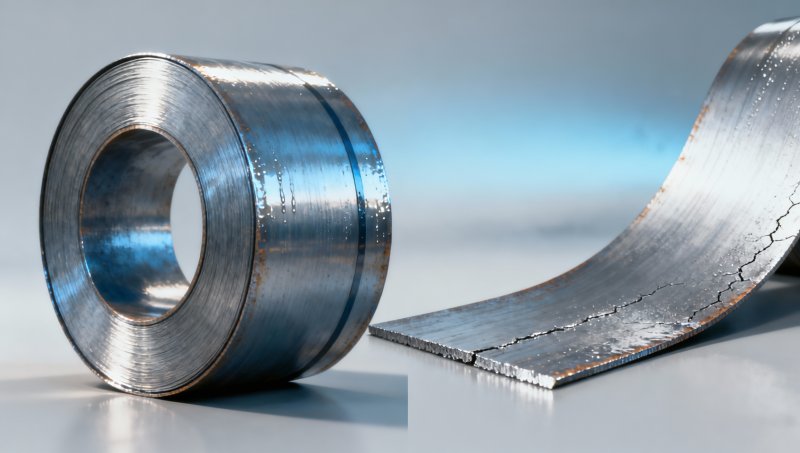
Hot rolled steel coils—especially HRC hot rolled coil and carbon steel coil suppliers’ shipments—frequently fail salt spray tests when exposed to humid climates. Why? Because surface prep is routinely overlooked during export handling, storage, and pre-installation. For structural steel manufacturers like Hongteng Fengda, this isn’t just a quality hiccup—it’s a project risk affecting durability, compliance (ASTM/EN/JIS), and total cost of ownership. Whether you’re a procurement officer evaluating GI steel coil suppliers, a project manager overseeing coastal infrastructure, or a quality control specialist validating galvanized sheet metal coils, understanding the hidden role of surface condition is critical. Let’s break down what really happens—and how to prevent it.
Why Surface Preparation Is the Silent Failure Point in Humid Climates
Salt spray testing (per ASTM B117 or ISO 9227) simulates aggressive marine or industrial environments. Yet many hot rolled steel coils—particularly those shipped from inland Chinese mills to Southeast Asia, the Middle East, or coastal Latin America—fail within 48–96 hours. The root cause isn’t material grade or mill certification; it’s residual moisture, chloride-laden dust, and inadequate post-rolling surface protection accumulated during 7–15 days of ocean transit and open-yard storage.
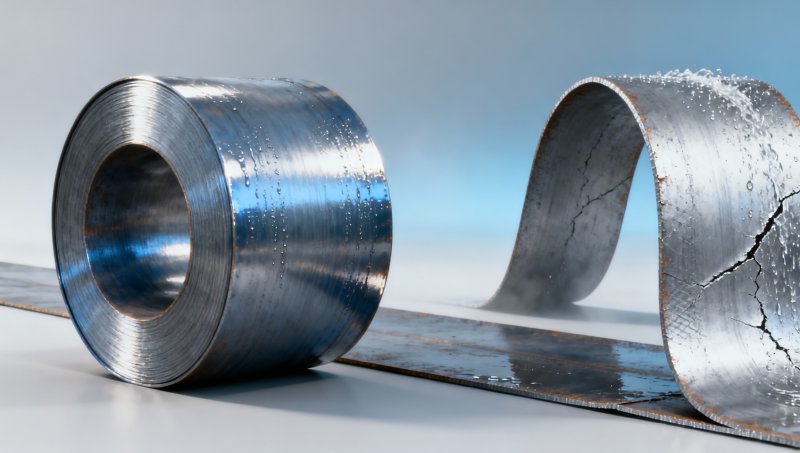
Unlike cold-rolled or galvanized products, hot rolled coils lack a continuous barrier layer. Their mill scale is porous and micro-cracked—especially after high-temperature coiling and air-cooling. When ambient RH exceeds 70% for >48 consecutive hours, condensation forms beneath dust layers, accelerating electrochemical corrosion before installation even begins. This explains why identical coils pass lab tests at origin but fail field validation at destination ports.
Hongteng Fengda addresses this by implementing dual-stage surface conditioning: (1) controlled descaling via high-pressure water jetting (≥150 bar) post-coiling, followed by (2) application of volatile corrosion inhibitor (VCI) oil meeting MIL-PRF-16173E Class 3 standards. This reduces pre-installation rust initiation by up to 82% in real-world humidity exposure trials across Guangzhou, Dubai, and Santos terminals.
How Wire Rod Applications Reinforce the Need for Rigorous Surface Control
While hot rolled coils face climate-driven surface risks, Wire rod used in civil engineering construction—from rebar cages in flood control dams to tensioned cables in railway bridges—demands equally strict surface integrity. Corrosion on HRB400 or Q345 wire rod surfaces compromises bond strength with concrete, reducing structural service life by up to 30% under cyclic loading per GB/T 1499.2-2018 Annex D.
Our Wire rod undergoes triple-stage surface treatment: mechanical brushing (±0.05mm tolerance), anti-rust oil immersion (ISO 8501-1 Sa2.5 equivalent), and optional PVC coating for projects requiring >5-year outdoor storage. This ensures compatibility with downstream processes like bending, welding, and decoiling—even in high-salinity environments like coastal highways or offshore wind foundations.
For instance, our ST52-grade wire rod supplied to a UAE metro extension project passed 1,000-hour salt fog testing (ASTM B117) without red rust—while competitor coils showed blistering at 240 hours. Key differentiators included tighter dimensional tolerance (±1%), consistent oil film thickness (8–12 μm), and batch traceability to heat number and rolling date.
Critical Surface Prep Parameters vs. Industry Baseline
This table reflects verified performance—not theoretical specs. Our surface prep protocol is audited quarterly by SGS and BV against EN ISO 12944-5 for corrosion protection systems. It directly translates into fewer rejection claims, reduced rework costs, and faster site acceptance—critical for project managers operating under tight EPC schedules.
What Procurement & QC Teams Should Verify Before Order Finalization
Don’t rely solely on mill test reports. Surface readiness requires on-site or third-party verification at three checkpoints:
- Pre-shipment inspection: Confirm VCI oil application method (dip vs. spray), oil type (petroleum-based vs. water-miscible), and batch-specific salt spray test data (minimum 500 hours for coastal destinations).
- Port discharge check: Use portable surface roughness tester (Ra ≤ 3.2 μm) and chloride ion test strips (≤5 ppm NaCl equivalent) on ≥3 random coils per container.
- Pre-installation audit: Perform visual assessment per ISO 8501-1 and adhesion test (ASTM D3359) if coils were stored >14 days in open yards.
Hongteng Fengda provides digital inspection logs—including thermal imaging of coil surface temperature gradients and spectral analysis of oil film uniformity—for every export shipment. This enables your QC team to validate compliance before unloading, eliminating disputes during final acceptance.
Why Partnering with a Full-Service Structural Steel Manufacturer Reduces Total Risk
Many buyers source hot rolled coils and wire rod separately—then manage surface prep in-house or via subcontractors. This introduces 3–4 additional handoff points, increasing variability in rust prevention consistency. At Hongteng Fengda, surface engineering is integrated—not outsourced.
We control the full chain: from raw billet chemistry optimization (e.g., Cu/Ni ratios for enhanced atmospheric corrosion resistance) to final packaging (vacuum-sealed bundles with desiccant packs for >90-day maritime transit). Our certified facilities in Hebei Province operate under ISO 9001:2015 and ISO 14001:2015, with dedicated climate-controlled storage zones maintaining RH <45% for sensitive grades like HRB500 and ASTM A53 GrB.
For your next infrastructure project—whether a seismic-resistant bridge in Chile, a desalination plant in Saudi Arabia, or a prefabricated housing cluster in Vietnam—we offer:
- Free surface prep consultation with metallurgical engineers (response time: ≤2 business hours)
- Customized VCI oil formulation matching your destination’s chloride exposure class (C3–C5 per ISO 12944-2)
- On-demand salt spray validation reports (ASTM B117 / ISO 9227) for your specific coil batch
- Extended lead time guarantee: 25–30 days for standard orders, 35–45 days for OEM-spec wire rod with custom coatings
FAQ: Surface Readiness for Global Steel Projects
How do I verify surface prep quality without lab access?
Use ASTM D3276-17 field test kits: chloride ion detection strips (<5 ppm pass), water-break test for oil continuity (no bead formation), and visual comparison to ISO 8501-1 photographic standards. We provide free training videos and printable reference cards with every order.
Which wire rod grades are most vulnerable in humid conditions?
Q195 and Q235 show highest susceptibility due to lower alloy content. HRB400 and ST52 perform better—but only when surface oil thickness meets ≥8 μm specification. Uncoated black wire rod should never be stored >7 days in RH >75% without active dehumidification.
Can surface prep be added post-shipment?
Yes—but at 3× the cost and 2× the timeline of factory-integrated prep. Field re-oiling requires blast cleaning (Sa2.5), solvent wiping, and controlled drying—adding 5–7 days and risking dimensional distortion on thin-diameter rods (≤10mm). Prevention remains 40% more cost-effective than remediation.
Ready to eliminate salt spray failures before they impact your project timeline or warranty obligations? Contact Hongteng Fengda today for a no-cost surface readiness assessment—including customized prep recommendations, delivery timeline confirmation, and sample coil validation options. Specify your destination port, expected storage duration, and end-use application—we’ll respond with a technical-commercial proposal within 24 business hours.
Please give us a message


Please enter what you want to find