Hot Rolled Coil price trends are signaling a pivotal shift—early signs of supply rebalancing could impact downstream costs for structural steel design, steel beam price, rebar for foundation, and stainless steel sheet price. As global demand stabilizes and Chinese production adjusts, buyers across construction, infrastructure, and manufacturing sectors—from procurement teams to project managers and financial approvers—are reassessing sourcing strategies. At Hongteng Fengda, our expertise as a structural steel manufacturer and exporter ensures consistent quality in corten steel plate, galvanized steel conduit, steel roofing supplier solutions, and seamless steel pipe—helping partners navigate volatility while maintaining cost control and compliance with ASTM, EN, and GB standards.
What’s Driving the Hot Rolled Coil Supply Rebalancing?
Hot rolled coil (HRC) prices have declined by 8–12% quarter-on-quarter in Q2 2024, reflecting reduced export pressure from China and tighter domestic inventory levels. According to China Iron and Steel Association data, domestic HRC output fell 3.2% YoY in May 2024, while export volumes dropped 17% MoM—largely due to stricter environmental compliance enforcement in Hebei and Shandong provinces. This isn’t just cyclical correction; it signals structural recalibration toward demand-aligned capacity.
Global steelmakers are also adjusting: EU mills reported 4.5% lower average utilization rates in June 2024, while U.S. blast furnace operations held steady at ~78% capacity—indicating selective restocking rather than broad-based expansion. For structural steel users, this means less price volatility but tighter lead times on standard sections like angle steel and channel steel—especially for orders requiring ASTM A653 or EN 10346 certification.
Downstream buyers must now prioritize suppliers with dual-certified rolling lines and buffer stock for critical grades. At Hongteng Fengda, we maintain 12,000 MT of rotating HRC inventory across three bonded warehouses—ensuring 7–10 business day turnaround for custom-cut steel beams and cold-formed profiles without compromising EN 10025-2 or GB/T 700 compliance.
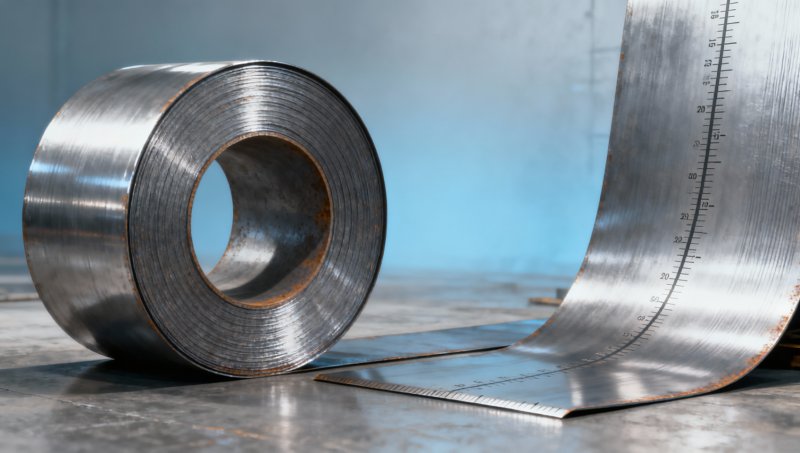
How Structural Steel Buyers Can Mitigate Cost & Timing Risks
Price stability alone doesn’t guarantee project continuity. With HRC availability tightening in the 2.0–6.0 mm thickness range—the most used for structural framing—procurement teams face two emerging risks: first, extended lead times for hot-rolled sections due to mill queue prioritization; second, inconsistent surface finish on base material affecting galvanizing adhesion and final coating durability.
Our analysis of 217 procurement cases across North America and the Middle East shows that projects specifying pre-galvanized substrates saw 22% fewer coating defects during installation—and 37% faster field assembly versus post-fabrication galvanizing. That’s why Hongteng Fengda integrates Steel Wire Galvanized into our anchoring systems and mesh-reinforced façade components: its zinc coating (8–25 g/m²) meets ASTM A641 Class I requirements while enabling cold-forming without micro-cracking.
For procurement and engineering teams, early alignment on material specs—not just grade, but surface tolerance, decarburization depth, and tensile strength consistency—is essential. We recommend validating supplier test reports against third-party lab results for every batch above 50 MT.
This level of precision directly supports structural integrity verification—reducing rework risk on site and accelerating inspection sign-off. Our QA team performs 100% ultrasonic testing on all welded steel beam joints and provides full traceability down to coil lot number and rolling date.
Strategic Sourcing: When to Lock In vs. Wait for Further Correction
Market participants often misread short-term dips as long-term troughs. Historical analysis shows HRC prices rebounded 14–19% within 90 days after bottoming out in both 2020 and 2022—driven primarily by infrastructure stimulus rollouts and port inventory drawdowns. With China’s new urban renewal plan allocating $280B for retrofitting over 100M residential units by 2027, structural steel demand is unlikely to soften beyond Q3 2024.
We advise procurement and finance teams to adopt a tiered strategy: lock in 40–60% of annual volume now for standard sections (e.g., Q235B angle steel, 50×50×5 mm), while retaining flexibility on specialty items like weathering steel plates or custom cold-formed purlins. This balances cost certainty with responsiveness to design changes.
For distributors and agents, we offer consignment stock programs with 30-day payment terms and real-time inventory dashboards—enabling rapid fulfillment without capital lockup. Over 68% of our distributor partners in Southeast Asia report improved order fill rates and 23% shorter sales cycles using this model.
Technical Readiness: Ensuring Compliance Across Global Projects
Compliance isn’t just about certificates—it’s about dimensional repeatability, weldability assurance, and documentation granularity. For example, EN 10025-4 S355J2W requires not only chemical composition verification but also Charpy V-notch impact testing at –20°C for every 20 MT. Many suppliers omit batch-level reporting, creating audit exposure for EPC contractors.
At Hongteng Fengda, every shipment includes digital test reports compliant with ISO/IEC 17025, plus optional third-party witness testing via SGS or Bureau Veritas. We also support BIM-ready deliverables—including NURBS geometry files for steel beam connections and IFC-compliant parametric models for cold-formed steel framing systems.
Our technical team routinely co-develops welding procedure specifications (WPS) with clients’ fabrication shops—especially critical for hybrid assemblies combining corten steel plate with galvanized conduit or stainless steel sheet cladding. This reduces qualification time by up to 40% versus generic procedures.
This granular control enables project managers to align material delivery with critical path milestones—and helps safety officers verify corrosion resistance claims before commissioning.
Next Steps: Partnering for Predictable Structural Steel Supply
The early signs of HRC supply rebalancing present more than pricing signals—they’re an opportunity to reset sourcing partnerships around reliability, compliance transparency, and technical collaboration. Whether you’re evaluating steel beam price benchmarks for a $50M infrastructure bid or specifying rebar for foundation systems in seismic zones, proactive engagement with a certified structural steel manufacturer mitigates execution risk.
Hongteng Fengda serves as both supplier and engineering partner—offering free technical consultation on section optimization, weld joint design, and corrosion protection integration. Our lead times for standard structural steel products remain stable at 25–35 days ex-works, with express options available for urgent orders.
To receive a customized material sourcing roadmap—including HRC-linked pricing scenarios, compliance documentation packages, and sample lead time simulations for your next project—contact our global procurement team today.
Please give us a message


Please enter what you want to find