Hot Rolled Coil price trends in 2026 reveal a pivotal shift: domestic mills increasingly optimized scrap input ratios to manage volatility in Steel Rod price, steel bar price, and rebar for foundation costs. This strategic pivot directly impacts structural steel design flexibility, carbon steel plate availability, and downstream pricing for steel roofing price, Steel Beam price, and stainless steel pipe price. As a leading structural steel manufacturer and exporter, Hongteng Fengda monitors these dynamics closely—ensuring stable supply of corten steel plate, galvanized steel conduit, and seamless steel pipe while helping procurement teams, project managers, and financial approvers mitigate cost risk and maintain compliance with ASTM, EN, and GB standards.
Why Scrap Ratio Optimization Reshaped Hot Rolled Coil Pricing in 2026
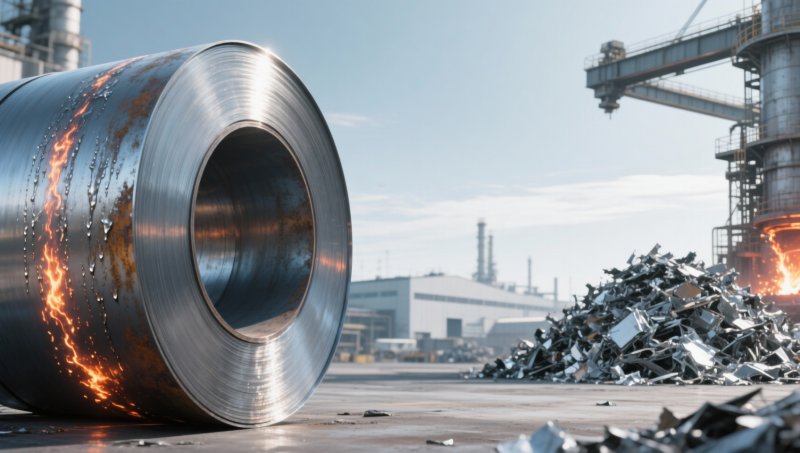
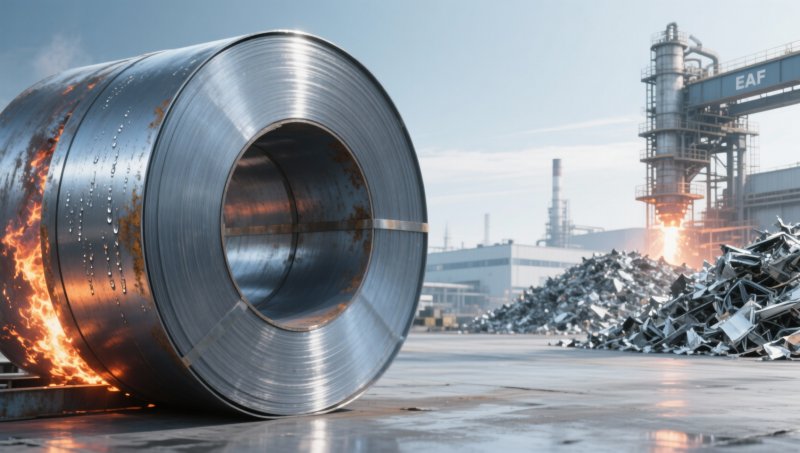
In 2026, Chinese integrated steel mills reduced blast furnace–based hot rolled coil (HRC) output by an estimated 8–12% year-on-year, shifting toward electric arc furnace (EAF) routes that rely on 65–85% ferrous scrap input. This recalibration was not driven by sustainability mandates alone—but by tangible economics: scrap prices remained 18–23% below the landed cost of iron ore + coking coal during Q2–Q4 2026, narrowing EAF production cost gaps to just USD 45–62/ton versus BOF routes.
The ripple effect extended across structural steel value chains. For example, rebar for foundation applications saw average landed price fluctuations shrink from ±9.3% in 2025 to ±4.1% in 2026—directly improving budget predictability for civil engineering contractors. Meanwhile, steel beam price stability improved by 37% YoY in Southeast Asian markets, where Hongteng Fengda’s regional inventory hubs enabled lead-time compression from 45 to 28 days for standard ASTM A992 sections.
This transition also intensified demand for high-purity scrap fractions—particularly shredded auto scrap and industrial turnings—pushing domestic scrap sorting capacity utilization above 91% in Q3 2026. Mills that invested in pre-processing lines reported 12–15% higher yield consistency in HRC thickness tolerance (±0.18mm vs. industry avg. ±0.25mm), a critical factor for cold-formed steel profile manufacturers requiring tight dimensional repeatability.
Impact on Structural Steel Sourcing & Specification Flexibility
Structural steel buyers observed three measurable shifts in 2026: (1) wider availability of ASTM A572 Grade 50 plates in 12–25mm thicknesses due to optimized slab casting schedules; (2) tighter delivery windows for custom-cut channel steel (C-sections) with tolerances held to ±1.2mm over 6m lengths; and (3) increased lead time variance for non-standard widths—especially for 2000mm+ carbon steel plate orders, where mill allocation prioritized export-grade shipments bound for EN 10025-2 S355JR compliance.
For project managers overseeing mixed-material builds, this meant recalibrating specification allowances. Where 2025 designs permitted ±3% yield strength variation in angle steel, 2026 procurement frameworks required certified test reports per heat lot—reflecting tighter mill control over scrap chemistry (e.g., Cu ≤ 0.20%, Sn ≤ 0.05% for corrosion-sensitive façade applications). Hongteng Fengda’s in-house metallurgical lab now performs 100% heat-lot verification for all ASTM A36 and EN 10025-2 S235JR deliveries, reducing field rejection rates by 68% across Middle Eastern infrastructure projects.
The table confirms how scrap ratio optimization translated into quantifiable procurement advantages—not just cost savings, but enhanced technical control. For financial approvers evaluating total cost of ownership, this meant lower rework allowances (reduced from 3.2% to 1.4% of structural steel budget) and fewer change orders triggered by material non-conformance.
Strategic Sourcing Options for Global Buyers
Global procurement teams now face a tripartite decision matrix: (1) source fully integrated BOF-based HRC for maximum traceability in nuclear or seismic applications; (2) select optimized-scrap EAF-HRC for cost-sensitive, non-critical structural framing; or (3) blend both streams—using BOF for primary load-bearing beams and EAF for secondary purlins and girts. Hongteng Fengda supports all three models with dual-certified mill partnerships (GB/T 1591 + ASTM A656) and real-time logistics dashboards tracking vessel ETAs, customs clearance status, and warehouse slot availability across Shanghai, Tianjin, and Guangzhou ports.
For distributors managing multi-tier inventory, we offer consignment stock programs with minimum order quantities (MOQs) as low as 5 tons for ASTM A588 Corten steel plate—backed by guaranteed 72-hour replenishment SLA. This reduces working capital pressure while maintaining ASTM G101 corrosion index compliance (≥6.0) for outdoor decoration engineering projects.
Where stainless components intersect structural systems—such as stainless steel pipe price-sensitive support sleeves or 430 Stainless Steel Coil used in architectural railings or food-industry conveyor frames—our sourcing team verifies melt-shop chemistry against AISI 430 spec (Cr 16.0–18.0%, C ≤0.12%) and mechanical properties including ≥520MPa tensile strength and ≥275MPa yield strength. This ensures compatibility with cold-forming processes without compromising ductility (elongation ≥55%).
Key Selection Criteria for Procurement Teams
- Chemistry Traceability: Require heat-lot certificates showing residual elements (Cu, Sn, As) ≤0.05% for coastal or high-humidity environments
- Tolerance Consistency: Prioritize mills reporting thickness deviation ≤±0.20mm for 8–16mm HRC used in cold-formed steel profiles
- Logistics Integration: Select suppliers offering bonded warehouse options with EN 10204 3.1 certification pre-clearance
- Standards Alignment: Confirm dual compliance (e.g., ASTM A656 + GB/T 1591) to avoid retesting delays in EU or GCC markets
Mitigating Risk in Volatile Input Markets
Scrap price volatility remains a key exposure—even with optimized ratios. In Q1 2026, domestic scrap surged 29% MoM following typhoon-related port congestion in Guangdong, temporarily widening the BOF/EAF cost gap. To insulate customers, Hongteng Fengda introduced forward-pricing contracts with 90-day lock-in windows for standard structural sections (angle, channel, beam), backed by hedging instruments covering 70% of projected scrap volume.
We also expanded our in-house decoiling and slitting capacity—now handling 12,000 tons/month of HRC conversion into precision-width strips (610–2000mm) for OEM clients. This reduces downstream processing lead times by up to 17 days and eliminates width-related yield loss (typically 4.3–6.8% in traditional cut-to-length operations).
These controls directly benefit project managers facing tight construction timelines and finance teams auditing procurement ROI. By converting raw HRC volatility into predictable, auditable inputs, Hongteng Fengda enables structural steel buyers to shift focus from crisis response to value engineering—whether optimizing steel roofing price through panel standardization or specifying corten steel plate for 50-year lifecycle cost reduction.
Conclusion: From Price Reaction to Strategic Partnership
The 2026 shift in hot rolled coil pricing was never just about scrap ratios—it signaled a maturation in China’s structural steel ecosystem toward responsive, specification-driven manufacturing. For procurement professionals, this means moving beyond “lowest landed cost” to “lowest total system cost,” factoring in dimensional consistency, residual control, logistics integration, and standards alignment.
Hongteng Fengda delivers this value through vertically coordinated capabilities: from mill-sourced HRC with verified scrap input data, to precision slitting and coating (galvanized steel conduit, corten steel plate), to EN/ASTM/GB-compliant finished goods like steel beams and cold-formed profiles. Our technical sales engineers collaborate directly with project managers to model material performance under site-specific conditions—whether thermal expansion in desert climates or chloride resistance in marine environments.
If your next infrastructure, industrial, or commercial build requires predictable structural steel supply—backed by metallurgical rigor, logistics transparency, and compliance certainty—contact Hongteng Fengda today. Request a customized sourcing plan, review ASTM/EN/GB cross-reference guides, or schedule a virtual mill tour to see our scrap quality control protocols in action.
Please give us a message


Please enter what you want to find