For fast-paced construction and industrial projects, choosing the right structural material directly affects speed, cost, and long-term performance. A hot rolled steel h beam offers the strength, load-bearing stability, and fabrication efficiency that keep schedules on track. With reliable global supply and consistent quality, it remains a practical option for faster execution and lower sourcing risk.
Why fast-track projects are leaning toward hot rolled steel h beam solutions
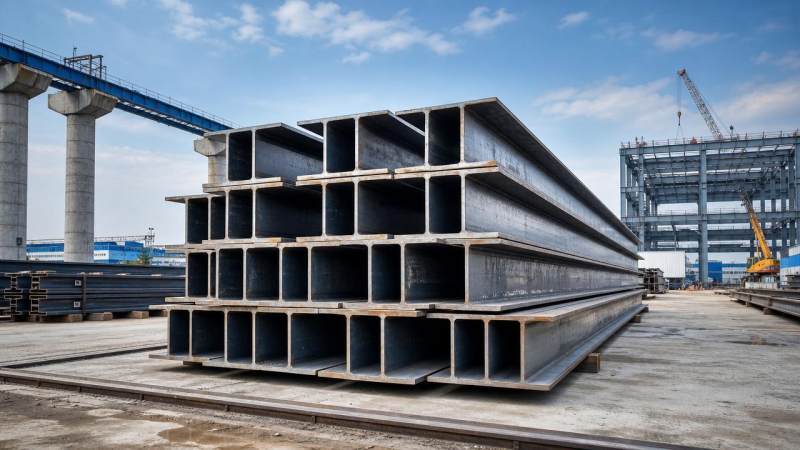
Project timelines are becoming tighter across steel structures, factories, bridges, and equipment platforms. Material choices now influence not only design safety, but also delivery rhythm and installation speed.
In this environment, the hot rolled steel h beam is gaining attention because it balances structural capacity with efficient fabrication. It reduces unnecessary complexity during cutting, welding, and assembly.
Compared with less optimized sections, a hot rolled steel h beam delivers stronger bending resistance and a more reasonable strength-to-weight ratio. That matters when every day on site carries measurable cost.
It also fits current sourcing priorities. Buyers increasingly want standard-compliant steel sections that can move smoothly through international engineering, procurement, and inspection processes.
Several market signals are reshaping structural steel selection
The rising preference for hot rolled steel h beam products is not isolated. It reflects a broader shift in how construction and industrial projects manage time, risk, and structural performance.
Modular building methods are expanding. Fabricators need beam sections that are easy to standardize, easy to process, and dependable under varied loading conditions.
At the same time, infrastructure and industrial expansion in many regions is increasing demand for sections that can support heavier loads without creating excessive dead weight.
Another signal is stricter quality verification. Materials aligned with ASTM, EN, JIS, and GB standards are preferred because they reduce approval friction and improve cross-border procurement confidence.
What is driving this shift
The performance advantages are becoming more relevant, not less
A hot rolled steel h beam is not simply a conventional steel section. Its geometry supports efficient load transfer, making it useful in buildings, workshops, bridges, and machinery bases.
The flange and web arrangement improves bending behavior. This allows designers to meet structural requirements while avoiding unnecessary weight in many applications.
Fabrication teams also benefit. Straightforward cutting, welding, drilling, and connection design help reduce labor intensity and workshop bottlenecks.
Where corrosion or special service conditions matter, material selection can be adapted. Available grades may include Q235, Q345B, Q460C, SS400, S275JR, S355JR, A572, A992, galvanized steel, and stainless options.
These advantages explain why the hot rolled steel h beam remains relevant across both traditional construction and newer industrial assembly models.
Common technical range used in projects
- Flange thickness: 8-64mm
- Web thickness: 5-36.5mm
- Flange width: 50-400mm
- Web width: 100-900mm
- Length: 1m-12m or as required
These ranges support varied applications, from steel structures and shipbuilding to bridging, automobile chassis, and mechanical manufacturing.
The impact extends across design, fabrication, logistics, and installation
Design teams benefit from a section with predictable structural behavior and broad standards compatibility. That improves specification clarity and reduces technical disputes later.
Fabrication workshops gain from repeatability. Standard beam profiles help organize cutting plans, fixture setups, and welding sequences more efficiently.
Logistics planning becomes more stable when size ranges and supply standards are clear. Consistent lengths and tolerances reduce repacking, rework, and avoidable site confusion.
Installation crews also see advantages. A hot rolled steel h beam can support faster assembly because its section is familiar, structurally reliable, and suitable for many connection methods.
Practical effects on key business stages
- Earlier design finalization due to standard section availability
- Lower fabrication waste through efficient profile selection
- Reduced sourcing uncertainty with internationally recognized standards
- Improved construction sequencing in fast-paced builds
- Better lifecycle value through dependable structural performance
What deserves closer attention before selecting a supply partner
As demand grows, not every supply source offers the same consistency. The benefits of a hot rolled steel h beam depend heavily on manufacturing discipline, inspection control, and delivery reliability.
It is useful to confirm whether the supplier can provide multiple grades, custom lengths, and compliance with JIS G3101, EN10025, ASTM A36, ASTM A572, and ASTM A992.
Production scale also matters. A supplier with stable capacity can better support urgent schedules, phased deliveries, and recurring project needs.
Quality control should not be treated as a formality. Dimensional accuracy, material traceability, and surface condition all affect downstream efficiency and final project performance.
Priority checkpoints
- Material grades available for structural and environmental demands
- Dimensional range matching design and fabrication requirements
- Certifications aligned with destination market expectations
- Lead time stability for batch or urgent deliveries
- Ability to support OEM and customized structural steel components
One practical example is H Girder, which suits steel structure, shipbuilding, bridging, and machinery applications while supporting cost saving and efficient construction.
A measured response is better than chasing the lowest upfront price
When evaluating a hot rolled steel h beam, the lowest unit price rarely tells the full story. Delays, inconsistent tolerances, and rework can erase any early savings.
A better approach is to compare total project value. That includes structural suitability, processing efficiency, quality reliability, freight planning, and after-sales technical support.
The next phase will favor reliable steel partners with global execution strength
The market direction is clear. Fast-paced builds need structural materials that support speed without compromising performance. That is why the hot rolled steel h beam continues to gain practical importance.
Reliable supply matters as much as beam performance. Hongteng Fengda, a structural steel manufacturer and exporter from China, supports global construction and industrial projects with stable capacity, strict quality control, and customized solutions.
Its product range covers angle steel, channel steel, steel beams, cold formed steel profiles, and customized structural components. Compliance with ASTM, EN, JIS, and GB standards helps reduce sourcing risk across markets.
For upcoming projects, the most effective next step is to review structural loads, target standards, required dimensions, and delivery timing together. That makes hot rolled steel h beam selection more accurate and more cost-efficient.
If project speed, consistency, and global supply confidence are priorities, now is the right time to evaluate qualified structural steel options and lock in a dependable production partner early.
Please give us a message


Please enter what you want to find