Hot Rolled Steel Coil Price Trends in 2026
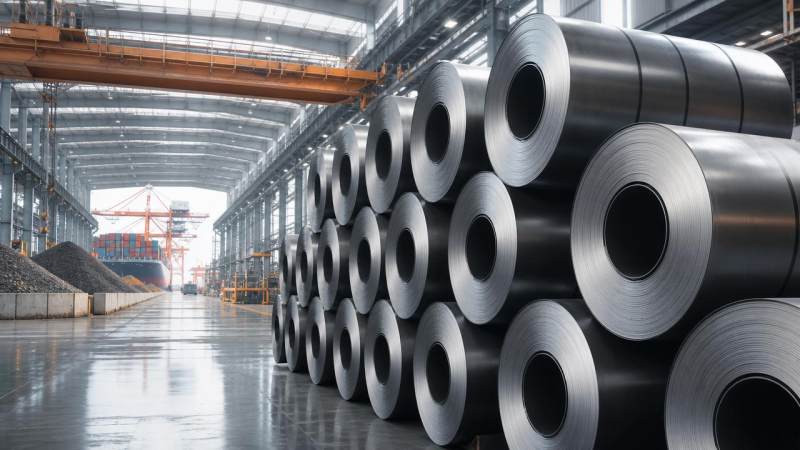
Understanding the hot rolled steel coil price outlook for 2026 is essential for buyers, project planners, and procurement teams managing steel-intensive budgets.
As global demand, raw material costs, energy prices, trade policies, and regional supply conditions shift, price trends may directly affect sourcing strategies.
This article examines key market factors shaping 2026 expectations and offers practical insights for business evaluators seeking reliable supply and cost control.
What Buyers Really Want to Know About 2026 Prices
Most business evaluators are not only asking whether prices will rise or fall. They need to know how exposed their projects are.
The key question is whether the 2026 hot rolled steel coil price will remain manageable enough for stable budgeting and contract planning.
For buyers, a useful forecast must connect market drivers with practical purchasing decisions, supplier selection, inventory policy, and delivery timing.
In 2026, prices are likely to remain sensitive rather than predictable, with regional differences becoming more important than global averages.
Companies that rely on one market quote may misread the situation, especially when freight, duties, and lead times change quickly.
A better approach is to evaluate price trends together with raw material costs, mill capacity, currency risk, and supplier reliability.
Overall 2026 Outlook: Volatility With Selective Opportunities
The hot rolled steel coil price in 2026 is expected to be influenced by uneven demand recovery across construction, infrastructure, machinery, and manufacturing.
If industrial activity improves in major economies, mills may gain stronger pricing power, particularly when inventories are kept at cautious levels.
However, if demand remains weak or financing costs stay high, price increases may face resistance from downstream buyers.
This creates a market where short price spikes can appear, but sustained growth depends on real consumption rather than expectations.
For procurement teams, the main risk is not only a high average price, but sudden timing mismatch between quotations and approvals.
Projects with fixed budgets should build flexible purchasing windows, because waiting for the lowest point can increase delivery risk.
Business evaluators should compare spot buying, quarterly contracts, and framework agreements based on project certainty and cash flow needs.
Raw Materials Will Remain a Primary Price Driver
Iron ore, coking coal, and scrap prices will continue to shape the production cost base for hot rolled coil in 2026.
When iron ore supply tightens or shipping disruptions affect major routes, steel mills may pass higher costs into export quotations.
Coking coal is equally important because blast furnace steelmaking remains widely used, especially in large-scale production hubs.
Scrap prices may also influence the market as electric arc furnace capacity expands and low-carbon steel policies develop.
Buyers should monitor raw material indices, but they should avoid treating them as perfect predictors of finished coil prices.
Mill margins, inventory pressure, and regional demand can either amplify or soften the effect of input cost movements.
A practical evaluation should ask whether suppliers can maintain production stability when raw material costs fluctuate sharply.
Demand From Construction and Manufacturing Matters More Than Headlines
Steel price discussions often focus on macroeconomic headlines, but actual consumption from downstream sectors usually provides better purchasing signals.
Construction demand affects beams, plates, coils, and fabricated components, especially in regions with infrastructure or energy-related projects.
Manufacturing demand influences hot rolled coil through automotive, machinery, appliances, containers, and general fabrication industries.
If manufacturing orders improve in 2026, coil buyers may face stronger competition for mill schedules and preferred specifications.
If construction remains uneven, some regions may show softer prices while others face shortages in specific grades or dimensions.
Business evaluators should therefore assess demand by destination market, not only by global steel production statistics.
For importers, the strongest risk often appears when domestic demand rises in supplying countries, reducing export availability.
Energy Costs and Decarbonization May Add Structural Pressure
Energy remains a major cost component in steelmaking, especially for mills exposed to volatile electricity, gas, or coal prices.
In 2026, energy policy and carbon-related costs may increasingly influence regional competitiveness and export pricing.
European buyers may continue to face cost pressure from carbon regulation, energy transition expenses, and compliance requirements.
Suppliers in Asia may offer competitive pricing, but buyers still need to verify standards, documentation, and consistency.
Decarbonization does not always create immediate price increases, yet it can affect long-term investment, capacity, and product premiums.
For business planning, the key issue is whether low-cost supply remains available without increasing quality or compliance risk.
Trade Policies Can Quickly Change Delivered Cost
The quoted hot rolled steel coil price is only one part of the real procurement cost for international buyers.
Tariffs, anti-dumping duties, safeguard measures, and import licensing requirements can change the delivered cost more than mill price movements.
In 2026, trade policy uncertainty may remain high as governments protect domestic mills and respond to capacity imbalances.
Buyers should calculate landed cost under multiple scenarios before committing to a supplier or market source.
This includes product price, ocean freight, insurance, duties, port charges, inland transport, inspection, and possible financing costs.
A low offer may become expensive if documentation is incomplete, classification is wrong, or shipment timing misses policy changes.
Reliable exporters help buyers reduce this risk by providing accurate standards, certificates, packing details, and shipment coordination.
Regional Differences Will Shape Real Buying Decisions
North America, Europe, the Middle East, and Southeast Asia may experience different price patterns during 2026.
North American prices can be affected by domestic mill discipline, import controls, infrastructure demand, and automotive production cycles.
European prices may remain sensitive to energy costs, carbon policy, import quotas, and slower industrial recovery.
The Middle East may see project-driven demand, especially where infrastructure, energy, and industrial investments continue to expand.
Southeast Asia may remain competitive but vulnerable to import flows, currency movements, and shifts in Chinese export policy.
For global buyers, the best sourcing region is not always the one with the lowest base quote.
The better choice is the region that provides predictable lead times, suitable standards, stable quality, and acceptable total landed cost.
How Business Evaluators Should Read Price Signals
Business evaluators should avoid relying on a single market report when judging 2026 purchasing timing.
A practical review should combine mill offers, raw material trends, freight rates, inventory levels, and downstream order visibility.
When mills shorten quotation validity, it often signals cost uncertainty or stronger confidence in near-term demand.
When distributors reduce inventory aggressively, future restocking can create sudden order pressure and temporary price increases.
When freight rises, imported material may lose competitiveness even if the factory price remains attractive.
Buyers should also compare payment terms, delivery reliability, and claim handling, because these factors influence real procurement value.
The strongest purchasing decisions usually come from combining market timing with supplier qualification rather than chasing the lowest number.
Where Related Galvanized Coil Fits Into Procurement Planning
Although hot rolled coil is often evaluated for structural and manufacturing needs, many projects also require corrosion-resistant coated materials.
For applications exposed to moisture, outdoor conditions, or longer service-life requirements, galvanized coil can support better lifecycle performance.
Hongteng Fengda supplies Coil Coated Galvanized Steel for buyers needing protective zinc coating and stable specification control.
Available options include G90 galvanized steel, thickness from 0.12mm to 3.5mm, and width from 600mm to 1500mm.
The zinc layer can reach 60-275g/m² for hot galvanizing, with pre-galvanized options from 80-275g/m².
Grades include DX51D+Z, SGCC, S220GD+Z, S350GD+Z, and S550GD+Z, supporting ASTM, EN, JIS, GB, and related standards.
For evaluators, the value is not only corrosion resistance, but reduced maintenance risk and better protection for steel structures.
Contract Strategy: Spot Buying, Fixed Price, or Framework Agreement
Choosing the right contract model is one of the most important decisions in a volatile 2026 market.
Spot buying can work when demand is uncertain, storage is limited, or buyers expect weaker prices.
However, spot buying exposes projects to sudden increases, limited availability, and longer lead times during demand rebounds.
Fixed-price contracts provide budget certainty, but suppliers may price in risk when raw material costs are unstable.
Framework agreements can balance flexibility and security by locking supplier capacity while allowing periodic price adjustment.
For large projects, evaluators should consider splitting volumes across committed base quantities and flexible optional quantities.
This approach reduces exposure to extreme market movements while preserving room to benefit from favorable price windows.
Inventory Planning Should Match Project Risk
Inventory strategy should not be based only on expected price direction. It should reflect project penalties and supply interruption costs.
If delayed steel delivery causes construction downtime or production stoppage, holding extra inventory may be financially justified.
If specifications are common and lead times are short, leaner inventory may reduce capital pressure and storage costs.
For imported steel, buyers should include ocean transit, customs clearance, port congestion, and inland delivery in planning.
Inventory buffers are especially important for customized dimensions, special grades, or projects requiring synchronized shipments.
Evaluators should compare the cost of carrying inventory with the cost of missing a delivery milestone.
In many cases, the cheapest purchase price is less valuable than guaranteed availability at the right time.
Supplier Qualification Is a Price Risk Control Tool
In 2026, supplier qualification should be treated as part of price management, not only a quality procedure.
A capable supplier can reduce hidden costs by preventing specification errors, late shipments, and documentation problems.
Buyers should verify production capability, quality control systems, export experience, standard compliance, and responsiveness before placing major orders.
Hongteng Fengda supports global buyers with structural steel products, customized components, stable production capacity, and international standard compliance.
Its product range includes angle steel, channel steel, steel beams, cold formed profiles, and OEM structural steel components.
For business evaluators, this broader capability matters when projects require both standard products and coordinated customized supply.
A supplier with dependable lead times can help buyers control budget risk even when market prices remain uncertain.
Key Indicators to Watch Throughout 2026
Buyers should monitor several indicators regularly instead of waiting for annual market summaries.
Important signals include iron ore prices, coking coal trends, steel mill utilization, export offers, and distributor inventory levels.
Freight rates, exchange rates, and trade policy announcements should also be reviewed when comparing international suppliers.
Downstream indicators such as construction starts, machinery orders, automotive output, and infrastructure spending can reveal demand strength.
When several indicators move in the same direction, buyers should prepare for faster quotation changes.
When indicators conflict, procurement teams should avoid aggressive assumptions and request updated offers from qualified suppliers.
A disciplined monthly review can improve timing decisions without requiring buyers to become commodity market specialists.
Practical 2026 Purchasing Recommendations
First, establish a target price range rather than a single expected price, because volatility will likely remain part of the market.
Second, evaluate total landed cost and delivery reliability before comparing suppliers on ex-works or FOB price alone.
Third, secure critical project volumes earlier when delivery delays would create significant financial or operational consequences.
Fourth, keep some purchasing flexibility for non-critical volumes, especially if demand signals remain uncertain.
Fifth, qualify suppliers before market pressure rises, because urgent sourcing often leads to weaker negotiation and higher risk.
Finally, use clear technical specifications, inspection requirements, and documentation standards to prevent disputes after shipment.
These actions help procurement teams manage the hot rolled steel coil price environment with greater confidence and fewer surprises.
Conclusion: Focus on Control, Not Perfect Prediction
The 2026 hot rolled steel coil market is unlikely to reward buyers who depend on perfect price prediction.
Raw materials, energy, regional demand, freight, and trade policies may all create price movement during the year.
Business evaluators should focus on controllable decisions: supplier reliability, contract structure, inventory planning, and landed cost analysis.
For steel-intensive projects, the best result usually comes from balancing cost opportunities with supply security and quality assurance.
By working with experienced manufacturers and exporters, buyers can reduce sourcing uncertainty and build more resilient procurement strategies.
Hongteng Fengda helps global customers manage these priorities through consistent quality, customized solutions, and dependable international supply support.
Please give us a message


Please enter what you want to find