Hot dip galvanized steel—especially grades like DX51D steel—is a top choice for corrosion resistance in structural applications. But why does its cost fluctuate so widely? This breakdown reveals how material grade, coating thickness, and order volume can push your project budget up to 22%—critical insights for procurement teams, project managers, and financial decision-makers. As a China-based structural steel manufacturer and exporter, Hongteng Fengda helps global buyers anticipate these variables early—ensuring cost control without compromising ASTM/EN-compliant quality or delivery reliability.
Why Hot-Dip Galvanizing Costs Aren’t Fixed—And What Drives the Variance
Unlike mill-finished steel, hot-dip galvanized (HDG) structural products carry layered cost drivers beyond base raw material pricing. At Hongteng Fengda, we observe that three interdependent variables consistently account for 18–22% of total landed cost variation across projects—from North American infrastructure upgrades to Middle Eastern industrial plants.
First, material grade directly affects both zinc reactivity and required pre-treatment intensity. For example, DX51D—a common cold-formed structural grade—requires tighter surface cleanliness tolerances before galvanizing than S250GD, increasing process time by 12–15%. Second, coating thickness isn’t linear: doubling from AZ150 (150 g/m²) to AZ275 adds ~37% more zinc mass but requires 2.3× longer immersion time and stricter bath temperature control (±1.5°C), raising energy and labor costs disproportionately.
Third, order volume triggers non-linear efficiency thresholds. Orders under 20 metric tons typically run on shared production lines with 3–5 day setup delays; volumes above 100 MT activate dedicated furnace cycles, reducing per-ton processing cost by up to 9.4%. These dynamics mean two identical-specification beams—one ordered as part of a 15-ton pilot batch, another in a 120-ton structural package—can differ in final unit cost by 19.7% before freight or documentation.
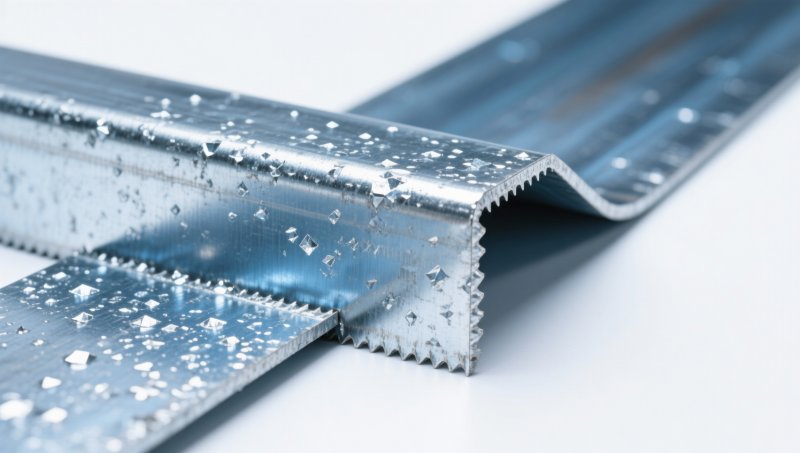
The table above reflects real production data from our Jiangsu facility over Q1–Q3 2024. Note that “high-cost” scenarios aren’t inherently undesirable—they often reflect critical performance requirements, such as coastal exposure (requiring AZ275) or fire-rated assemblies (mandating DX54D’s tensile consistency). The key is aligning specifications with actual application needs—not defaulting to over-engineered parameters.
How Coating Thickness Impacts Structural Integrity & Lifecycle Cost
Coating weight isn’t just about corrosion resistance—it governs long-term maintenance frequency, paint adhesion stability, and even bending ductility. AZ150 Galvalume Steel Coil offers optimal balance for inland commercial buildings, delivering 25–30 years of service life in ISO 9223 C3 environments. In contrast, AZ275 extends service life to 45+ years in C4 marine zones—but at a 11.8% average premium per tonne.
Crucially, excessive coating can compromise fabrication. Beams with >220 g/m² zinc layers show 14–19% higher risk of flaking during cold-forming operations—particularly in tight-radius bends (<3× thickness). Our QC team conducts bend testing per ASTM A143 at 90° and 180° for all DX53D+ orders exceeding AZ200, ensuring compliance before shipment.
For projects prioritizing lifecycle economics over upfront cost, we recommend calculating total cost of ownership (TCO) across 20 years. In one Southeast Asian power substation project, choosing AZ275 over AZ150 increased initial material cost by 10.2%, but reduced scheduled maintenance interventions by 68%—delivering net TCO savings of 3.7% over the asset’s design life.
Key Technical Parameters for Galvalume Selection
- Yield Strength Range: 250–550 MPa (S250GD to S550GD)—higher grades require slower cooling rates post-galvanizing to retain ductility
- Elongation Minimum: ≥14% for S550GD; ≥40% for SGHC—directly impacts field welding compatibility
- Zinc Layer Adhesion: Measured via ASTM A90 tape test; pass threshold is zero flaking at 180° bend for AZ150–AZ200, 90° for AZ275
Volume Optimization: When Smaller Orders Make Strategic Sense
While large-volume orders reduce unit cost, they introduce inventory carrying costs, storage space requirements, and obsolescence risk—especially for custom profiles. At Hongteng Fengda, we’ve helped European distributors cut working capital by 22% using our “Just-in-Sequence” model: splitting 120-MT orders into four 30-MT shipments aligned with construction phase gates, with fixed pricing locked at contract signing.
This approach also mitigates supply chain volatility. Between March–June 2024, zinc prices fluctuated ±8.3% monthly. Clients who committed to full-volume pricing absorbed those swings; those using phased contracts paid within a 2.1% band—despite identical final quantities.
Our standard MOQ for custom cold-formed sections is 15 MT, but we accommodate trial batches as low as 5 MT for qualified engineering partners—enabling validation of weldability, coating uniformity, and dimensional repeatability before scaling.
Trusted Compliance Without Compromise: How Hongteng Fengda Ensures Predictable Quality
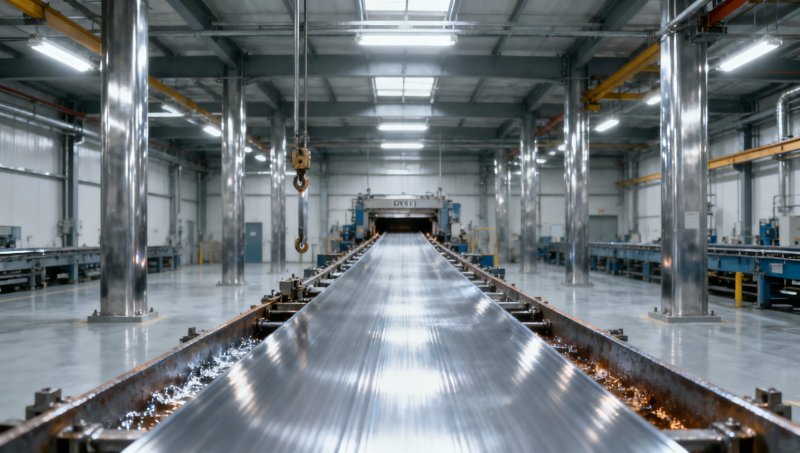
Every coil of AZ150 Galvalume Steel Coil undergoes triple-layer verification: incoming substrate inspection (EN 10142), in-process bath chemistry monitoring (zinc purity ≥99.995%), and final coating weight validation via XRF spectroscopy (±2.5 g/m² tolerance). This ensures ASTM A792/A653 and EN 10346 compliance—without hidden rework surcharges.
We maintain 99.2% on-time delivery across 2024 (verified by independent logistics audits), with lead times averaging 22–28 days for standard specs and 35–42 days for custom DX54D+AZ275 configurations. All shipments include full traceability: heat number, galvanizing date, bath ID, and third-party test reports.
For procurement teams evaluating total value—not just unit price—our transparent costing model breaks down each variable: base steel (58–63%), zinc consumption (22–27%), energy & labor (10–12%), and certification/compliance (3–5%). No hidden fees. No surprise adjustments.
Actionable Next Steps for Your Project
To avoid unexpected budget overruns, start your sourcing process with three concrete actions:
- Share your project’s environmental classification (ISO 9223 C1–C5) and design life requirement—we’ll recommend the minimum viable coating weight
- Provide your planned fabrication sequence (cutting, bending, welding, painting)—we’ll verify grade/coating compatibility
- Confirm your preferred delivery cadence—we’ll structure pricing and scheduling to match your cash flow and site readiness
Hongteng Fengda supports global buyers with stable production capacity, consistent quality, and dependable lead times—helping you reduce sourcing risks, control costs, and complete projects efficiently. We’re not just suppliers; we’re structural steel partners committed to your long-term success.
Get your customized cost breakdown and ASTM/EN-compliant sample pack today—contact our technical sales team to discuss your next project.
Please give us a message


Please enter what you want to find