When high strength steel tubing fails under cyclic loading, the root cause isn’t always material deficiency—it could stem from structural steel grades mismatch, flawed fatigue testing protocols, or overlooked factors like steel rod diameter and surface integrity. For engineers, procurement teams, and project managers relying on lightweight steel tube or flexible steel wire in dynamic applications, understanding the interplay between material specs (e.g., ASTM/EN-compliant grades), galvanized sheet for roofing durability, and H-beam weight chart consistency is critical. Hongteng Fengda—China-based structural steel manufacturer—supports global clients with rigorously tested, traceable high strength steel tubing and customized solutions backed by ISO-aligned quality control.
Why Cyclic Failure Triggers a Root-Cause Audit
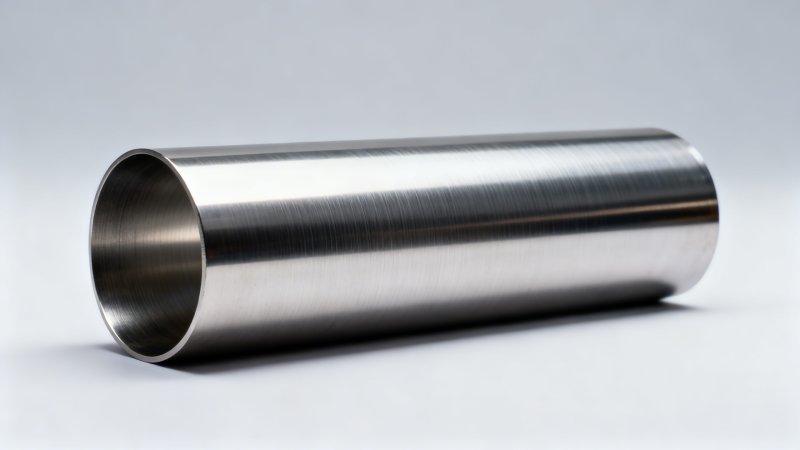
Fatigue failure in high strength steel tubing rarely occurs at first load—but after repeated stress cycles (typically 10⁴–10⁷ cycles depending on amplitude and environment). When premature fracture appears during service or validation testing, technical evaluators must distinguish between three primary categories: material nonconformance, design-induced stress concentration, or procedural flaws in test execution.
Grade mismatch remains among the most frequent oversights. A specification calling for ASTM A500 Grade C (yield ≥ 50 ksi / 345 MPa) may be inadvertently substituted with Grade B (yield ≥ 46 ksi / 317 MPa), reducing fatigue life by up to 35% under identical loading spectra. Surface defects—such as mill scale residues, grinding marks deeper than 0.05 mm, or hydrogen-embrittled zones from improper pickling—can act as crack initiation sites even in fully compliant grades.
Testing protocol integrity is equally decisive. ASTM E466 mandates constant-amplitude axial loading with ≤ ±0.5% force variation; yet field labs sometimes use servo-hydraulic systems without real-time load calibration—introducing ±3–5% deviation that skews S-N curve interpretation. Without traceable load cell certification every 90 days and specimen alignment verified within 0.1°, results lose statistical validity.
How Material Selection Impacts Fatigue Performance
Not all stainless steels behave identically under cyclic stress. While austenitic grades like 304 offer excellent ductility, their lower yield-to-tensile ratio (~40–45%) increases plastic strain accumulation per cycle. In contrast, 201 Stainless Steel Coil delivers higher formability than 300-series grades while maintaining tensile strength ≥ 520 MPa and yield strength ≥ 275 MPa—ideal for cold-formed tubular components requiring both fatigue resistance and press-brake compatibility.
Its high-manganese, low-nickel composition (typically 4–6% Ni vs. 8–10% in 304) reduces raw material cost by ~18–22% without sacrificing essential corrosion resistance in urban decoration, food processing, or conveyor belt applications. However, it cannot be heat-treated—relying instead on controlled cold working to achieve final hardness (≤183 HB). This makes batch-to-batch consistency in rolling reduction (target: 65–75% thickness reduction) and annealing atmosphere (N₂ + H₂ mix, dew point ≤ –40°C) mission-critical.
For cyclic-loaded structures, surface finish directly influences endurance limit. BA (bright-annealed) and 2B finishes show 20–25% higher fatigue strength than NO.1 mill finish due to compressive residual stresses and Ra < 0.1 μm roughness. Applications demanding long-term vibration resistance—such as train underframes or medical equipment housings—routinely specify 4K or 8K polished surfaces.
Key Mechanical Parameters Under Cyclic Load
The table highlights why 201 stainless excels where ductility and work-hardening response matter more than ultimate strength alone. Its 55–60% elongation enables energy absorption across millions of cycles—critical for shock-absorbing supports or adjustable scaffolding joints. Meanwhile, carbon steel’s lower ductility demands tighter tolerances in joint geometry to avoid localized yielding.
Procurement Checklist: 5 Non-Negotiable Verification Points
Procurement and quality assurance teams must verify these five items before accepting high strength steel tubing—especially for cyclic-load applications:
- Mill Test Report (MTR) with full chemistry (including Mn, Ni, Cr, N) and mechanical properties measured per ASTM A370—not just “conforms to spec” statements.
- Surface inspection records confirming Ra ≤ 0.8 μm for fatigue-critical sections, with documented use of profilometer calibrated weekly.
- Fatigue test summary (if supplied): minimum 3 specimens, R-ratio = 0.1, run to 10⁷ cycles or failure—plus Weibull analysis showing 90% confidence life estimate.
- Traceability: Heat number linked to production batch, rolling date, annealing parameters, and dimensional check reports (thickness tolerance ±0.05 mm for 2.5–3.0 mm gauges).
- Certification alignment: ISO 9001:2015, SGS third-party verification, and BV type approval for structural applications—valid for current shipment lot.
Hongteng Fengda provides all five documents digitally upon order confirmation—and offers pre-shipment sample testing at client-designated labs (lead time: 7–10 business days). Our standard delivery window for custom-cut tubing is 15–25 days after deposit receipt, with priority scheduling available for urgent infrastructure projects.
Why Global Buyers Trust Hongteng Fengda for Structural Steel Integrity
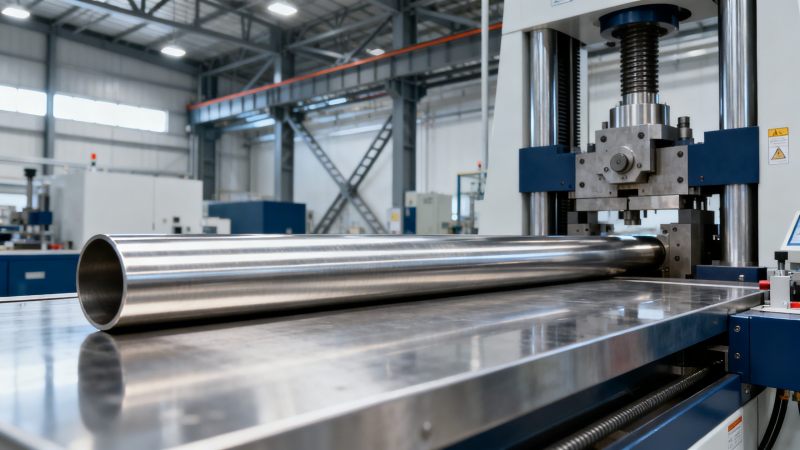
As a certified structural steel manufacturer and exporter from China, Hongteng Fengda bridges the gap between cost efficiency and uncompromised reliability. We supply angle steel, channel steel, steel beams, cold formed profiles, and OEM structural components compliant with ASTM, EN, JIS, and GB standards—validated through in-house tensile, impact, and bend testing labs accredited to ISO/IEC 17025.
Our clients—from North American bridge contractors to Middle Eastern industrial plant developers—consistently cite three advantages: (1) stable capacity (20,000+ MT/month), eliminating supply chain volatility; (2) dual QC checkpoints (pre-rolling and post-annealing); and (3) engineering support for grade substitution analysis, including fatigue life modeling using FEA-simulated stress maps.
Ready to validate your next high strength steel tubing specification? Contact us for: detailed MTR review, fatigue test protocol alignment, dimensional tolerance consultation, or sample dispatch (standard coils shipped within 3 business days). Let’s ensure your cyclic-loaded structure performs safely—cycle after cycle.
Please give us a message


Please enter what you want to find