The HRC steel price outlook for 2026 is becoming a key concern for commercial evaluators as supply shifts, energy costs, trade policies, and downstream demand continue to reshape the global steel market. Understanding what drives this volatility is essential for assessing procurement risks, budgeting accurately, and identifying more reliable sourcing strategies in an increasingly competitive international environment.
Why is the HRC steel price expected to stay volatile in 2026?
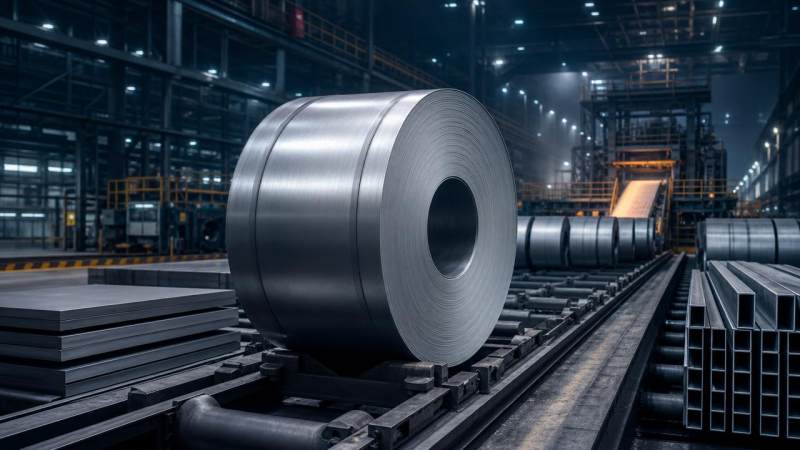
For business evaluators, the main issue is not whether the HRC steel price will move, but how fast, how far, and under which conditions. Hot rolled coil remains a benchmark for many steel contracts, so its direction affects budgeting for structural sections, fabricated parts, machinery, and infrastructure supply chains.
In 2026, volatility is likely to come from overlapping forces rather than one dominant trigger. Raw material costs, regional production cuts, carbon-related compliance pressure, freight conditions, currency shifts, and uneven construction demand can all change procurement economics within a short period.
For buyers comparing sourcing options, the HRC steel price also matters indirectly. Even when purchasing angle steel, channel steel, steel beams, or cold formed profiles, many producers calculate offers based on broader flat steel and mill sentiment. This creates a ripple effect across the steel industry.
- HRC acts as a reference point for steel market expectations in multiple regions.
- Price swings influence inventory value, hedging decisions, and project tender accuracy.
- Volatility often widens the gap between spot buying and contract buying outcomes.
- Procurement teams face greater pressure to validate suppliers, lead times, and substitution options.
The market signals commercial teams should track
Commercial evaluation should not rely on price charts alone. A meaningful reading of the HRC steel price requires watching blast furnace utilization, electric arc furnace economics, coking coal and iron ore movements, energy tariffs, import duties, and demand indicators from construction and manufacturing.
When several of these indicators move at the same time, market volatility becomes more intense. That is why disciplined sourcing frameworks matter more in 2026 than simple low-price chasing.
What are the main drivers behind HRC steel price changes?
The table below gives commercial evaluators a practical view of the main variables that can reshape the HRC steel price in 2026. It focuses on how each factor affects procurement timing, quote validity, and contract negotiation.
A key takeaway is that HRC volatility is not only supply-led. Demand quality matters just as much. If mill output is stable but downstream project approvals slow down, the HRC steel price may soften despite elevated production costs.
Supply-side pressure points
Mill maintenance schedules, environmental restrictions, and financing conditions can tighten available tonnage. In some markets, older production lines may face higher compliance costs, reducing competitiveness and shifting buyers toward exporters with stable production planning.
Demand-side uncertainty
A commercial evaluator should distinguish between broad steel demand and usable demand. Announced projects do not always become steel orders. Budget approvals, interest rates, and local permitting often delay material purchases, which can distort near-term HRC steel price expectations.
How should procurement teams assess steel price risk across product categories?
Not every steel product reacts to the HRC steel price in the same way. Flat products usually respond faster, while structural steel may reflect changes with a lag depending on section size, conversion cost, stock availability, and export market competition.
For project-based buying, the best approach is to compare price sensitivity, fabrication complexity, and replacement risk across categories. This matters when evaluating not only beams and channels, but also related industrial components used in lifting, mining, marine, and heavy-duty operations.
For example, in corrosion-sensitive or load-bearing environments, buyers may need to assess alternatives beyond standard structural sections. In such cases, specialized wire rope products can become part of the sourcing discussion, especially where durability, tensile strength, and compliance affect life-cycle cost. One practical option is Galvanized Steel Wire Rope 1470Mpa to 1960Mpa, which is available in models such as 6X7+FC, 6X19+IWR, and 8x19S+FC, with diameters from 1.0 mm to 22 mm and finishes including plain, electro galvanized, and hot dipped galvanized.
It is relevant in mining, cranes, elevators, drilling, agriculture, railways, and cableway applications, and buyers can match zinc coating thickness to corrosion conditions. Thin coating groups suit mild exposure, while medium and thick galvanized groups fit more aggressive environments. Standards such as GB/T 20116-2008, DIN, EIPS, ISO 9001, and ABS are useful checkpoints during technical review.
A practical comparison for business evaluation
The following comparison helps procurement teams judge how HRC steel price volatility may influence different purchasing decisions across the steel supply chain.
This comparison shows why procurement should not react mechanically to every HRC movement. A well-structured supplier review can reveal where stable conversion capability and dependable lead times matter more than short-term spot discounts.
What should commercial evaluators check before locking 2026 steel contracts?
When the HRC steel price is unstable, commercial evaluators need a disciplined checklist. The goal is to protect total project economics, not simply reduce the first quoted number.
Core checkpoints for supplier evaluation
- Confirm which standards apply to the project, such as ASTM, EN, JIS, or GB, and make sure they are reflected in both quotation and mill documentation.
- Check whether the supplier can maintain stable production for repeated orders instead of only offering opportunistic spot material.
- Review lead time assumptions, port conditions, and packaging details because logistics volatility can erase an apparent price advantage.
- Ask how raw material changes are managed during quote validity, especially on projects with phased deliveries.
- For OEM or customized structural components, confirm drawing review, tolerance control, and inspection method before contract signature.
These factors are especially important for buyers working across regions. A low nominal HRC steel price does not guarantee a low delivered cost once compliance work, delayed shipment, or quality inconsistency is included.
Why supplier structure matters in volatile years
Hongteng Fengda serves global construction, industrial, and manufacturing buyers with structural steel products and customized solutions from China. For commercial evaluators, this matters because supplier strength is not only about product range. It is about whether the supplier can help reduce sourcing risk through consistent quality control, dependable lead times, and flexibility across standard and OEM requirements.
With capabilities in angle steel, channel steel, steel beams, cold formed steel profiles, and customized structural components, the company supports projects that need reliable execution rather than one-time opportunistic purchasing. Compliance with major international standards including ASTM, EN, JIS, and GB also helps buyers align technical and contractual requirements more efficiently.
How can buyers control costs when HRC steel price swings are hard to predict?
Cost control in 2026 will depend more on method than on market luck. Buyers that connect forecast assumptions with supply options are usually better positioned than those waiting for the perfect bottom.
The table below summarizes workable strategies that help reduce exposure to HRC steel price volatility while protecting project delivery and specification integrity.
The right mix depends on the buyer’s exposure. A trader may focus on price timing, while an EPC contractor may care more about delivery certainty and approved substitution paths. In both cases, HRC steel price management should support project execution, not work against it.
Which common mistakes distort HRC steel price decisions?
Mistake 1: Treating spot price as total procurement cost
Many evaluations stop at ex-works or FOB comparisons. This can be misleading. Freight, duty exposure, inland delivery, packaging, testing, and timeline risk all change the real cost position.
Mistake 2: Ignoring quality stability during volatile periods
When mills face margin pressure, specification control and documentation quality can become inconsistent across the market. Buyers should verify chemistry, mechanical properties, coating details where relevant, and inspection process before focusing only on price movement.
Mistake 3: Assuming all Chinese suppliers operate the same way
China remains a major steel sourcing base, but supplier capability differs widely. Commercial evaluators should distinguish between trading-only offers and suppliers with real manufacturing coordination, quality systems, and export handling experience.
Mistake 4: Delaying decisions until the market feels certain
In practice, certainty often arrives after the buying window has passed. It is more effective to define trigger points, volume bands, and technical fallback options in advance than to wait for a perfectly clear HRC steel price trend.
FAQ: what do commercial evaluators ask most about HRC steel price?
How should I forecast HRC steel price for budgeting purposes?
Use a range, not a single number. Build a base case, a high-cost case, and a softened-demand case. Then test how each scenario affects procurement timing, delivered cost, and supplier selection. This is more practical than relying on one market prediction.
Does HRC steel price directly determine structural steel quotations?
Not directly in every case. Structural sections also depend on rolling availability, section size, conversion cost, inventory, and export demand. However, the HRC steel price still influences overall steel market sentiment and can shape quotation behavior across categories.
What is the safest sourcing approach during high volatility?
A balanced approach is usually safest: qualify more than one supplier, define acceptable substitution ranges, lock critical tonnage first, and keep commercial terms clear on validity, inspection, and delivery responsibility. The safest decision is rarely the lowest headline quote.
Why do lead times matter so much when HRC steel price moves quickly?
Because delay creates price exposure. If a supplier cannot hold schedule, the buyer may face revised costs, downstream disruption, or forced spot replacement. Lead time discipline is therefore part of price risk control.
Why choose us for structural steel sourcing and evaluation support?
For commercial evaluators dealing with 2026 HRC steel price uncertainty, the right partner should help simplify decisions, not add hidden variables. Hongteng Fengda supports global buyers with structural steel manufacturing and export coordination built around stable production capacity, consistent quality, and dependable lead times.
We can support discussions on specification confirmation, product selection, OEM requirements, delivery scheduling, applicable standards, coating or material options, and quotation structure for international projects. Whether you are comparing angle steel, channels, beams, cold formed profiles, or related industrial steel components, our team can help review technical fit and sourcing risk before you commit.
- Request parameter confirmation for standard or customized structural steel products.
- Discuss delivery cycles and shipment planning for multi-stage projects.
- Check certification and standards alignment for ASTM, EN, JIS, or GB requirements.
- Compare sourcing options when HRC steel price volatility affects your budget assumptions.
- Ask for sample support, OEM evaluation, or quotation communication based on your target market.
If you are planning procurement under uncertain HRC steel price conditions, a structured consultation can save both time and cost. Share your drawings, standards, volume plan, delivery window, and destination market, and we can help you evaluate a more reliable sourcing path.
Please give us a message


Please enter what you want to find