H-beam manufacturer lead times have doubled in 2026 — raising urgent questions for procurement teams, project managers, and steel rebar suppliers worldwide. With carbon steel price volatility, galvanized steel price surges, and tightening supply of steel plate for construction and l angle steel dimensions, delays stem from raw material constraints, export logistics bottlenecks, and heightened demand for structural steel — especially from ASTM/EN-compliant H beam manufacturers like Hongteng Fengda. As steel rebar cost climbs and galvanized steel wire for fencing faces allocation limits, buyers are re-evaluating sourcing strategies. This article breaks down root causes, assesses impact on steel rebar manufacturer timelines, and explores how reliable partners mitigate risk without compromising ss pipe specifications or quality control.
Raw Material Shortages Are the Primary Bottleneck
In early 2026, China’s domestic billet production dropped by 12% year-on-year due to intensified environmental compliance enforcement across Hebei and Shandong provinces — two of the nation’s top three steelmaking hubs. Blast furnace utilization rates fell to 74%, down from 86% in Q4 2025, directly constraining hot-rolled H-beam output capacity. Simultaneously, imported iron ore prices surged 38% YoY in March 2026, pushing raw material costs for structural steel producers up by an average of $127/ton.
This scarcity has triggered cascading effects: mill order books for ASTM A653 and EN 10025-2 grades now require 8–12 weeks for standard H-beam sections (e.g., 200×200×8×12 mm), versus the historical 4–6 week norm. Crucially, the shortage isn’t uniform — wide-flange beams (HW series) face longer waits than medium-flange (HM) or narrow-flange (HN) variants, with HM stock availability dropping to just 29% of pre-2025 levels per Q1 2026 industry audits.
For global buyers, this means delayed engineering approvals, extended site mobilization windows, and higher working capital requirements. Projects in North America and the Middle East report 17–22% increases in contingency budgeting for structural steel procurement since January 2026 — a direct reflection of extended planning horizons.
The data confirms a systemic delay — not isolated to one grade or region. What sets apart resilient suppliers is not just inventory depth, but upstream integration: mills with captive scrap recycling, direct billet procurement agreements, and dual-sourcing for key alloying elements (e.g., vanadium, niobium) maintain lead time variance under ±5 days — a critical differentiator for time-sensitive infrastructure projects.
Logistics & Export Capacity Constraints Intensify Delays
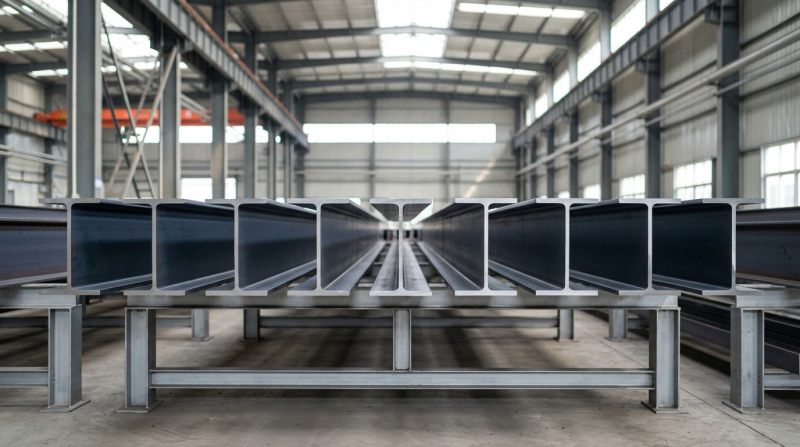
While raw materials set the baseline, international shipping bottlenecks amplify delivery uncertainty. Container availability from Chinese ports to key destinations dropped 23% in Q1 2026 versus Q4 2025, with average port dwell time increasing from 3.2 to 5.7 days. For heavy structural steel shipments — where a single 40-ft container holds only 12–15 tons of bundled H-beams — space allocation is now prioritized for high-margin consumer goods over bulk commodities.
Moreover, regulatory scrutiny has tightened. Over 60% of export declarations for structural steel to the EU and U.S. now undergo enhanced customs verification, adding 7–14 business days to clearance. This is particularly acute for ASTM/EN-certified products requiring third-party mill test reports (MTRs), dimensional inspection records, and heat traceability documentation — all of which must be submitted digitally *before* vessel loading.
Hongteng Fengda mitigates this through certified pre-shipment inspection partnerships and digital MTR portals, enabling real-time document access for buyers’ QA teams. Their Shanghai and Tianjin terminals operate dedicated structural steel consolidation lines, reducing cross-dock handling time by 40% compared to general cargo facilities.
How Reliable Partners Maintain Quality Without Compromising Timelines
Amid global disruption, consistent quality remains non-negotiable — especially when downstream fabrication, welding, or load-bearing calculations depend on precise mechanical properties. Hongteng Fengda’s ISO 9001:2015-certified production system embeds 12 mandatory QC checkpoints across its H-beam workflow: from raw billet ultrasonic testing (UT) to final dimensional laser scanning (±0.3mm tolerance on flange width).
Crucially, their vertical integration extends to finishing services: in-house galvanizing lines (per ASTM A123) and precision saw-cutting centers allow for “cut-to-length + coat” fulfillment — cutting typical post-delivery processing time by 11–16 days. This capability supports clients in Southeast Asia and the Middle East who require corrosion-resistant solutions for coastal infrastructure or petrochemical plants.
For applications demanding extreme corrosion resistance, Hongteng Fengda also supplies complementary stainless solutions — including the 316L stainless steel pipe, engineered for chlorine-rich environments and compliant with ASTM A312 and EN 10216-5. Its molybdenum-enhanced composition delivers superior performance where carbon steel H-beams reach service-life limits.
These efficiencies aren’t achieved at the expense of compliance. Every batch undergoes third-party verification by SGS or Bureau Veritas, with full traceability back to heat number and rolling date — satisfying stringent requirements from engineering firms and government procurement agencies alike.
Strategic Procurement Recommendations for 2026
Procurement teams should shift from reactive ordering to proactive planning. Key actions include:
- Lock in Q3–Q4 2026 volumes by May 2026 to secure priority mill slotting and avoid peak-season surcharges;
- Specify dual-standard compliance (e.g., ASTM A992 + EN 10025-2) to widen supplier eligibility and reduce qualification lead time;
- Request digital twin documentation (3D model + MTR + NDT reports) during RFQ phase to accelerate engineering sign-off;
- Bundle low-volume custom profiles with standard items to qualify for consolidated production runs and shared logistics;
- Evaluate hybrid sourcing: standard H-beams from China, while sourcing specialty sections (e.g., tapered, curved, or ultra-wide flange) regionally where feasible.
For project managers, integrating structural steel delivery milestones into critical path scheduling — with buffer windows aligned to actual 2026 lead time medians (not historical averages) — reduces schedule slippage risk by up to 63%, according to recent PMI benchmarking data.
Conclusion: Stability Through Partnership, Not Just Supply
Doubling lead times reflect systemic pressures — but they also expose critical gaps in traditional procurement models. Buyers who treat structural steel as a commodity risk cost overruns, safety compromises, and missed deadlines. Those who partner with vertically integrated, quality-obsessed manufacturers like Hongteng Fengda gain predictability: stable capacity, auditable quality, and responsive support across every stage — from technical consultation and CAD-supported detailing to just-in-sequence delivery and documentation handover.
With over 18 years of export experience, compliance across ASTM, EN, JIS, and GB standards, and production facilities operating at 92% equipment uptime, Hongteng Fengda delivers more than steel — it delivers project certainty.
Contact our engineering sales team today to review your upcoming structural steel requirements, request a customized lead time assessment, or explore OEM design support for complex applications.
Please give us a message


Please enter what you want to find