For industrial building projects where strength, speed, and cost control matter, h beam structure systems offer a practical advantage.
Their high load-bearing capacity supports large spans, heavy equipment, and future layout changes with fewer structural limitations.
As industrial facilities become larger and more performance-driven, the value of h beam structure design continues to grow.
This shift affects material selection, engineering decisions, construction speed, and long-term operating efficiency across steel building projects.
Why h beam structure is gaining stronger momentum in industrial construction
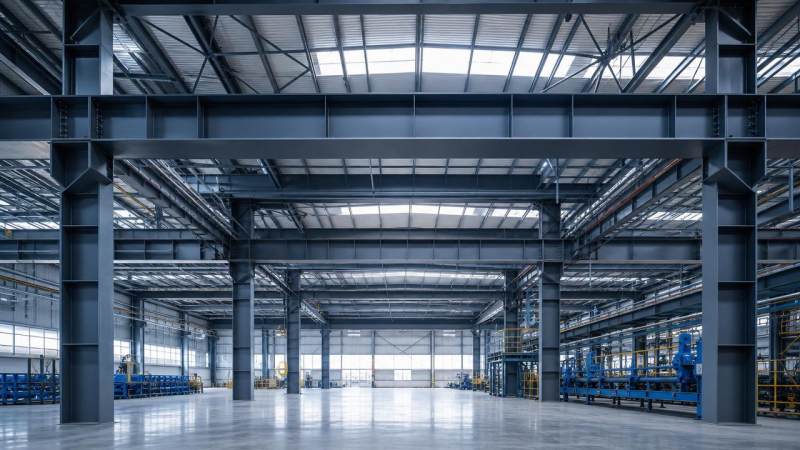
Industrial buildings now face higher demands for span, durability, expansion flexibility, and faster completion schedules.
Traditional framing methods often increase material consumption, labor intensity, and on-site coordination pressure.
In contrast, h beam structure systems provide efficient load transfer and stable geometry for demanding steel applications.
They are widely used in factories, logistics centers, workshops, equipment halls, and multi-bay warehouse developments.
This growing preference reflects a broader trend toward standardized steel components and predictable project execution.
The demand shift behind modern h beam structure adoption
Several market signals explain why h beam structure solutions are increasingly favored in industrial buildings.
- Larger buildings require longer clear spans and fewer interior columns.
- Production sites need stronger frames for cranes, mezzanines, and dynamic loads.
- Investors expect faster erection and shorter project cycles.
- Steel buyers seek better cost control through optimized sections and reduced waste.
- Global projects increasingly prefer steel components aligned with ASTM, EN, JIS, and GB standards.
These changes make h beam structure planning less about simple material choice and more about strategic building performance.
What makes h beam structure effective in industrial buildings
The main advantage comes from the section shape.
Its flange and web arrangement improves bending resistance while keeping weight relatively efficient for the required strength.
High load capacity with efficient steel use
An h beam structure can carry substantial vertical and lateral loads without excessive section enlargement.
This helps reduce redundant steel consumption while maintaining structural safety and serviceability.
Better span performance for open industrial layouts
Open floor areas matter in storage, assembly, and machine operation zones.
Using h beam structure members makes it easier to create wider clear spaces with fewer internal obstructions.
Faster fabrication and erection
Standardized dimensions support efficient cutting, welding, drilling, and connection preparation.
That improves installation speed and lowers delays caused by complex on-site modifications.
Adaptability for future expansion
Many industrial buildings evolve after commissioning.
A well-designed h beam structure can support extension bays, upgraded loading conditions, and equipment changes more easily.
Key drivers shaping h beam structure selection today
These drivers show that h beam structure evaluation is now closely linked to operational outcomes, not only initial steel pricing.
How these changes affect project planning and supply decisions
The move toward h beam structure systems changes decisions across design, fabrication, transportation, and site assembly.
Earlier coordination becomes more important because beam sizes, connection details, and corrosion protection influence the full project schedule.
Material compatibility also matters.
Industrial projects often combine primary beams with plates, bracing parts, enclosures, and equipment supports.
For related fabrication needs, Carbon Sheet Steel can be useful in construction, machinery, petroleum, and heat-exchange applications.
Available grades include Q245R, Q345R, Q370R, 16MnDR, and 15CrMoR, with thickness from 1mm to 100mm.
This kind of supporting material integration helps improve consistency across industrial steel solutions.
Where h beam structure creates the most visible business value
Warehouses and logistics hubs
Large storage facilities need open circulation paths, rack compatibility, and efficient roof support systems.
An h beam structure supports these goals with strong spans and reduced interior congestion.
Manufacturing plants
Production lines can change over time.
A robust h beam structure allows for machine relocation, utility adjustment, and mezzanine additions with fewer structural conflicts.
Heavy industrial workshops
Facilities with crane systems or high vibration loads benefit from the stability and rigidity of properly engineered steel beams.
Export-oriented building projects
Projects serving international markets often prioritize compliance, repeatability, and delivery discipline.
That makes h beam structure sourcing from experienced structural steel suppliers especially important.
Critical points to review before finalizing h beam structure solutions
- Confirm loading conditions, including static, dynamic, wind, and seismic requirements.
- Match beam specifications to span targets and future building modifications.
- Check steel grade compliance with project standards and destination market rules.
- Review fabrication capability, dimensional accuracy, and welding quality control.
- Assess corrosion protection strategies for indoor, coastal, or chemical environments.
- Plan logistics carefully for oversized members and phased site installation.
These checkpoints reduce sourcing risk and support better life-cycle value from an h beam structure system.
A practical way to judge the next move
Why the right steel partner matters as h beam structure demand grows
As industrial construction becomes faster and more performance-focused, h beam structure selection directly influences project certainty.
Reliable structural steel supply means more than shipping beams on time.
It includes consistent quality, standard compliance, customization support, and practical coordination from production to delivery.
Hongteng Fengda, a structural steel manufacturer and exporter from China, supports global industrial projects with stable production and dependable service.
Its experience in steel beams, channels, angle steel, cold formed profiles, and custom components helps align sourcing with real project needs.
If the goal is a stronger, faster, and more adaptable building, reviewing h beam structure options with a qualified steel partner is a smart next step.
Please give us a message


Please enter what you want to find