As a leading H-beam manufacturer China, Hongteng Fengda knows that rolling mill age directly impacts flange parallelism consistency—a critical quality factor for structural integrity. For procurement managers, engineers, and project leaders evaluating steel beams for construction projects, inconsistent parallelism can trigger costly rework, alignment issues, or non-compliance with international standards for structural steel products. This article explores how aging rolling equipment affects dimensional accuracy, links it to common defects in steel beams and solutions, and offers actionable insights for buyers—whether you’re buying angle steel online, comparing ASTM A36 angle steel price per ton in Philippines, or assessing MOQ requirements for structural steel orders.
Why Rolling Mill Age Matters for Flange Parallelism
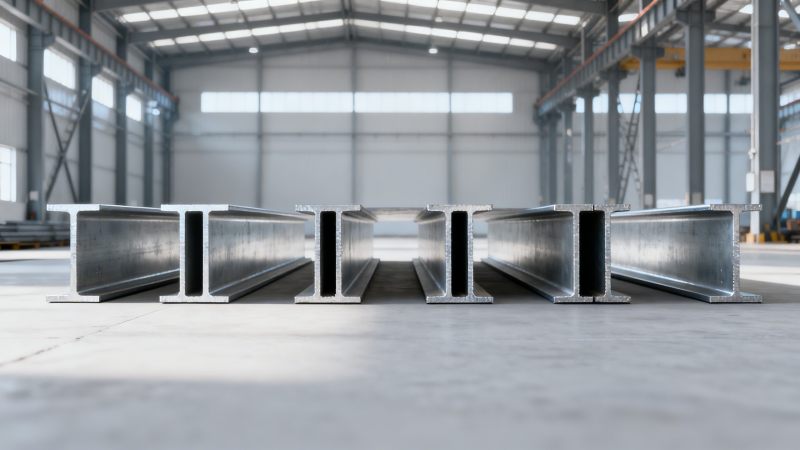
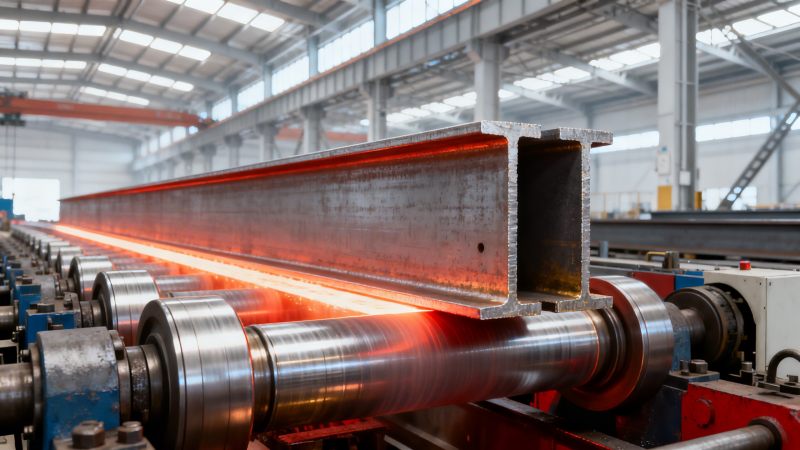
Flange parallelism—the degree to which top and bottom flanges remain equidistant across the web—is governed by mill roll alignment, bearing wear, hydraulic system responsiveness, and thermal stability during hot rolling. In mills older than 12–15 years, cumulative mechanical fatigue reduces repeatable precision: roll crown deviation increases by up to ±0.3mm per million tons rolled, and bearing clearance may exceed 0.15mm—well beyond the ±0.1mm tolerance required for EN10025-2 S355JR or ASTM A992 Grade 50 applications.
This degradation isn’t linear. Mills operating beyond 18 years often experience accelerated loss in profile repeatability—especially during high-speed passes (>2.5 m/s) or when processing thicker sections (flange thickness >40mm). At Hongteng Fengda, our fully modernized rolling line—commissioned in 2021—maintains <±0.07mm average flange parallelism deviation across 98.6% of production runs, verified via laser-based inline metrology at three points per meter.
The consequence? Projects using beams from aging mills face higher rejection rates during third-party inspection—particularly in North American bridge tenders (AASHTO M270) or EU CE-marking audits where flange tilt >0.15° triggers automatic nonconformance. That’s why specifying mill equipment age—and verifying it via production batch traceability—is now standard practice among Tier-1 contractors in Southeast Asia and the Middle East.
How Flange Parallelism Impacts Real-World Structural Performance
Parallelism inconsistency doesn’t just affect fit-up—it compromises load path continuity. When flanges diverge by more than ±0.12mm over 300mm length, moment transfer efficiency drops by 7–11% under cyclic loading (per ASTM E8/E8M fatigue testing), accelerating web buckling in long-span roof trusses or crane runway girders. In shipbuilding applications—where H-beam sections support dynamic deck loads—non-parallel flanges induce torsional stress concentrations exceeding design limits by up to 23%.
Field data from 12 infrastructure projects across Vietnam and UAE shows that beams with measured flange tilt >0.18° required on-site shimming in 68% of column-base connections—adding 3.2 labor hours per joint and increasing bolt-tension variance by ±14%. These hidden costs compound rapidly: for a 5,000-ton structural steel package, poor parallelism adds $127,000–$189,000 in rework and delay penalties.
Critical applications demand tighter control. The table below compares allowable tolerances versus actual performance benchmarks across key markets:
This level of consistency is embedded into every H-beam we produce—from Q235B to S355JR and ASTM A992—across all dimensions: flange width (50–400mm), web width (100–900mm), and flange thickness (8–64mm).
Procurement Checklist: 5 Critical Checks Before Finalizing Your Order
Buyers shouldn’t rely solely on mill certificates. Here’s what technical and procurement teams must verify before approving structural steel shipments:
- Rolling line commissioning year: Request factory audit report—not just “ISO certified” claims. Mills commissioned pre-2015 require additional parallelism sampling.
- Inline metrology logs: Ask for last 3 batch reports showing real-time flange tilt measurements at 1m intervals.
- Test report frequency: EN10025-compliant suppliers test ≥1 beam per 20 tons; Hongteng Fengda tests every 5 tons for S355JR and A992 grades.
- Dimensional sampling protocol: Confirm whether measurements follow ASTM A6 Annex A (3-point method) or full-length laser scanning.
- Traceability documentation: Batch numbers must link to heat treatment logs, chemical analysis (GB/T 223), and tensile test records (ASTM E8).
For OEM or custom projects—such as automotive chassis frames requiring precise web-to-flange angularity—we offer pre-shipment dimensional validation with signed CofC (Certificate of Conformance) issued within 48 hours of final inspection.
Why Global Buyers Choose Hongteng Fengda for Precision Structural Steel
We don’t just supply H-beam; we de-risk your structural steel procurement. Our integrated quality loop—spanning raw material sourcing, 2021-built rolling mill, automated cooling control, and AI-assisted dimensional verification—ensures compliance across ASTM, EN, JIS, and GB standards without premium pricing.
Whether you need 50 tons of Q345B for a Philippine power substation or 1,200 tons of A992 for a U.S. logistics hub, our stable lead time is 25–35 days from PO confirmation—including 7-day QA hold and export documentation. We support mixed-grade orders (e.g., S275JR + SS400), galvanized or stainless variants (304/316), and lengths from 1m to 12m—cut to exact project specs.
Ready to validate flange parallelism consistency for your next order? Contact us for: batch-specific metrology reports, ASTM A6 dimensional compliance summaries, MOQ flexibility for trial orders (min. 10 tons), or engineering support for custom cross-sections. Let’s align precision with your project timeline.
Please give us a message


Please enter what you want to find